






 Portuguese
  Spanish
  5 min of reading
  0 comments


Right there on the northern border of Brazil, on the coast of Guyana which has become the largest oil phenomenon on the planet, ExxonMobil has begun drilling wells with an automated system that practically removes human hands from controlling the drill and allows the machine to correct its own course at the bottom of the sea.
Guyana is today one of the most talked-about places in the oil industry, and for a simple reason, it’s discovery after discovery. In just a few years, the small country neighboring Amapá has gone from anonymity to becoming an emerging oil power, with ExxonMobil leading a series of giant finds in the basin that extends along the coast, just a few hundred kilometers from Brazilian territory.
The novelty now is not another discovery, it’s the method. Together with Halliburton, Exxon has started using in Guyana a closed-loop automated drilling system, where the equipment itself adjusts the drill’s trajectory in real-time, without relying on an operator monitoring every meter. It’s the kind of advancement that silently changes how oil is extracted from the seabed.
What it means for a well to drill itself
To understand the leap, it’s worth remembering how drilling used to work. Traditionally, drilling an offshore oil well is an operation that heavily depends on human interpretation, with technicians interpreting data and correcting the drill’s course at every moment, in an exhausting and error-prone task. A small deviation down there, thousands of meters deep, can cost a fortune and days of rework.
-
The urgent need to implement a severe cut in public spending and a massive increase in taxes, in addition to drastically compromising the quality of basic services and the purchasing power of the population, could result in social unrest in the country, with the population leading protests, strikes, and frequent disturbances.

-
FIRJAN’s mega plan of R$ 526.3 billion for Rio de Janeiro aims to revive Brazil’s largest industry, with two-thirds of the investments going to oil and gas.

-
China signals an increase in beef imports, Brazil has already consumed 70% of the 1.106 million ton quota and seeks to renegotiate the tariff that jumps from 12% to 55%, while demand from the US also skyrockets.
-
Food inflation rose 302% in 20 years in Brazil, but the supermarket changed: purchasing power yielded 87% more mortadella and 31% less fruit, and ultra-processed foods took over the cart.

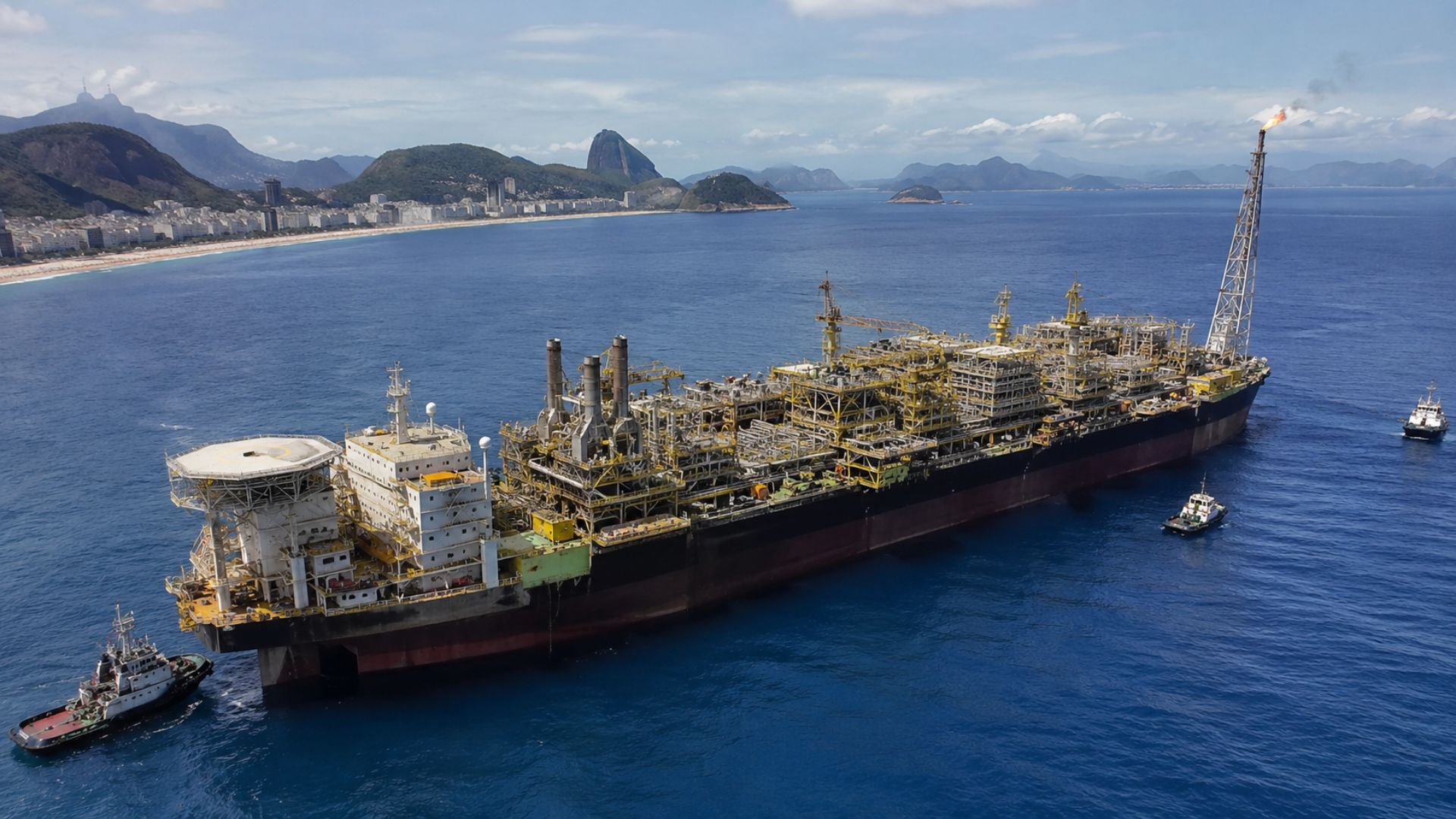


Closed-loop automation changes this logic from the ground up. The system continuously measures what happens at the drill bit and adjusts the direction on its own, keeping the well on the planned course with a precision that human hands can hardly achieve. I confess it’s the kind of technology that seems straight out of a movie, a machine digging kilometers deep and self-correcting without anyone needing to touch the controls all the time.

Why this hits so close to Brazil
Here’s the point that makes this story so relevant to us. Guyana is a close neighbor to Brazil, and the geological formation that has been yielding so much oil there does not respect political borders; it extends towards the Brazilian coast, in the region known as the equatorial margin. It is precisely there, at the mouth of the Amazon, that Brazil is betting to try to replicate part of the success that Exxon has had on the other side of the line.
In other words, the technology being tested in Guyana today is exactly the type of tool that might end up being used in Brazilian waters tomorrow. What happens in that piece of ocean stops being distant news and becomes a mirror of what might come along our coast, with all the economic potential and all the environmental discussions it carries.
And these discussions are real. The exploration of the equatorial margin, in the region of the Amazon mouth, is one of the most sensitive topics in Brazilian energy policy, dividing those who see it as a historic chance for wealth and those who fear the impact on one of the most delicate areas of the coast. Guyana, which advanced quickly and with little restraint over its oil, acts as an uncomfortable mirror, showing the size of the economic prize while exposing the speed at which the oil frontier advances when the coffers speak louder. Brazil watches this neighbor with a mix of envy and caution, and each new production record announced on the other side of the border increases the internal pressure for a decision on whether, and how, the country should dive into the same basin.

Automation, cost, and the new face of oil
It’s not just a matter of technological elegance, it’s money. Drilling at the bottom of the sea is extremely expensive, and each hour of operation of a rig costs a small fortune. When the machine drills faster, with less error and less rework, the cost of each well plummets. This economy explains why the industry is so eager for automation, and why ExxonMobil chose Guyana, its jewel of the moment, to test the system.
There’s also a safety aspect that often goes unnoticed. The more the machine takes over critical and repetitive tasks, the fewer people need to be exposed in the riskiest operations of a platform. Automation, in this sense, is also a way to remove workers from the frontline of danger, leaving the roughest part to the systems.

The neighbor that became a laboratory of the future
I imagine how, in just a few years, Guyana went from a country almost nobody mentioned to becoming a kind of open-air laboratory for the most advanced oil extraction technologies in the world. And all of this happening right next door, in the same geological neighborhood where Brazil wants to write the next chapter of its oil production.
Following what Exxon does there is, in a way, peering into the future of our own coast. The automated drilling that is now a novelty in Guyana has everything to become standard on the Brazilian equatorial margin, with all that it promises in wealth and all that it demands in care, and the clock on this decision is already ticking.
Do you think Brazil should rush to explore the same basin as Guyana, or tread more cautiously in this region?




Be the first to react!