






 Portuguese
  Spanish


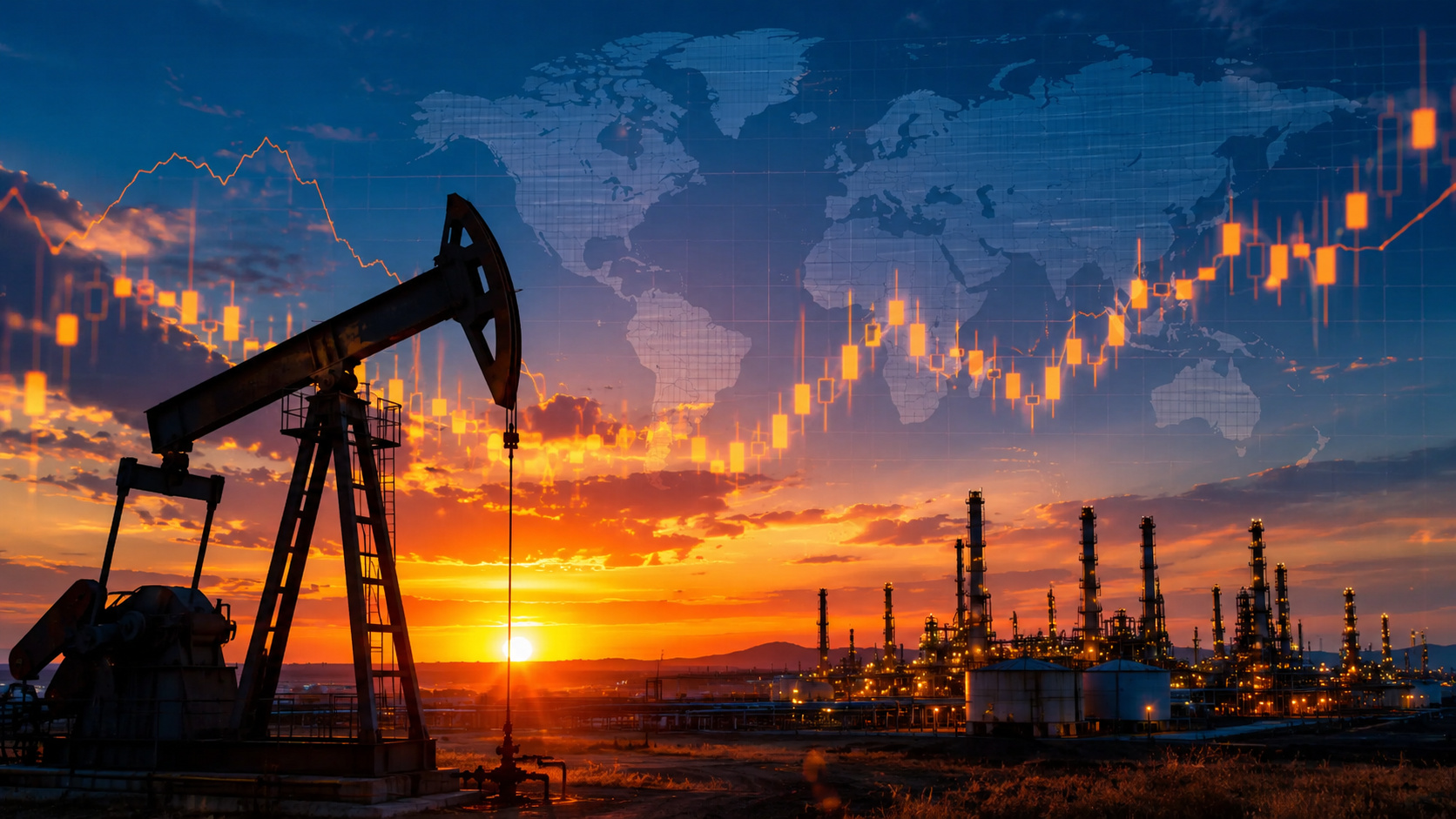

The Organization of the Petroleum Exporting Countries (OPEC) revised down its forecast for global oil demand growth in 2026. The entity reduced the previous estimate by 200,000 barrels per day, now projecting an increase of 1.2 million barrels daily next year. As a result, the forecasted global consumption stands at 106.33 million barrels per day.
Despite the negative revision for 2026, OPEC maintained a more optimistic outlook for 2027. Additionally, the organization demonstrated confidence in a gradual recovery of the global energy market, driven by economic recovery and stability in the energy sector in the coming years.
OPEC reduces expectations for 2026
The new projection released by OPEC indicates a slowdown in the growth rate of global oil demand.
-
Petrobras to Double Natural Gas Supply in Northeastern Brazil with New Investment

-
Petrobras Approves $1.2 Billion Refinery in Brazil to Produce Aviation Fuel and Diesel from Plants
-
Petrobras Secures $2.2 Billion Contract to Build and Operate Four Support Vessels for Brazil’s Offshore Oil Fields
-
Oil production grows in Rio, but reserve replacement raises a warning sign


Furthermore, the entity pointed out that global economic factors continue to directly influence international energy consumption.
Experts state that such revisions are common in light of the economic and geopolitical fluctuations observed in recent years.
In this context, the market closely monitors any changes in the organization’s estimates.
Global demand continues to grow
Even with the downward revision, OPEC still projects growth in global oil consumption in 2026.
Additionally, the expectation of an increase of 1.2 million barrels per day demonstrates that the commodity will continue to play a strategic role in the global economy.
Experts affirm that sectors such as transportation, industry, and aviation continue to drive energy demand.
Therefore, oil remains one of the main energy sources on the planet.
Outlook improves for 2027
Despite the adjustment for 2026, OPEC raised its expectations for 2027.
Additionally, the entity demonstrated confidence in a more consistent recovery of the global energy market.
Experts believe that economic stability, industrial recovery, and consumption growth may favor demand expansion in the coming years.
In this scenario, investors monitor signs of gradual strengthening in the energy sector.
What influences oil demand
Global oil demand depends on different economic and geopolitical factors.
Among the main elements monitored are:
- Global economic growth
- Industrial consumption
- Global transport
- International inflation
- Geopolitical tensions
Additionally, changes in energy consumption behavior also affect OPEC projections.
The role of OPEC in the global market
OPEC has great influence over the international oil market.
Moreover, the organization brings together some of the largest producers of the commodity in the world.
Experts state that reports released by the entity usually impact oil prices, international stock markets, and global economic expectations.
Therefore, investors closely follow the projections published by the organization.
Market reacts to OPEC projections
Changes in OPEC estimates often have an immediate impact on financial markets.
Additionally, lower demand projections can pressure international oil prices.
Experts state that the energy sector remains highly sensitive to global economic growth expectations.
In this context, OPEC reports serve as an important reference for investors and governments.
Oil remains strategic for the global economy
Even with the advancement of renewable energies, oil continues to hold a central position in the global economy.
Moreover, various sectors still heavily depend on the commodity for the functioning of productive activities.
Experts state that the energy transition should occur gradually over the coming decades.
Therefore, oil will continue to be an important part of the global energy matrix.
Geopolitical tensions influence the sector
The international oil market remains directly linked to geopolitical tensions.
Conflicts in the Middle East, economic sanctions, and trade disputes frequently alter global supply and demand.
Furthermore, any instability involving major producers can generate price volatility.
Experts state that energy security will continue to be an international priority.
The impact on oil prices
The OPEC review can also influence the behavior of commodity prices.
Furthermore, lower demand expectations usually reduce upward pressure on the barrel.
However, geopolitical factors and production cuts can still sustain significant market fluctuations.
In this scenario, investors remain attentive to the movements of the organization and major economies.
The relationship between oil and inflation
Oil prices have a direct impact on global inflation.
Moreover, more expensive fuels increase logistical, industrial, and transportation costs.
Experts state that fluctuations in the commodity often affect food, energy, and consumer goods.
Therefore, central banks closely monitor the behavior of the energy market.
The global economic recovery
OPEC believes that global economic growth could favor an increase in energy demand by 2027.
Moreover, the recovery of industrial sectors and international trade tends to boost oil consumption.
Experts state that the pace of the Chinese and American economies will continue to be decisive for the sector.
In this context, the global economic scenario remains at the center of attention.

The advancement of the energy transition
Although oil remains relevant, the market is also watching the expansion of renewable energies.
Moreover, governments and companies have increased investments in more sustainable sources in recent years.
Experts state that the energy transition should gradually transform global fossil fuel consumption.
However, oil will still play an important role during this process.
What experts expect for the coming years
Analysts believe that the oil market will continue to face significant fluctuations.
Furthermore, economic and geopolitical factors should continue to influence global supply and demand.
Among the main points monitored are:
- Growth of China
- OPEC production
- International tensions
- Global energy policy
- Advancement of renewable energies
All these elements should influence market behavior in the coming years.


The future of the global oil market
The revision of OPEC’s projections shows that the global energy market continues to go through a period of uncertainties and transformation.
Furthermore, economic, technological, and geopolitical changes continue to alter consumption perspectives of the commodity.
While investors follow the organization’s next moves, oil continues to exert a strong influence on inflation, the economy, and international markets.
Finally, even with the slowdown predicted for 2026, the more positive outlook for 2027 indicates that OPEC still bets on a gradual recovery of global oil demand in the coming years.


