





 Portuguese
  English
  Spanish
  2 min of reading


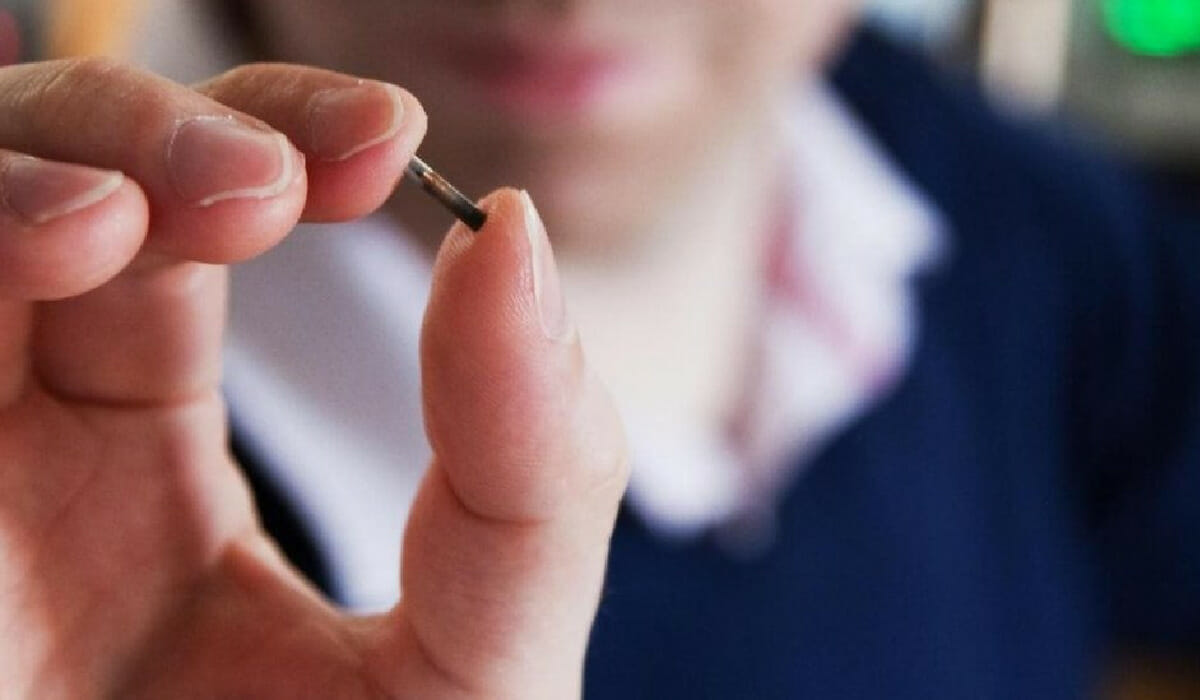
The New Developed Technology Is Promising and Can Replace Personal Access Items, Increasing Owners’ Security
At the recent DEF CON security conference, held on the 10th, software engineer Miana Windall shared an intriguing experience: the use of 25 scannable chips under the skin, intended for security purposes.
Windall reports that these subcutaneous implant chips were used to facilitate her access to the commercial building where she works, highlighting how this technology minimizes the chances of someone using her access credentials without her knowledge.
“It is unlikely that someone could scan your credential (implanted by chip) without you noticing. After all, it’s not so easy to steal your hand, at least not without a machete.” – Miana Windall, software engineer.
-
Scientists are studying GJ 1214 b, a planet 40 light-years away that may concentrate water on a much larger scale than Earth, and this “ocean world” helps to understand how to store, protect, and maintain the planet’s most valuable resource under extreme conditions.

-
Scientists are investigating Ganymede, a moon larger than Mercury that may hide a global ocean under kilometers of ice, containing more water than all of Earth’s oceans and transforming the largest satellite in the Solar System into a colossal, yet inaccessible, reservoir.

-
18 scientists issue a warning in a new study: extreme events could affect 36% of terrestrial habitats by 2085 and subject species to heat, fires, droughts, and floods in succession.

-
Alert in the US: wildfire smoke enters deep into the lungs, reaches the bloodstream, and is already associated with 24,100 deaths per year






RFID Technology of Chips and Its Applications
These implants operate through Radio Frequency Identification (RFID) technology and magnets, which can be read by devices enabled for these technologies. This means that these implants could be used to open residential doors or even vehicles.
Although RFID technology was patented in the 1970s and is now widely used in credit cards and transportation systems, it doesn’t play out like in Hollywood movies, as emphasizes Amal Graafstra, founder of Dangerous Things, a company specializing in biosecurity implants. This is because these implants are passive, meaning they are not active unless read by a specific reader.
Amal Graafstra, founder of Dangerous Things, emphasizes that one known use for these chips is the access key for Tesla vehicles, enabling the car to start. However, this use is somewhat complex, depending on the user’s skills in configuring the electric vehicle’s key.
“When we sell the transponder [implant], we are selling the key, not the lock.” – Amal Graafstra.
Challenges and Potentials of New Implantable Chips
Companies are exploring ways to use RFID chips as security tools. However, the technology faces a vulnerability: the need for access credentials to be available. Introducing these credentials as an implant significantly complicates the theft of the user’s key.
Another highlighted application is the use of these implants as a form of identity authentication. Replacing traditional methods, such as two-factor authentication, these implants become a more secure access key. Graafstra points out that, unlike physical keys or text messages, which may be vulnerable, the implant is always with the user, providing a high level of security.
The growing adoption of these subcutaneous implants opens a new frontier in the quest for secure access and identification, driving innovation in the field of security and technology.


-

1 person reacted to this.