






 Portuguese
  Spanish


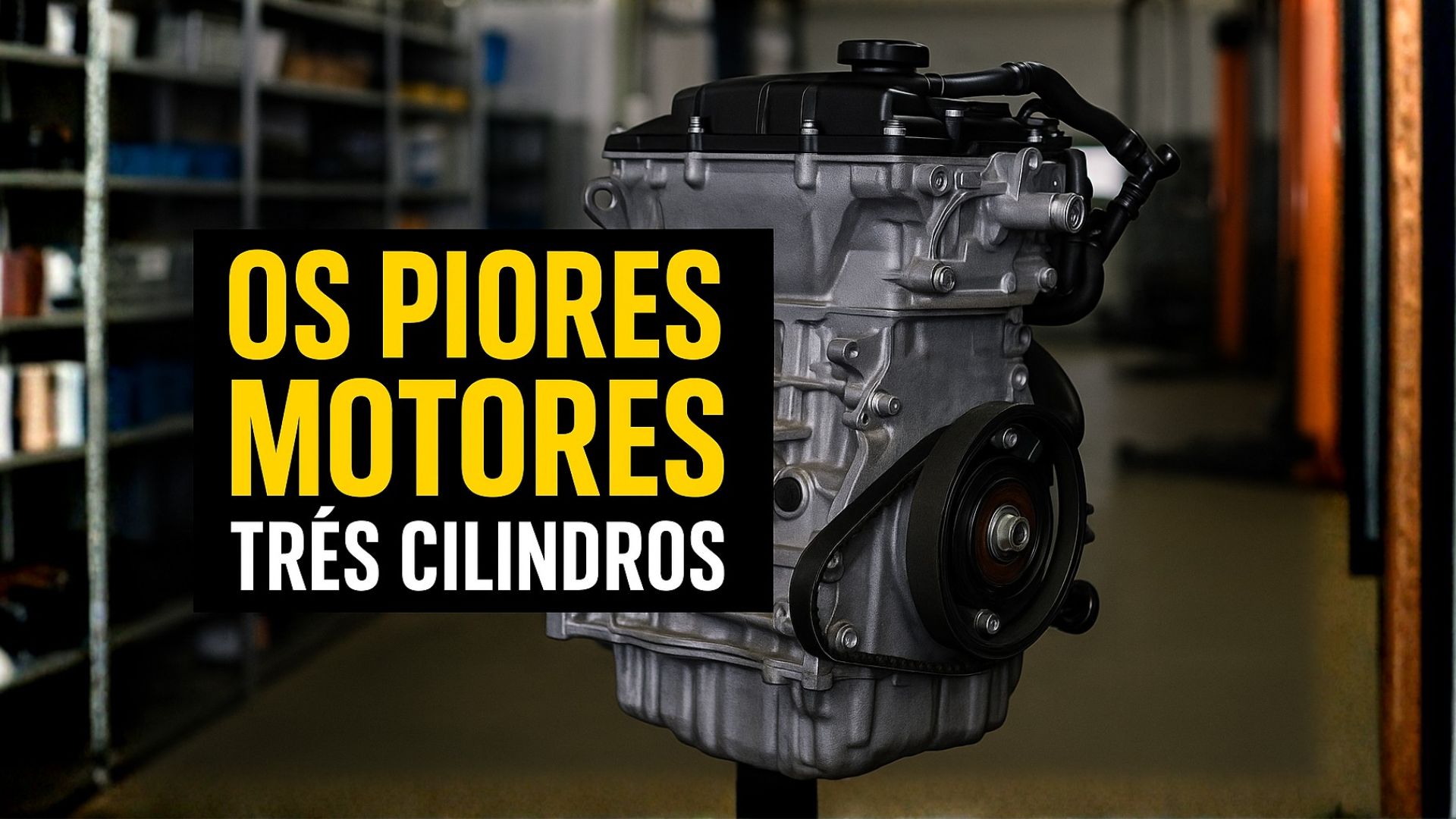


Owners Report Recurring Failures in Three-Cylinder Engines Mentioned by Flávio Palmeira in Video on Autos Papos Channel, Involving Premature Wear, Excessive Vibrations, Oil Burn, and Belts That Deteriorate Before Expected.
The main mechanical problems faced by four three-cylinder engines sold in the country were detailed by Flávio Palmeira in a video published on the Autos Papos channel.
According to the insurance broker, who deals daily with drivers and vehicle owners, these recurring failures have led consumers to face premature wear of parts, high maintenance costs, and even the return of newly purchased cars.
Flávio Palmeira explained that the survey is based on constant reports from clients served by his brokerage over the years.
-
2027 Toyota Corolla Cross Unveiled: New Design, Enhanced Fuel Efficiency, Reduced Maintenance Costs, Advanced Technology, Connected Services, and Up to 10-Year Warranty

-
Fiat Cronos Precision 2018: Affordable Sedan with Spacious Trunk and Reliable Maintenance
-
Volkswagen to Cut Production by 1 Million Cars by 2030, Reducing Jobs and Platforms, Focusing on More Profitable Models

-
Toyota Launches First 100% Electric Car in Brazil: bZ4X with 343 HP, All-Wheel Drive, 361 km Range, Priced at $419,990 BRL, Limited to 99 Units



According to him, many drivers seek compact low-displacement cars to save on fuel and avoid high daily expenses, but they end up surprised by defects that, he claims, are more common than expected in certain engine lines.
Renault SCe 1.0 and Premature Wear
The first engine highlighted by Flávio Palmeira was the Renault SCe 1.0, present in models like Kwid and Sandero.
As he explained, it is the set that generates the most complaints among customers.
He mentioned that one of the most frequent problems is the accelerated wear of the camshaft, which causes the engine to vibrate more than normal, lose performance, and produce abnormal noises.
In some cases reported by customers, the wear reaches the point of requiring deep repairs.
The expert also stated that the SCe 1.0 presents oil consumption above average, even in new units.

He further reinforced that many drivers notice that the oil level drops quickly, even though there is no smoke emission.
This characteristic has caused frustration among owners who use their vehicles for app-based transportation and thus cover long distances.
Flávio Palmeira also mentioned recurring failures in the ignition coils and the absence of a conventional gasket on the valve cover, replaced by glue.
In his assessment, this type of sealing facilitates the emergence of leaks with use.
“It’s a set that, unfortunately, has problem after problem,” he stated in the video while commenting on the recurrence of occurrences.
Peugeot and Citroën 1.2 PureTech and the Contaminated Belt
The second engine analyzed was the 1.2 PureTech, from Peugeot and Citroën.
As the presenter pointed out, the high vibration is just one part of the difficulty faced by owners.
The most critical point, according to him, is the melting of the timing belt in contact with the oil, a situation that can occur even when using the lubricant recommended by the manufacturer.
He explained that oil contamination by fuel accelerates the wear of the belt, a phenomenon that can appear sooner than expected in the maintenance schedule.
In his words, “it’s not just a matter of changing the oil at the dealership; the problem goes beyond that.”

The PureTech also requires specialized labor.
According to Palmeira, the very replacement of the belt and the adjustment of the engine timing are delicate operations that may lead to additional failures if performed by professionals without specific experience in the set.
He noted that this complexity tends to increase maintenance costs, especially outside the authorized network.
GM 1.0 and the Risk of Damage After the Melting of the Belt
The third engine mentioned by Flávio Palmeira, both in the aspirated and turbo versions, was the 1.0 from General Motors, present in models like Onix and Tracker.
He reported that the set repeats the problem of the timing belt soaked in oil, which deteriorates due to fuel contamination.
“It’s the same story: the belt melts, and when that happens, the damage can be significant,” he said.
He recalled that some owners ended up losing the engine after the component failure.
Although GM has extended the warranty for the part, the expert noted that many cases end up classified as “misuse,” which makes assistance difficult.

While citing customer experiences, he commented that relying solely on coverage can be a headache.
The solution, as he explained, is usually to perform preventive changes at shorter intervals than what the manufacturer suggests.
The presenter also mentioned an additional problem in the vacuum pump, which can melt and affect brake function.
According to him, when the pedal becomes stiffer, this is usually a sign of impending failure.
As he emphasized, this is a defect that can trigger greater troubles, including a risk of clogging the oil pickup.
Ford 1.0 and the Vibration Above Normal
The fourth engine addressed in the video is the Ford 1.0 three-cylinder, especially the first generation, used in models like the Ka.
As explained by Flávio Palmeira, it is a set known for vibration above normal, to the point that, as he described, it seems like the engine will fail at any moment.
In addition to the rough behavior, the engine also presents the previously mentioned problem of timing belt degraded by contact with oil.

He noted that some owners fresh out of the dealership sought warranty after the early onset of the failure.
In cases narrated in the video, drivers who use the car for work reported significant losses due to downtime.
The expert added that newer versions are not free from occurrences and that models equipped with the 1.5 three-cylinder also accumulate complaints.
However, he kept the focus on the initial 1.0 as he considers it, in his words, “one of the most problematic” in the segment.
Engines That Stand Out for Reliability

Although he dedicated the video to models that generate the most complaints, Flávio Palmeira mentioned that there are more reliable options.
He cited the Volkswagen EA211 1.0, which equips Polo, Virtus, Nivus, and T-Cross, as the set that returns the least to the brokerage with serious complaints.
He stated that maintenance is more expensive, especially for the replacement of the timing belt and the water pump, but reinforced that, with basic care, the engine usually presents good durability.
As he detailed, occasional cleaning of the valves due to carbon buildup may be necessary in prolonged use.
Even acknowledging finishing issues in some vehicles from the brand, the expert stated that the engine stands out for its reliability.
“It’s not perfect, but it’s the most balanced in the category,” he commented.
By bringing together so many reports of mechanical inconsistencies, the discussion raised by Flávio Palmeira directs reflection to a central question for any buyer: to what extent is it worth saving on the initial purchase to risk facing a complex repair in the future?









motor 3 cilindros, tô fora!!
VW é VW