






 Portuguese
  Spanish


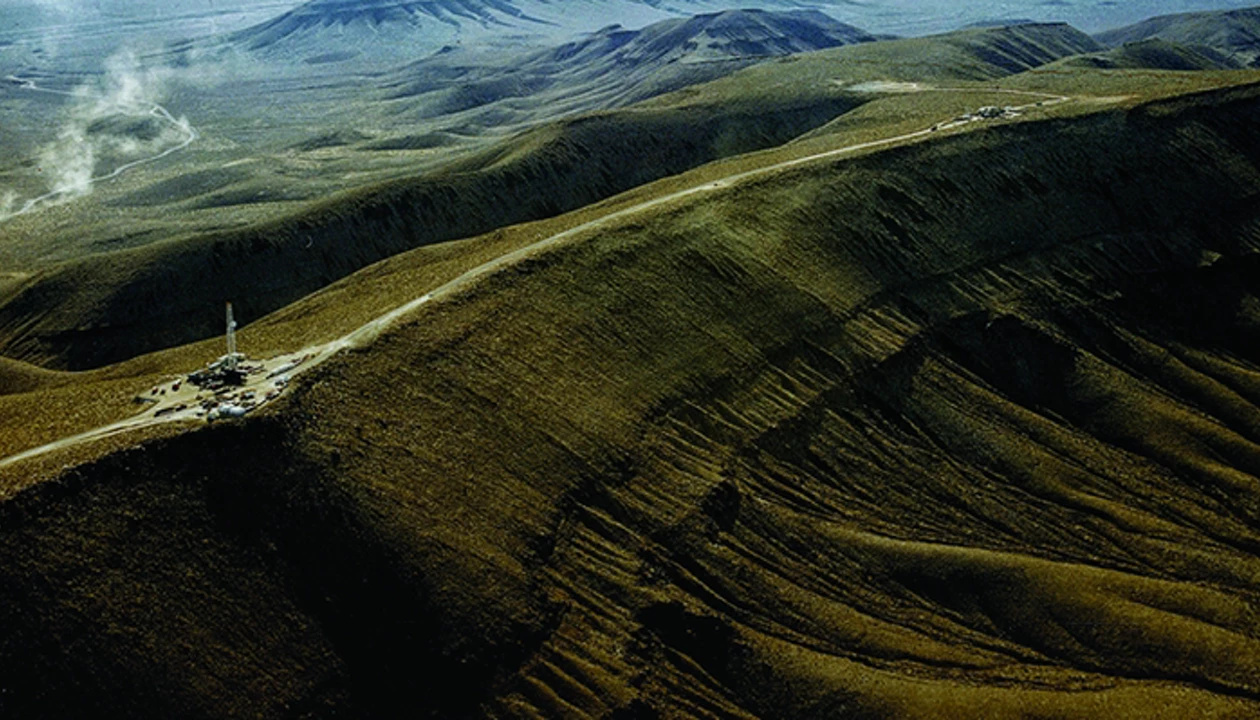

The U.S. Dug 8 Km of Tunnels in Yucca Mountain to Study Whether a Volcanic Mountain Can Isolate Nuclear Waste for 10,000 Years.
When the U.S. government decided to investigate whether a volcanic mountain could store highly radioactive waste for millennia, the global debate about nuclear energy gained a new chapter. Since the end of the Cold War, the U.S. has been seeking a geological solution capable of ensuring that extremely hot, radioactive, and dangerous used nuclear fuel remains isolated from the biosphere for periods longer than the history of any civilization. It was in this context that the project in Yucca Mountain, in the Nevada desert, emerged, a technical and scientific initiative that spanned decades, administrations, political battles, legal processes, and billions of dollars.
According to the U.S. Department of Energy, structural excavations began in the 1990s with the goal of transforming the inside of the mountain into an underground laboratory. To achieve this, armored excavators and Tunnel Boring Machines (TBMs) opened more than 8 km of experimental tunnels, located about 300 meters below the surface, within a mass of welded volcanic tuff, rock formed by eruptions from an extinct volcano about 12 to 14 million years ago.
The depth and type of rock were not random choices: every meter excavated was part of a study on how groundwater, heat, fractures, and time would influence the radioactive material.
-
Award-Winning Japanese Restaurant Reveals It Has Preserved Part of the Same Frying Oil for 66 Years

-
American Youth Transforms from Severe Obesity to U.S. Air Force Enlistment, Losing 90 Kilograms in Two Years
-
11-Year-Old Entrepreneur Sells 60 Homemade Sweets Daily, Mastering Cost Calculation, Social Media Promotion, and Client Negotiation Since Age 7

-
Peruvian Mountain’s 5,200 Aligned Holes May Unveil Ancient Indigenous Market for Corn and Cotton


Why a Volcanic Mountain in the Desert?
Yucca Mountain is located within the Nevada National Security Site, an extremely dry region with little rainfall, low deep aquifer recharge, and soil permeated by volcanic rocks that have low hydraulic conductivity.


This means that, theoretically, groundwater would take thousands of years to circulate to the interior of the tunnels, a fundamental requirement for storing nuclear fuel, as water can carry radioactive particles into the environment.
The mountain’s geology helped reinforce the technical argument: multiple layers of welded volcanic tuff form a natural barrier with reduced porosity, while unwelded zones act as secondary layers that cushion stresses and accommodate fractures. These characteristics have made Yucca Mountain one of the most studied cases on the planet regarding geological confinement.
Technology, Engineering, and Underground Testing
The excavations were made with TBMs of 7.6 meters in diameter, used to create tunnels capable of accommodating vehicles, sensors, and test modules. Inside, researchers installed instrumentation to measure three critical variables:
- Heat — used nuclear fuel remains hot for centuries.
- Water — infiltrations and moisture mobilize radionuclides.
- Geochemical Transport — chemical reactions alter the mobility of toxic elements.
Thermal simulations heated tunnel walls to test how heat propagates in the rock, how it “breathes,” and how it responds to cycles of moisture over time. This was necessary because the project needed to model periods of 10,000 years, a regulatory horizon defined by the U.S. Environmental Protection Agency (EPA) to ensure safety after the operations cease.
At the same time, the project envisioned the use of double containment: metal barrels with special alloys to delay corrosion and geological confinement as a final barrier. The principle was simple: even if the metal fails, the mountain continues to function as a geological filter.
The Problem Was Not Technical, It Was Geopolitical
Despite decades of research, the project never became an operational repository. In 2002, Congress designated Yucca Mountain as the official site to store used fuel from U.S. civilian nuclear reactors. However, there was a monumental obstacle: political opposition from the state of Nevada, which does not have nuclear power plants and refused to become a “national repository.”
Public hearings brought together scientists, engineers, politicians, environmentalists, and indigenous communities. From a regulatory standpoint, the project underwent reviews by the Nuclear Regulatory Commission (NRC) and environmental reviews by the Department of Energy (DOE), but in 2010, the federal government suspended the licensing process, halting the legal advancement of the project.
Since then, Yucca Mountain has not technically died; it has remained in a state of limbo. The underground facilities, tunnels, and laboratory still exist, but without authorization to receive real nuclear fuel.
What Happened to U.S. Nuclear Fuel?
While Yucca Mountain faced political gridlock, the country adopted a temporary solution: dry storage near nuclear power plants, using sealed metal canisters in monitored fields. The enriched uranium used in reactors remains hot, radioactive, and physically stable in these containers, but this is not considered a definitive solution.
States like Illinois, Pennsylvania, and South Carolina hold much of the U.S. civilian nuclear inventory, as they concentrate plants that have been operating since the 1970s. This means that, ironically, the country that has invested the most in deep geological research for storing nuclear fuel still hasn’t resolved politically where to put it.
Why Is There Still Talk About Yucca Mountain?
Because the problem it tried to solve has not disappeared. Nuclear fuel cannot simply “vanish”: it remains radioactive and needs to be confined for long periods. For this reason, countries like Finland (Onkalo), Sweden (Forsmark), France (Bure), and Canada (NWMO) have advanced with deep geological repositories, with plans for permanent sealing.
Yucca Mountain, despite being stalled, remains a global scientific reference. Its tunnels at 300 meters deep and its volcanic geology have been used in research contributing to the international understanding of what it means to design for millennia.
What the Yucca Mountain Case Reveals About Extreme Projects
Yucca Mountain exposed a contradiction of modern nuclear civilization:
- We have technology to generate clean energy without CO₂,
- We have engineering capable of tunneling through mountains,
- We have science to model geological behavior for millennia,
- But we lack political consensus on the final destination of waste.
In this sense, Yucca Mountain is less a technical failure and more a mirror of the world we live in: highly energized, industrialized, and connected societies, yet stumbling on the less glamorous part of the equation, what to do with what remains.
Yucca Mountain has been called the “scientific work of a generation,” not for its physical scale, although 8 km of tunnels at 300 m deep are impressive, but because it involves engineering, geology, energy, politics, national security, and the human notion of deep time.
Until there is a definitive decision, the mountain remains there: dry, volcanic, silent, excavated, and waiting for the moment when civilization decides if it is ready to deal with waste meant to last longer than empires, religions, and countries.


