






 Portuguese
  Spanish
  3 min of reading
  0 comments


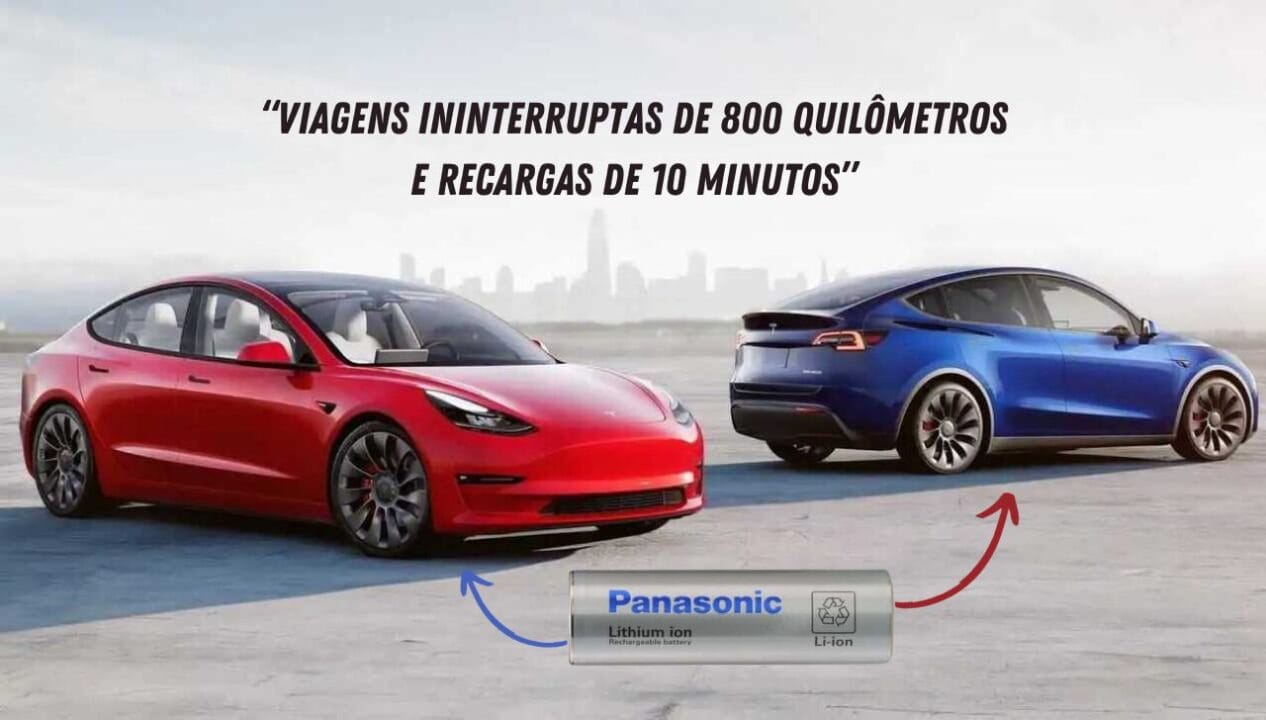
Panasonic Strengthens Its Partnership With Tesla, Announcing Improvements to the 2170 Batteries for Model 3 and Model Y. With Increased Energy Density, the Company Plans to Open a Factory in the US Aiming at Reducing Prices of Electric Vehicles.
In a strategic move, Panasonic revealed plans for the production of an enhanced version of the 2170 batteries, widely used in Tesla models such as the popular Model 3 and Model Y. In addition to increasing the energy density of these cells, the Japanese company aims to optimize the production rate, including the opening of a new factory in the United States. This initiative will not only improve the performance of electric vehicles but also has the potential to positively impact costs, contributing to a reduction in the prices of these cars.
See: Panasonic’s Outlook on Global Demand for Electric Vehicles


Tesla and Panasonic: Strengthened Partnership in Battery Production
Currently responsible for approximately 10% of global battery production for electric vehicles, Panasonic maintains a crucial partnership with Tesla, being its main customer in the United States.
Panasonic’s Chief Technology Officer (CTO), Shoichiro Watanabe, stated in an interview with Bloomberg that production of the upgraded versions of the 2170 cells will begin at the factory in Nevada, US, between 2024 and 2025.
-
Uber Faces Shareholder Scrutiny as Board Accused of Ignoring Safety, Compliance, and Harassment Warnings Amid Over 3,500 U.S. Lawsuits

-
Ferrari’s First Electric Car Divides Fans, Priced at $630,000, Amid Concerns Over Limited Editions; Brand Clarifies It’s Not Just for Future Perks
-
BYD Dolphin Mini: The Electric Car That Defies Depreciation, Losing Only 3.58% in a Year and Becoming the Best-Selling Retail Model Under $22,000

-
Electric Car JAC E-JS4 Loses $19,000 in Value in One Year, Leading Record Depreciation of Used Cars in Brazil Due to Expensive Battery and New Models


The notable improvement in the energy density of the batteries means that fewer cells will be needed to build an electric vehicle, potentially resulting in a decrease in global prices, as highlighted by Watanabe.
Panasonic Plans to Quadruple Battery Production by 2030 Aiming to Reduce Prices of Electric Vehicles
The CTO expressed the goal of quadrupling the production of batteries for electric vehicles by 2030, without the need to invest in new manufacturing facilities.
The company plans to enhance the manufacturing pace to meet the growing demand for high-quality batteries.
Alongside these advancements, a production unit for 2170 cells is under construction in De Soto, Kansas.
However, this unit has been redesigned to handle larger 4680 batteries, intended for future Tesla models.
Amid these developments, the company is about to announce a third factory, reinforcing its production goals for 2030.
Panasonic Strengthens Its Presence in the US
Watanabe’s statements come at a strategic time, coinciding with measures from the Biden administration that offer subsidies for battery cell manufacturing in the United States, attracting renowned companies like Panasonic to contribute to the sector.
Recently, the company closed a deal to acquire nano-composite silicon anode material from a California company, promising to increase the range of electric vehicles for “uninterrupted travel of 800 kilometers and 10-minute recharges.”
These advancements indicate an important phase for the electric vehicle industry, with Panasonic playing a crucial role in technological evolution and infrastructure expansion for sustainable purposes.
Source: Olhar Digital





Be the first to react!