






 Portuguese
  Spanish
  3 min of reading


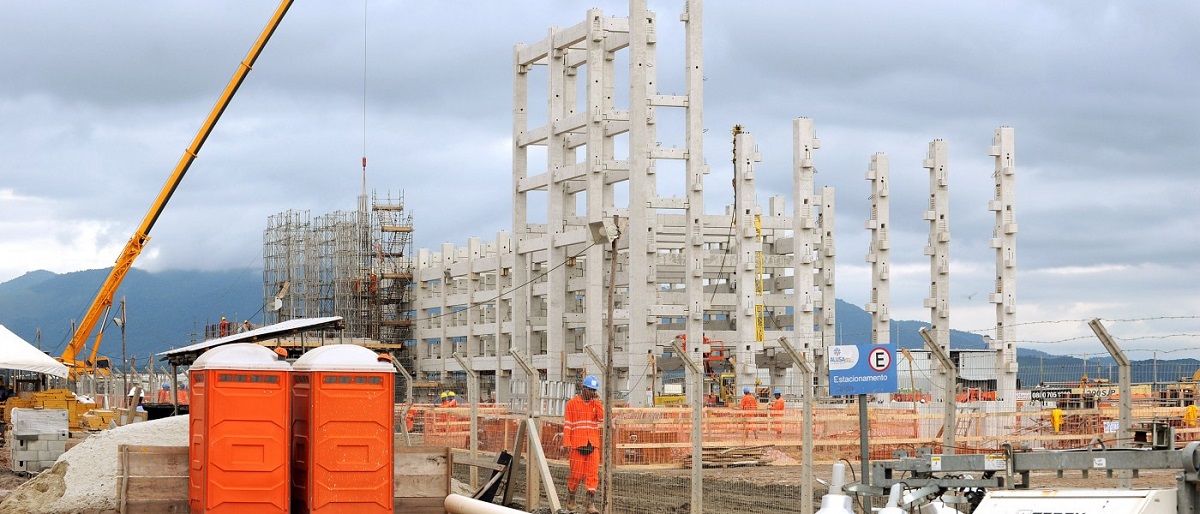
Divestment Plans in the Refining Sector Cause Petrobras to Reevaluate Agreement with the Chinese on Comperj Works
The agreement signed in October last year between Petrobras and the Chinese CNPC for the construction of the Comperj refinery in Itaboraí (RJ) is at serious risk of being misaligned with the line of reasoning of the president of the Brazilian state-owned company.
It is known internally that the new model to be adopted is one of divestments and reduced participation in the refining sector, and the pre-agreement with the Chinese, signed under the management of former company presidents, Pedro Parente and Ivan Monteiro, is now at odds with what the current president, Roberto Castello Branco, believes.
Under the agreement with the Chinese, CNPC would hold 20% of the joint venture to be formed for the completion and operation of the first train (module) of the Comperj refinery, which will have a capacity to process 165,000 barrels/day of oil.
To date, the definitive agreement for the partnership has not been defined due to feasibility and planning studies that have been dragging on since July 2017.
-
A Brazilian city decided to purchase a piece of the Atlantic Forest with more than 153,000 square meters, and owners of preserved areas will be able to submit proposals to transform the forest into a conservation unit.

-
Brazilian siblings aged 11 and 7 read 240 books in just one year and caught attention on social media: while many children spend hours on screens, they turned their family’s routine into an example of reading, discipline, and curiosity.
-
The legendary oak that, according to the story, hid Robin Hood from the Sheriff of Nottingham, died at the impressive age of 1,200 years in England, and the first chilling sign of its end was that no leaves sprouted on the tree this spring.

-
While the world looks at forests, the UN warns that the Earth is also threatened by the silent degradation of natural grasslands and savannas, ecosystems that cover half of the planet, support billions of people, and can exacerbate water, food, and climate crises.


Roberto Castello Branco has already stated that he does not intend to sell small stakes in the refineries and that his view is that if he sells, he will sell 100%.
The original divestment project from the previous management of Pedro Parente provided for the sale of 60% of the regional hubs in the South and Northeast, but this will also be reviewed by the current president, who does not agree with that viewpoint and wants to define the new model still this semester.
The Comperj
On Monday (03/18) the president of the State-Owned Company and the governor of the state of Rio de Janeiro, Wilson Witzel, met to combine efforts in resuming the works of Comperj, and the governor stated that he would provide all necessary support.
Upon reaching an agreement on the resumption of the Comperj works, Petrobras believes it will need an additional two years to complete the construction, which is currently 80% finished and was interrupted in 2015.
The Comperj has consumed investments on the order of US$ 13 billion, and Petrobras has conditioned the resumption of works on the entry of a partner, as it is believed that around US$ 13 billion are still needed to finalize the project.
Today, Petrobras is solely in charge of completing the (UPGN) Natural Gas Processing Unit at Comperj and has already spent around R$ 1.95 billion on the project.
Petrobras aims to earn approximately US$ 40 billion from the sale of refining assets, and the idea is to keep only 50% control of this segment.





Be the first to react!