






 Portuguese
  Spanish
  4 min of reading
  1 comment


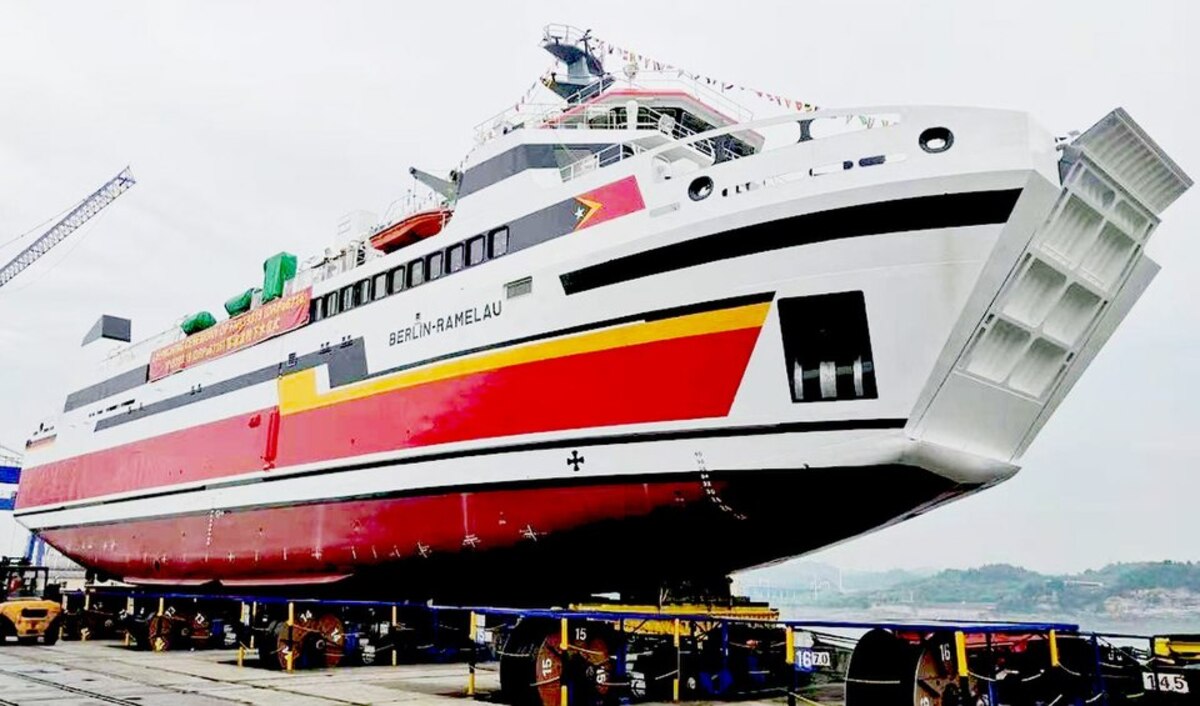

Beyond Just Pushing a Ship into the Water: Discover the Techniques, Risks, and Behind-the-Scenes of the Most Tense Moment in Shipbuilding — Launching the Vessel into the Sea
Few people wonder how a ship ends up in the water. After it’s finished, what happens? The answer lies in the launching techniques, critical moments filled with tension for engineers and builders.
The launch is the process in which a vessel finally meets the water after its construction. There are different ways to accomplish this, depending on the type of ship, the shipyard, and the conditions of the location.
Each Type Requires Extreme Care
Launching a ship is not just about pushing it into the water. Each type of launch has its risks and requires attention to technical calculations. Experienced professionals must evaluate the smallest details. If something goes wrong, the ship can capsize, damage structural parts, or even sink.
-
North Korean Fiasco: Launch of the Largest Warship Ends in Sinking

-
While giant ships still burn heavy fuel and the maritime sector races against climate targets, Maersk and Vale are starting to bet on ethanol as a new route to reduce emissions at sea.

-
China begins construction of the world’s largest LNG ship, a 344-meter giant capable of supplying 4.7 million homes for a month, carrying 271,000 m³ of gas, and placing QatarEnergy in the largest naval order ever recorded in world history.
-
China is designing a container ship with a thorium nuclear reactor that will operate for 40 years without refueling, and the 25,000-container giant from Jiangnan Shipyard will cross oceans without emitting carbon in an industry that burns 300 million tons of fuel per year.


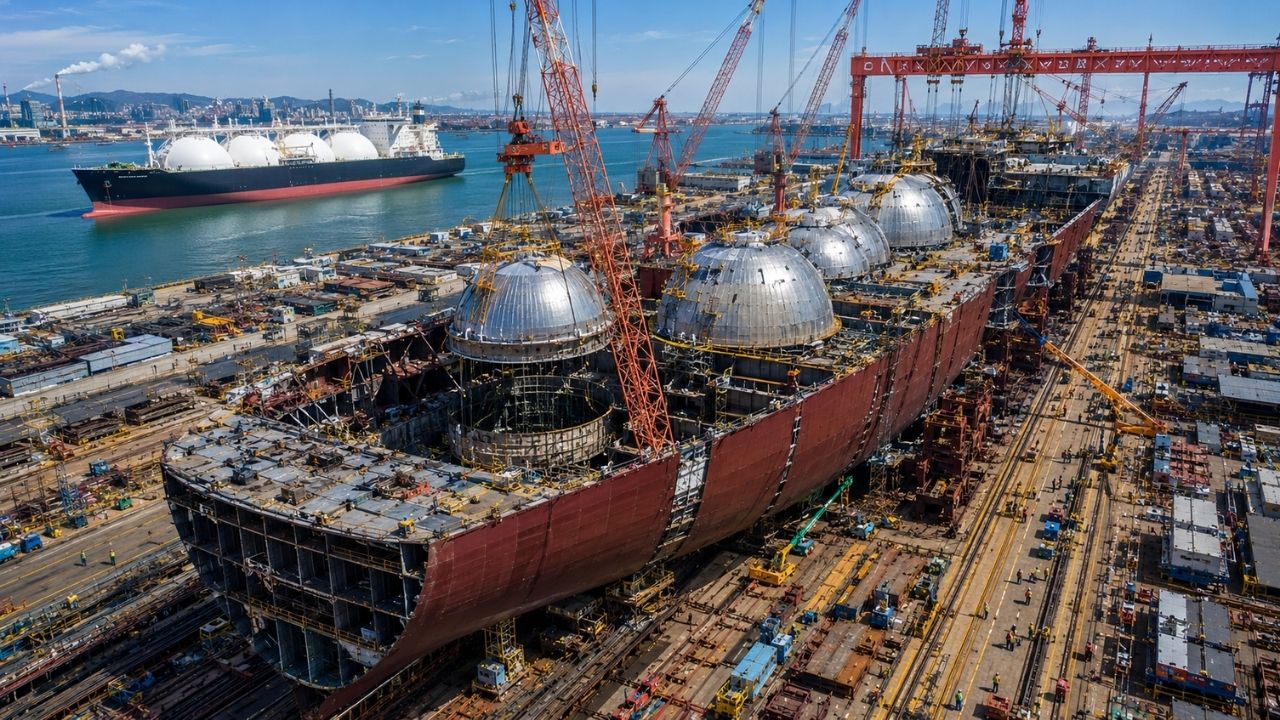

Side Launch: Simple Only in Theory
One of the most well-known methods is the side launch. The vessel slides down inclined rails until it touches the water, on its side. It seems simple, but it’s one of the most challenging in terms of structural design and stability.
During this type of launch, the hull experiences direct impact from the water, and the ship undergoes a pendulum movement until it stabilizes. For this to work, the weights must be well-distributed, exactly as planned in the design.
But this does not always happen. If the ship has been built with slight weight deviations or imbalances, it can behave unpredictably during the launch. There are documented cases where side launches did not go as expected.
Stern Launch: Sliding Forward
Another common technique is the stern launch, which uses the back of the vessel as the point of contact with the water. In this approach, the ship slides in the direction of its length.
There are two main variations of this method. The first is the slide launch. The ship is built on rails and secured by steel cables.
At the moment of launch, the cables are released, and the ship slides into the water. But it is necessary to ensure that the depth at the location is sufficient. If not, the propeller can hit the bottom and cause serious damage.
The second variation uses airbags. This technique does not require rails. Large air bags are placed underneath the ship. When inflated, they lift the hull. A tractor or tugboat is then used to pull the ship until it smoothly slides into the water. This is a practical and adaptable solution for different environments.
Dry Dock: A Different Way to Touch the Sea
Although not a true launching technique, the dry dock also takes ships to the water. It is a construction site with walls that prevent water from entering.
When the ship is ready, the barriers are opened, and the compartment fills with water. Thus, the ship floats and is ready to go.
This technique is considered one of the gentlest from a structural point of view, as it avoids strong impacts and sudden movements.
Floating Dock: Engineering in Balance
Another option is the floating dock. This is a structure with ballast tanks. When the time comes to launch the ship, these tanks are filled with water, causing the dock to slowly sink.
This allows the water to enter the compartment where the ship is located. The vessel then begins to float in a controlled manner.
This technique offers safety and precision, with minimal impact on the structure of the ship. Therefore, it is also widely used in constructions that require more care.
Closure: The First Contact with the Sea Is Never Simple
Launching a ship is a complex operation, full of variables. Each technique has its advantages, disadvantages, and risks. Whether using rails, airbags, dry docks, or floating docks, the moment the hull touches the water is always decisive.
The choice of method depends on the type of ship, the conditions of the location, and the experience of the professionals involved. And it is in this moment that the vessel ceases to be just a project and begins its journey across the seas.
With information from Blog da Engenharia.








Muito boa as explicações e informações .Fale mais desse assunto .