





 Portuguese
  English
  Spanish
  4 min of reading
  1 comment


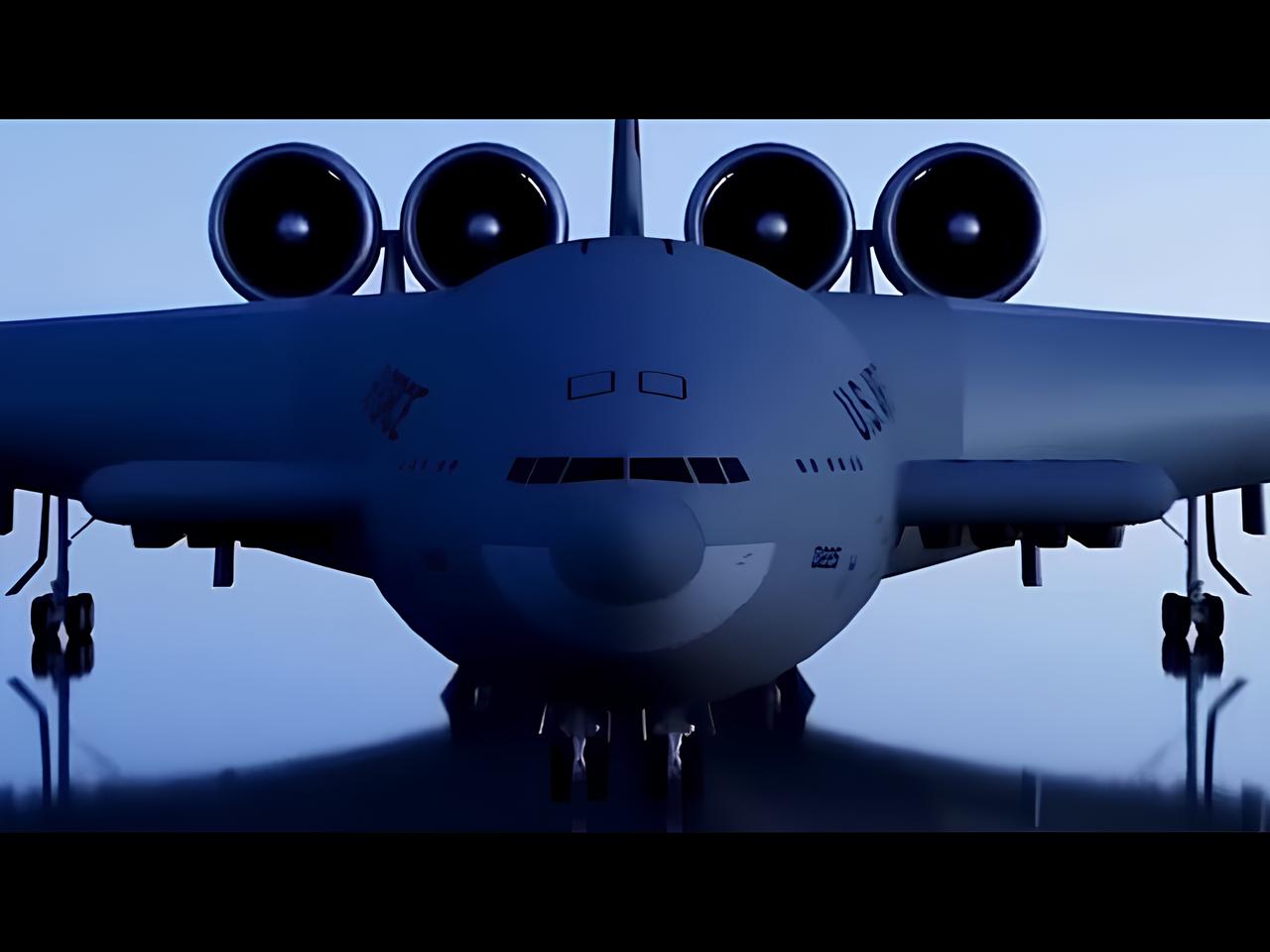


With 5,000 Tons, Over 1,100 Meters Wingspan, and Nuclear Propulsion, the CL-1201 Was the U.S. Project to Create an Armed “Flying City” During the Cold War.
During the tensest years of the Cold War, when the United States and the Soviet Union competed for every technological advance as a matter of strategic survival, American engineers imagined something that today seems like science fiction: a colossal nuclear airplane, large enough to function as a permanent airbase in the skies. This concept was named Lockheed CL-1201 and, although it never went beyond the drawing board, reveals how far the logic of deterrence was willing to go.
The CL-1201 was not envisioned as a simple bomber or reconnaissance plane. The proposal was to create a self-sufficient air platform, capable of staying airborne for weeks or even months, patrolling strategic areas of the planet without the need to land.
An Unprecedented Scale in Aviation
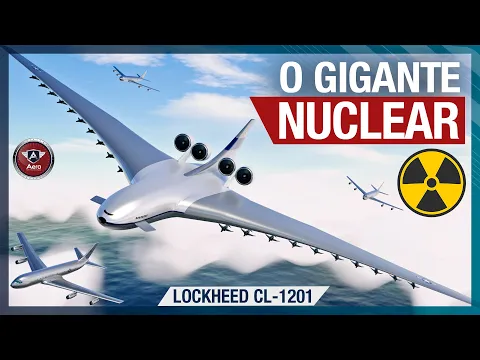
The numbers associated with the CL-1201 impress even by today’s standards. The project envisioned an aircraft with wingspan exceeding 1,100 meters, almost four times larger than that of an Airbus A380. The estimated weight was around 5,000 tons, far surpassing any aircraft ever built.
-
How to impress without investing? Brazil wants to show military strength to the world and discuss more money for defense, but a detail of R$ 601 per person in the budget reveals an uncomfortable bill and places the country behind 4 South American neighbors.

-
Brazilian Navy disables 50 dredges in the Amazon, causing millions in losses to illegal mining operating in the rivers of Amazonas.
-
With 360-degree radar, the U.S. Navy receives its 70th E-2D Advanced Hawkeye aircraft and reinforces air surveillance on aircraft carriers.

-
The MQ-25A Stingray doesn’t fire a single shot — but the drone that made its first flight in April 2026 will double the range of the entire U.S. Navy fighter fleet.





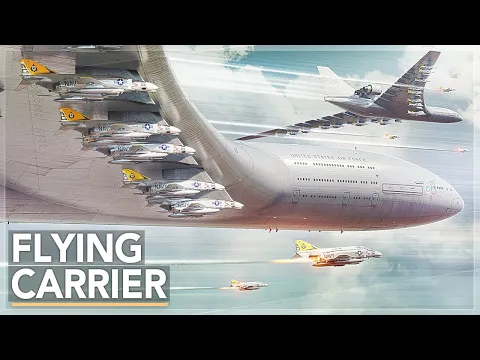

To sustain something of this magnitude, the aircraft would have multiple sets of wings, dozens of wheels on the landing gear, and an internal structure comparable to that of a warship. Practically speaking, the CL-1201 would be closer to an artificial flying island than a conventional airplane.
Nuclear Propulsion to Stay Airborne Indefinitely
The heart of the project was nuclear propulsion. Instead of relying on traditional fuel, the CL-1201 would be powered by an onboard nuclear reactor, capable of generating enough energy to keep the aircraft in continuous flight for extremely long periods.
This idea did not come out of nowhere. At the same time, the U.S. was studying smaller nuclear airplanes under the ANP (Aircraft Nuclear Propulsion) program. The CL-1201 represented the pinnacle of this logic: if an airplane could stay in the air practically indefinitely, it would become immune to ground preemptive attacks and ensure a constant presence in any theater of operations.
CL-1201: An Armed Airbase in the Skies
More than just flying, the CL-1201 was designed to fight. Studies indicated that the aircraft could carry dozens of fighters, drones, and support aircraft, launching them mid-flight and receiving them back like an aerial aircraft carrier.
Moreover, the structure would enable the transport of long-range missiles, gigantic radar systems, and command centers capable of coordinating operations on a continental scale. In practice, the CL-1201 would function as a flying headquarters, out of the immediate reach of ground attacks.
Imagined Strategic Advantages
From a military point of view, the logic was clear. An aircraft of this type could:
– maintain constant surveillance over strategic regions
– launch attacks without warning
– survive an initial enemy nuclear strike
– reduce dependence on vulnerable fixed bases
In a total war scenario, the CL-1201 would be a key piece of extreme deterrence, symbolizing technological power and continuous responsiveness.
The Risks Ignored by the Paper
But the same grandeur that made the project attractive also made it dangerous. A nuclear reactor flying over populated areas posed enormous risks. Any structural failure, collision, or crash could result in a radioactive disaster of incalculable proportions.
Furthermore, protecting such a large aircraft against missiles, sabotage, or mechanical failures would be a colossal challenge. Unlike an aircraft carrier at sea, the CL-1201 would not be able to simply “stop” in case of an emergency.
Costs and Viability Beyond Reality
Another decisive factor was the cost. Building, operating, and protecting such a large aircraft would require astronomical investments, along with unprecedented infrastructure for runways, hangars, and maintenance. Even by U.S. military standards, the project quickly proved economically unfeasible.
With the advancement of intercontinental ballistic missiles, nuclear submarines, and surveillance satellites, the strategic logic changed. It became more efficient to distribute military power across multiple smaller platforms rather than concentrating it in a single flying colossus.
Why the CL-1201 Never Left the Drawing Board
The project was ultimately shelved in the conceptual phase. No prototypes were built, and the CL-1201 entered history as one of the most extreme examples of technological ambition of the Cold War.
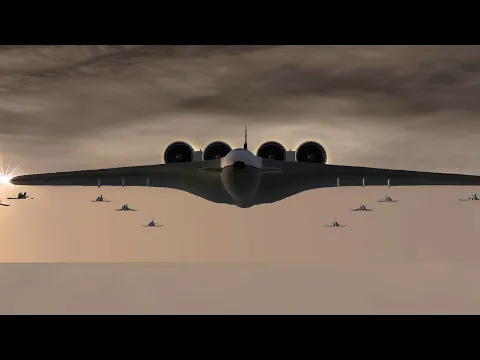
Even so, it should not be seen merely as a delusion. The CL-1201 reveals how, at certain historical moments, engineering was pushed to the limit to meet a logic of fear, deterrence, and absolute supremacy.
A Symbol of an Era Without Limits
Today, the CL-1201 is remembered as a symbol of a time when almost everything seemed possible and justifiable in the name of national security.
It never flew, but it helps to understand how the arms race led engineers and strategists to imagine machines that still challenge the limits of physics and reason.
In a world that is again discussing hypersonic weapons, stratospheric platforms, and warfare in space, the CL-1201 stands as a powerful reminder: not every grand idea needs to leave the drawing board to shape the military thinking of the future.









Isso mostra que haviam megalomaníacos em ambos os lados da guerra fria