Portuguese
  Spanish



Researchers Develop Photovoltaic Concrete With The Power To Revolutionize Sustainable Buildings. The Product Can Generate Solar Energy With UV Rays.
A solar energy has been expanding, just like its derived technologies, and currently represents one-third of the world’s installed renewable energy, becoming increasingly accessible. This time, researchers developed a photovoltaic concrete that generates electricity from solar radiation. The concrete was developed in Mexico, resulting from the doctoral research of Orlando Gutiérrez Obeso and Euxis Kismet Sierra Marques. The creators graduated in Advanced Technology at the Azcapotzalco Center for Research and Technological Innovation, part of the National Polytechnic Institute (IPN).
Learn How The Use Of Photovoltaic Concrete Can Expand The Sustainable Construction Market


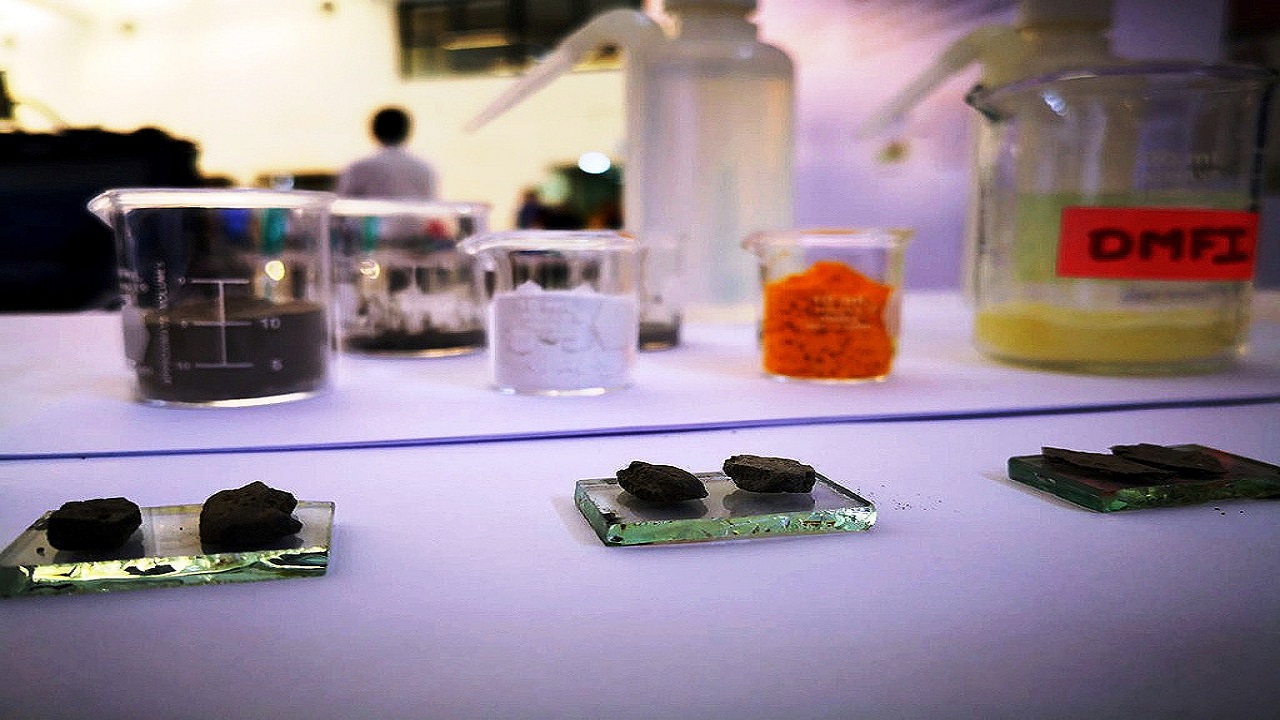
To manufacture photovoltaic concrete, the process developed by the scientists uses perovskite, which is a calcium and titanium oxide mineral and a more cost-effective alternative compared to silicon solar cells.
Using high-energy milling, the inventors were able to develop a cement powder at the nanoscale, with particles smaller than 100 nanometers. By synthesizing the materials to develop a perovskite and by binding them to titanium oxide, they developed Gratzel cells, that is, organic solar cells that were invented in the 1990s.
-
Facing high rent, couple transforms parents’ garage into a fully functional apartment, creating a complete home at a fraction of the market cost.

-
OnePlus N6 Smartphone to Launch in India with 8,000mAh Battery and 45W SuperVOOC Charging, Lasting Up to Three Days

-
Scientists Plan to Release Air Bubbles Underwater to Protect Antarctica’s “Doomsday Glacier” from Melting

-
Chinese R6000 Drone Combines Airplane and Helicopter Features, Carries Up to 12 People for Multiple Missions




The final result is a solid block of concrete mixed with organic elements that make it possible to capture solar radiation and generate electricity. With 38% of CO₂ emissions linked to energy coming from construction, the project emerged to meet the demands for more environmentally friendly building materials.
Sustainable Buildings Will Be Able To Generate Their Own Solar Energy
The scientists hope to develop a concrete that meets various structural criteria, so that the technology can be used in the construction of sidewalks, foundation slabs, bridges, mobile device charging docks, and architectural lighting devices, among various other uses in new sustainable buildings.
Euxis recently stated in an interview with a local Mexican channel that the material not only absorbs solar energy, but also artificial light, like UV rays, for example, making it more effective when not under direct sunlight.
The duo of scientists also claims that, in the future, buildings will be able to generate their own solar energy sustainably. Gutiérrez highlights that studies are underway to make this possible. The theoretical principle already exists and works, and the solar cells known today, which are on the market, were in the lab four decades ago.
Construction Industry And Solar Energy Market Go Hand In Hand
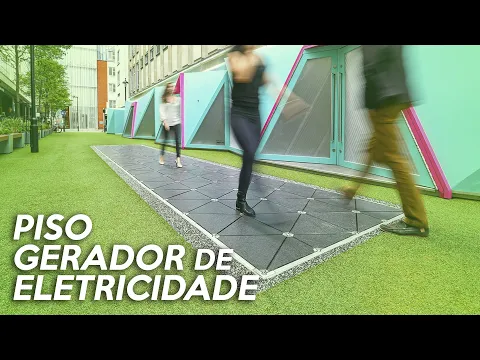
The Hungarian company Platio has developed and is already selling since 2021 a solar energy floor for houses with the capacity to generate electricity that can be fed back into the consumer’s power grid. The company claims that only 20 m² of solar flooring is needed to meet the annual electricity consumption of an average family.
In addition to generating energy for the power grid, another way to use the product is to power electric cars. Tests have already been conducted in a shopping center in Hungary, where 6.47 m² of the flooring was installed and connected to a small charging station.
The aim was to charge the smartphones of employees or customers. To further confirm the efficiency of the solar energy-generating product, it has been applied in squares, maritime infrastructures, and parks; however, it is oriented towards residences, being used on balconies, patios, terraces, and sidewalks.
The design of the flooring features colors for the tiles, such as black, blue, red, and green. And, although the product may seem slippery, Platio claims that the anti-slip level is high, in addition to having very simple maintenance compared to panels that are mounted on roofs.