Portuguese
  Spanish


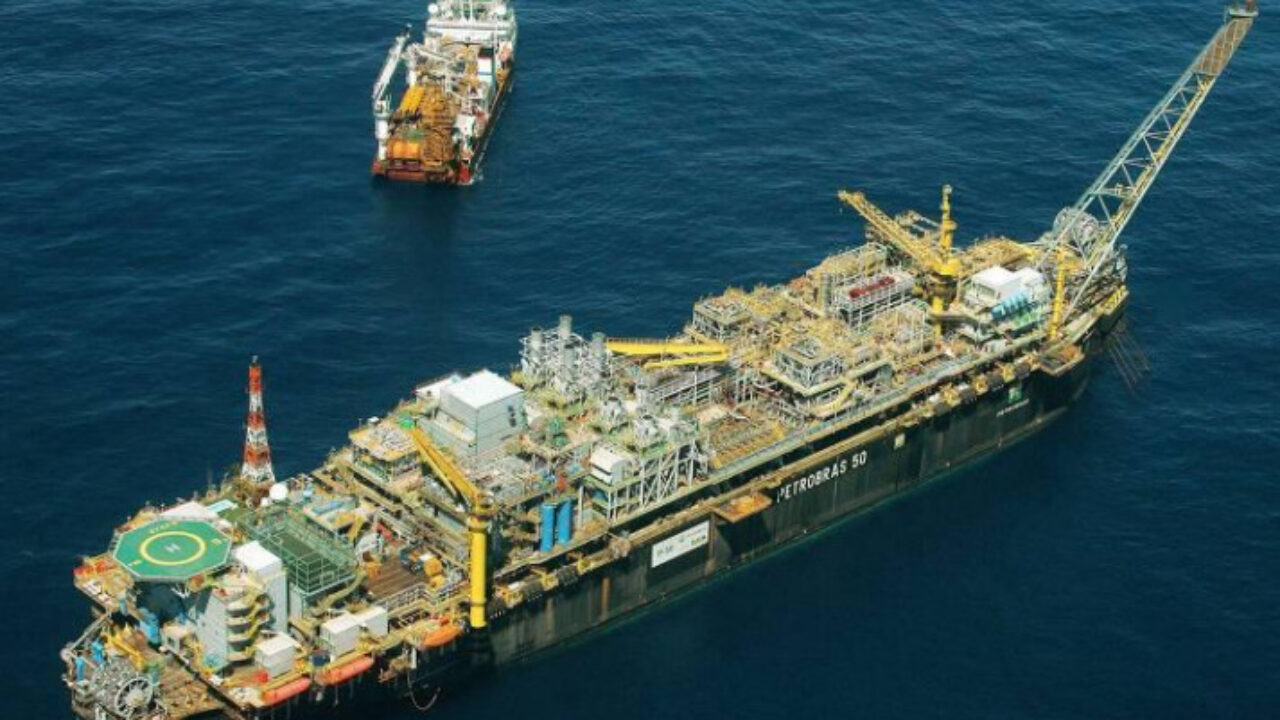

On the last Thursday, the 8th, Petrobras gave up its plan to relinquish the Albacora field, which was being negotiated with Prio. In a statement, the state-owned company claims that despite significant mutual efforts, it was not possible to find conditions that reflected the valuation of the asset for Petrobras.
At the same time, Prio stated that while Albacora is an asset with great potential, the company believes that a possible transaction with values above those already offered would not guarantee returns nor bring the appropriate risk profile for this project. The community was informed on the same day of the decision to withdraw. Furthermore, according to the statement, Petrobras will continue its revitalization project for the Albacora Field, located in deep waters in the Campos Basin, to develop production from the Forno reservoir. According to Petrobras, the project includes hiring a new platform for the field.
Finally, both companies stated that the decision to terminate the transaction does not affect the sale of the Albacora Leste field to Prio by Petrobras, which is still being evaluated by the ANP (National Agency of Petroleum, Natural Gas and Biofuels). It is estimated that the purchase will be approved in the coming months. In a statement, Petrobras affirmed that it remains fully committed to its active portfolio management program. According to them, it is essential to emphasize that the company continues to periodically reassess its portfolio of assets, continuously identifying which should be divested, and which ones should be the focus of the state-owned company’s investments. Simultaneously, Prio stated that the company reinforces its commitment to financial discipline, in addition to capital allocation at rates of return that reflect its objectives of generating value for its shareholders and clients.
Thus, Petrobras will continue the revitalization project for the Albacora Field, which also includes the development of production from the Forno reservoir, located in the pre-salt area of Albacora.
-
Statkraft Brazil Earns Pro-Ethics Certification from CGU, Highlighting Commitment to Compliance, Governance, and Sustainable Renewable Energy

-
Despite Perceived Delays, Rio de Janeiro’s New Stock Exchange on Track for Launch by Early Next Year

-
Constellation Earns 2025–2026 Pro-Ethics Seal from Brazil’s CGU, Stands Out as Only Offshore Drilling Company Recognized

-
Brazilian Soft Drink Company Dolly Faces Billion-Dollar Bankruptcy Battle Over $3 Billion Debt Accumulated Over Two Decades


Sale of Albacora Indicates Negative News for Prio, But Petrobras Remains Firm in Its Decision
Various industry experts evaluated the news as negative, especially for Prio, as it removes from the company a potential advantage for the investment test, even though it has not yet been incorporated into the base case. At the same time, the situation does not hinder Prio’s growth avenues, despite Albacora. In this regard, Itaú BBA’s research team evaluated the announcement of the withdrawal as neutral, as investors were already assigning a high probability of a negative outcome for the operation due to the slow pace of negotiations.
On the other hand, the bank believes there is a positive indication by eliminating the uncertainty this reality posed on the company’s prospects, enabling the stock to respond appropriately to the organic growth it has been showing from its revitalization plans for the region. Thus, BBA reiterated its outperform rating — equivalent to buy — for Prio, with a target of R$45, representing a huge potential appreciation of 64% compared to the previous closing of R$27.56.
Additionally, analysts from Itaú BBA emphasize that the fair value estimate did not consider the Albacora Field and encompasses the expected value creation from the ongoing revitalization of the Frade Field, along with the future development of the Wahoo and Albacora Leste Fields. Following the announcement, Bradesco BBI highlighted that the value of the field in its target price for 2023 of R$49 per share was R$8 per asset, based on a considerably conservative assumption of the field reaching production of 80,000 barrels per day for a period of five years, marking 20kbpd in the first year.