Portuguese
  Spanish


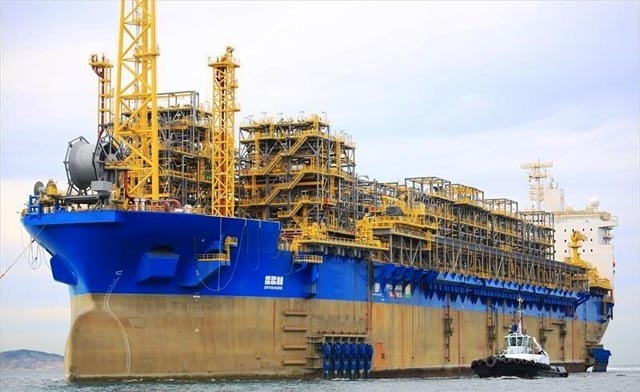

SBM Will Not Be Able to Meet All the Demand for FPSOs That Will Be Requested by Petrobras and Exxon for Development of Fields in Brazil and Guyana
Due to the significant expansion of oil production in deep waters, Petrobras and Exxon Mobil are competing for a limited number of large floating platforms. Petrobras Transfers the Delivery of Offers for the Chartering of the FPSO of Mero 3 to March.
According to the president of SBM Brazil, Eduardo Chamusca, the company will not be able to meet all the demand for FPSOs that will be requested for the development of fields in Brazil and Guyana by the oil companies.
-
Over 2,000 Tons of Discarded Fishing Nets Since 2020 Repurposed into Durable Caps, Fins, and Parts

-
Seals and Sea Lions Lose Habitat and Food as Climate Change Advances, Impacting Ice, Prey, and Coastal Communities

-
Brazilian Innovator Uses 3D-Printed Device to Cool Two Rooms with One Air Conditioner
-
China Uses 432 Robots to Move a 7,500-Ton Historic Building in Shanghai, Preserving Architecture While Creating Space for Underground Center


The American Exxon has a more flexible business model that accommodates the hiring of more than one vessel in replicated projects. The Brazilian oil company, on the other hand, has hiring limitations imposed by the State-Owned Companies Law.
“What is happening today is that all the oil producers will want FPSOs at the same time, and there won’t be enough companies to make them,” the executive informed in an interview from his office in Rio de Janeiro. “If you have many clients, at some point the FPSO manufacturers will become more selective,” Chamusca concluded.
Since the drop in oil prices between 2014 and 2016, the offshore production equipment industry has faced declining demand and excess platforms. However, the FPSOs used in ultra-deep waters are an outlier.
- Job and Internship Openings in Rio de Janeiro Today by Oceaneering
SBM and Modec are the only companies that lease the FPSOs that Petrobras and Exxon will need. The platforms can produce up to 240,000 barrels per day and cost up to US$ 2.5 billion each to build. The daily lease rates for the vessels range from US$ 400,000 to US$ 1 million.
After facing years of low demand, the company that in 2016 could not secure even one FPSO tender is now able to choose which contracts it wants to bid for from clients such as Petrobras and Exxon, marking a radical change in the scenario for SBM.
After a four-year ban (lifted in 2018) that prevented the company from signing new contracts with Petrobras, SBM managed to close a contract for the Mero field.
“The company that will succeed, as in any capitalist market, will be the one that has a more pragmatic business model, like an Exxon,” Chamusca said. “We don’t have a preferred client, but we do have a preferred hiring model.”
- Macaé Has New Job Openings Today by Ocyan for High School Graduates
According to the executive, Brazilian legislation requires Petrobras to use price as the main hiring criterion, while SBM prefers a business model that allows for project replication, reducing construction time. “Price is not always the best criterion,” he said.
Currently, SBM has three platforms under simultaneous construction. Under ideal hiring conditions, allowing project rotation between departments, the number could be tripled to nine, he stated.
Chamusca reports that Brazil is responsible for about one in four of the 200 FPSOs in operation globally. The country is expected to account for half of the global demand after auctioning off several licenses for offshore exploration and production.
In 2020, Brazil is expected to auction six platforms, including for the giant Búzios field. “We cannot participate in six bids in one year; we will need to be selective,” he concluded.