Portuguese
  Spanish


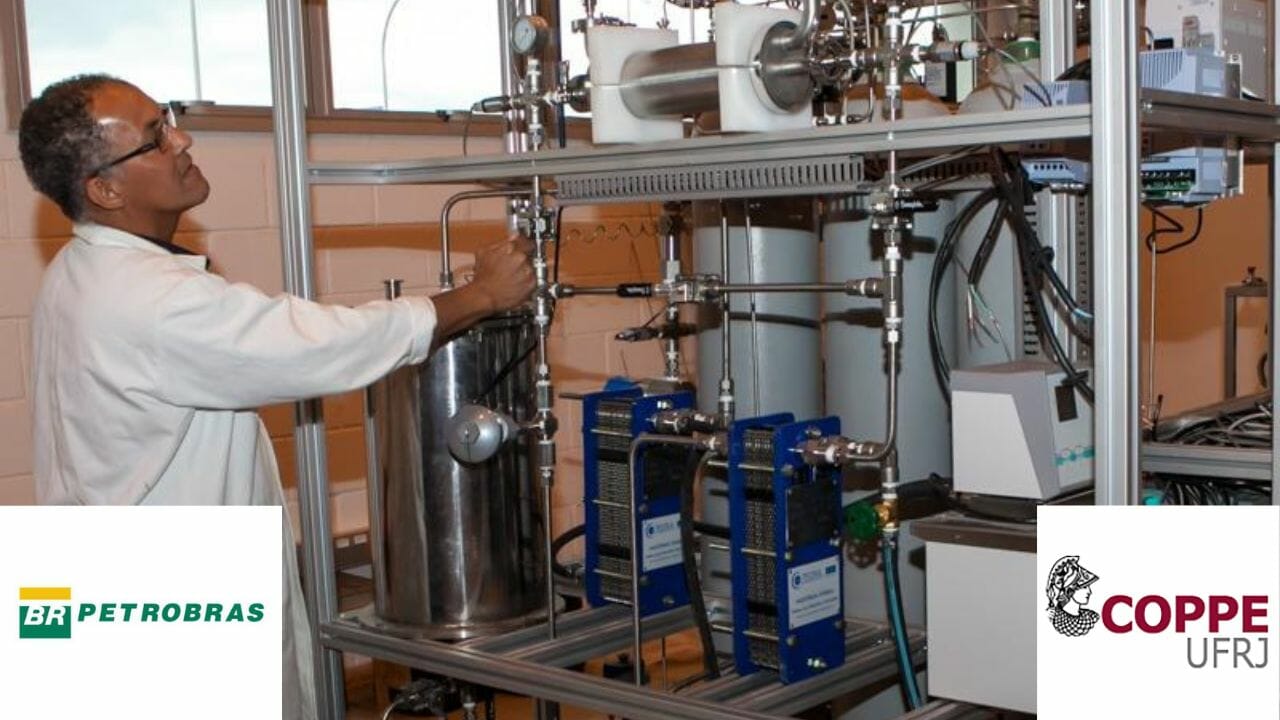

Partnership Invests in Ion Liquid Membranes to Improve Efficiency and Stability in CO² Separation from Natural Gas
Partnership between Petrobras and Coppe/UFRJ promises to revolutionize CO² separation in pre-salt platforms, with an investment in national technology that could be a milestone for the gas industry.
In a significant step for the oil and gas industry, Petrobras and the Center for Excellence in Natural Gas (CEGN) of the Alberto Luiz Coimbra Institute of Graduate Studies and Research in Engineering (Coppe/UFRJ) are working together on the development of innovative membranes.
These membranes, which use ionic liquids, aim to separate carbon dioxide from natural gas extracted from oil platforms in the pre-salt.
-
In Brazil’s backyard: Tesla, by Elon Musk, announces official operations in Uruguay, where electric vehicles already make up 20% of new cars but still leaves out the largest market in the region.

-
This Mars rover may finally reveal if life ever existed on Mars.
-
A nearly 70-year-old Chinese inventor has registered 90 patents and created a device that stores water in the roots, helping seedlings survive drought while trying to transform the arid slopes of the Loess Plateau into green areas without relying on heavy irrigation.

-
Researchers want to change the way of producing rare earth magnets, reducing purification steps and making better use of the elements found in Swedish deposits.


A New Milestone in the Gas Industry
According to Professor Cristiano Borges from Coppe/UFRJ, the technology is crucial for natural gas to be transferred from offshore platforms to the mainland. Currently, it is necessary to reduce the concentration of CO² in natural gas to about 3%. The development of these membranes addresses this need, with the advantage of having superior performance and stability, already proven on a laboratory scale.
“CO² capture in hydrocarbon streams, particularly from natural gas, remains a priority for the oil and gas industry”, Borges states. The partnership aims to tackle the challenge of high CO² levels, which can reach up to 70% in pre-salt sources.
Nationalism and Innovation
Petrobras has always sought to enhance process control through national technology. Currently, few international suppliers offer polymeric membranes for this purpose. Therefore, the partnership with Coppe/UFRJ comes at a good time, providing a more efficient and autonomous solution to the problem.
“It’s a matter of space. During gas extraction from reservoirs at 5,000 meters deep, as it is transported to the surface, it undergoes depressurization. At very high pressures, there is an increase in the volume of the polymer that forms the membrane, and it loses mechanical resistance and separation efficiency”, explains the professor.
Ion liquids, due to their low volatility and good thermal stability, are the protagonists in this new separation method. According to Borges, “some protic ionic liquids, based on ethanolamines and carboxylic acids, have shown high selectivities for CO² absorption.”
Contribution to Decarbonization
In addition to the technological advancement, the new technology can significantly contribute to reducing carbon emissions in the offshore oil extraction process. “One way to reduce CO² emissions is to remove it from natural gas and reinject it into the reservoir”, concludes Borges.
Information from Coppe/UFRJ.