Portuguese
  Spanish


Billion-Dollar Trade And Imminent Sanctions Against Moscow Cause Immediate Rise In International Oil Prices
The global oil market started the week with a sharp increase.
The reason was the announcement of a robust trade pact between the United States and the European Union, revealed on Sunday (28).
This was followed by an ultimatum from U.S. President Donald Trump to Russia.
Both events combined drove the prices of Brent and WTI crude oil up on Monday (29).
This signals a possible reorganization in the global energy supply chain in light of rising geopolitical tensions.
Prices Rise With Announcement Of EU’s Billion-Dollar Purchase
In immediate response to the new agreement, Brent crude rose 2.34%, reaching US$ 70.04.
This contract is traded in London for delivery in September.
Simultaneously, West Texas Intermediate (WTI), a benchmark in the United States, advanced 2.38%, priced at US$ 66.71.
According to Gregory Brew, an analyst at Eurasia Group, the market reacted positively to the tariff stability between the two economic powers.
During an official meeting in Scotland, Donald Trump and Ursula von der Leyen announced a trade pact.
The President of the European Commission and the U.S. President announced 15% tariffs on European products exported to the U.S.
Prior to the agreement, exporters feared a fee of up to 30%, set to take effect on August 1.
This early resolution reduced uncertainties and bolstered optimism in the markets.
-
Oil production grows in Rio, but reserve replacement raises a warning sign

-
Petrobras is expected to complete the drilling of the Morpho well in the Foz do Amazonas in August 2026, the first well in the Equatorial Margin, an oil frontier that the ANP estimates at more than 30 billion barrels and could redraw the map of Brazil.

-
Oil returns to the center of concerns with tension between the US and Iran

-
IEA reduces forecast for global oil demand in 2026 after impacts of the Middle East crisis


European Union Commits US$ 750 Billion In Hydrocarbons
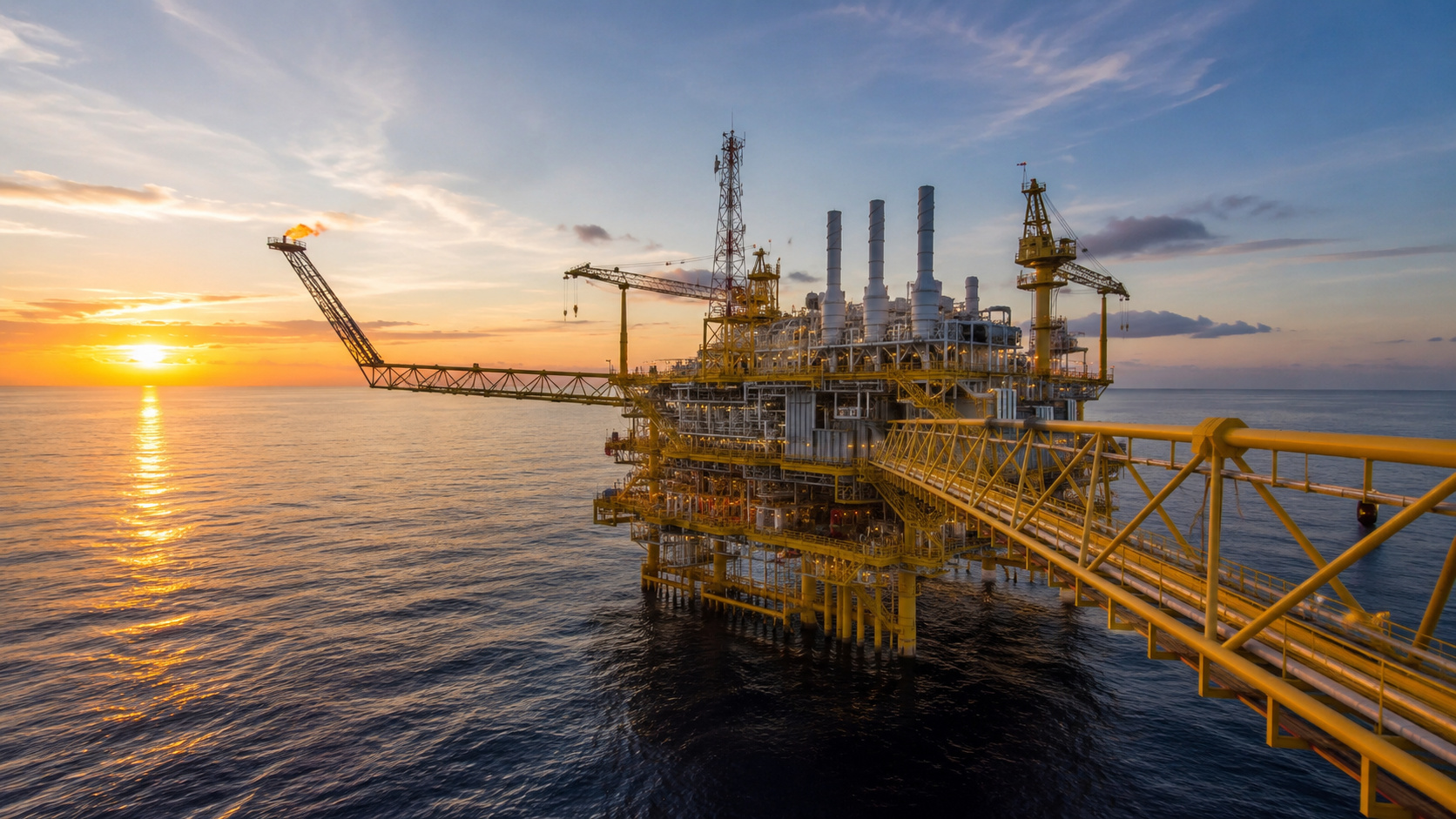
In addition to tariff relief, the pact establishes that the European Union will purchase US$ 750 billion in hydrocarbons from the United States over the next three years.
The volume includes natural gas, oil, and nuclear fuels.
According to Robert Yawger from Mizuho USA, this massive purchase represents a strategic energy repositioning by the EU.
The goal is to reduce its reliance on Russian energy.
This move strengthens transatlantic trade ties.
It also signals greater political alignment between the U.S. and Europe in light of the war in Ukraine.
The increase in demand for American oil helps justify the appreciation noted in the sector’s future contracts.

Tight Deadline For Russia Further Pressures Prices
Another factor that significantly contributed to the rise in prices was the new ultimatum given by Trump to Russian President Vladimir Putin.
The American leader stipulated, on Monday (29), a new deadline of “10 or 12 days” for Moscow to end the conflict with Ukraine.
If not, severe new sanctions will be imposed.
These sanctions will target not only Russia but also countries and companies that continue to use Russian oil.
This declaration raised the alert in the international energy sector.
The risk of expanded sanctions on Russian oil drives the immediate redirection of global demand.
This increases the search for alternative suppliers, mainly from the United States and the Middle East.
The escalation of the conflict aggravates volatility and reinforces the appreciation of the barrel.
China Also Enters The Equation Of The Global Market
As the United States and the European Union strengthen ties, negotiations between China and the U.S. are still ongoing.
Additionally, the third round of talks started on Monday (29) in Stockholm, marking another joint effort to reduce tensions.
As a result, China, the world’s largest importer of crude oil, continues to play a crucial role in balancing global supply and demand.
According to Robert Yawger, any eventual failure in the talks could certainly trigger an immediate demand destruction in China, generating spillover effects in the global market.
Consequently, this would negatively affect global consumption and significantly pressure prices again.
However, as long as the atmosphere of cooperation between the U.S. and Europe persists, the general trend will still be upward in prices.
If the deadlocks with Russia continue, the energy markets, in turn, should remain under sustained volatility.