Portuguese
  Spanish


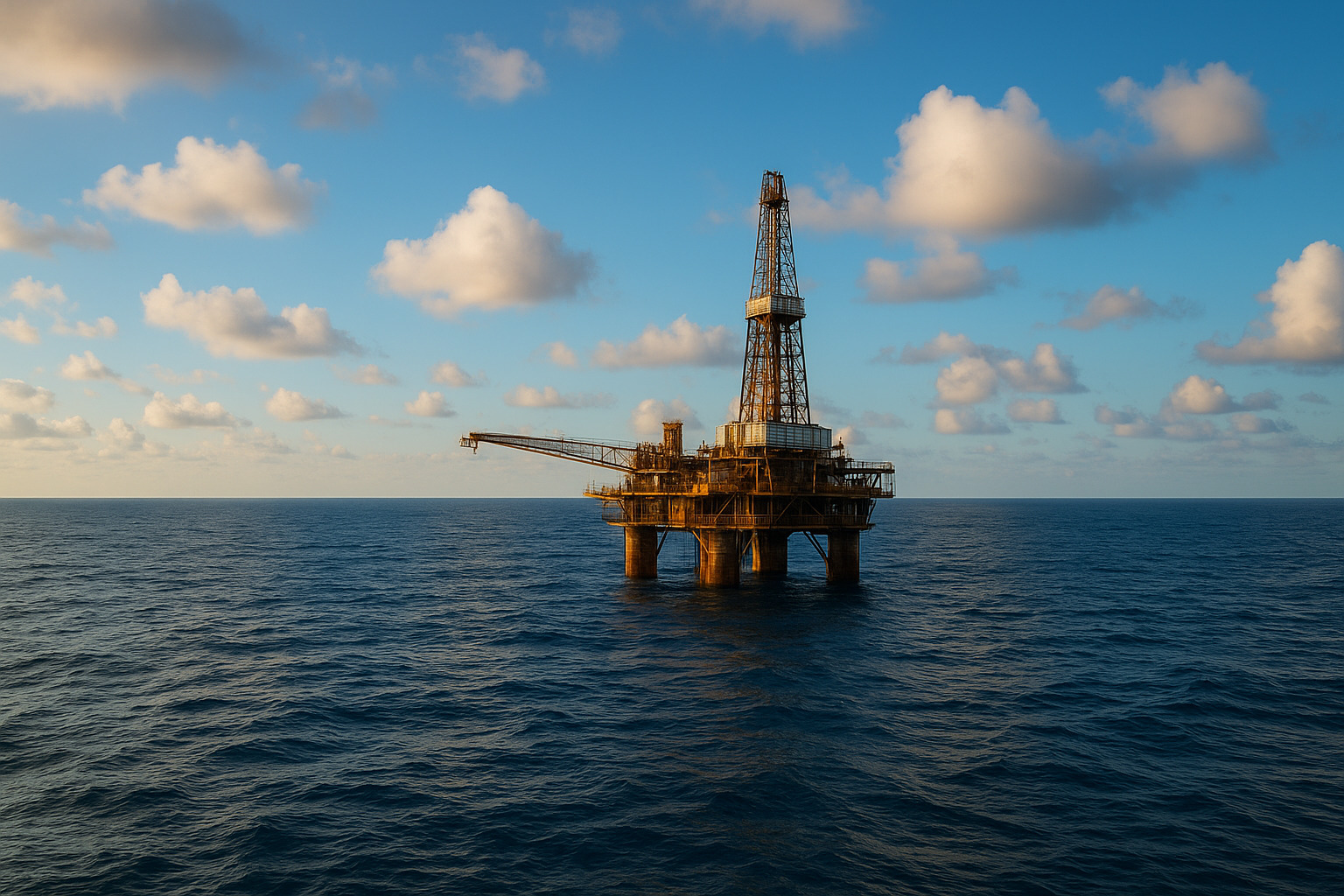


Oil Closes Lower Amid Expectations of Increased Global Supply Pressuring Prices and Reflecting the Delicate Balance Between Demand and Production.
The price of oil has always served as one of the most sensitive indicators of the global economy. Therefore, it directly influences everything from fuel costs to investments in energy and infrastructure.
Recently, oil has closed lower as concerns arise over a possible oversupply in the international market.
This movement illustrates how the dynamics of supply and demand, along with geopolitical factors, continuously shape the global oil sector.
-
Qantas and Airbus Invest in Company Aiming to Convert Unsorted Household Trash into Jet Fuel

-
Brazil’s ANP Opens 86 New Oil Blocks in the Equatorial Margin, Expanding the Amazon River Mouth Frontier

-
OPEC+ Boosts Oil Supply by 188,000 Barrels per Day in July 2026, Leading to Price Drop from $112 to $89 per Barrel in Under Two Months

-
TotalEnergies Signs 20-Year Deal to Purchase 2 Million Tons of LNG from Alaska, Boosting Project Viability



History and Impact of Oil Prices
Since the 1970s, when the first major oil crisis occurred, the market has learned that any significant change in production or international conflicts causes immediate impacts on prices.
During that period, drastic production cuts by members of the Organization of the Petroleum Exporting Countries (OPEC) substantially increased barrel values, resulting in inflation and recession in several economies.
Therefore, although the current scenario is more complex, oil has closed lower amid signs that supply may exceed demand in the coming months.
The recent drop in prices occurred as traders closely monitored the actions of OPEC+, a group that includes oil-producing countries allied with the original organization.
At the same time, the expectation that the entity could increase its production by up to 2.2 million barrels per year raised concerns among investors and market analysts.
Historically, whenever OPEC+ signals an increase in production, prices tend to decline. This is due to the fear that greater supply will put downward pressure on values.
Additionally, the difference between types of oil, such as Brent and WTI, directly influences market behavior.
Brent, the international benchmark, reflects more global supply conditions, while WTI, produced in the United States, more closely tracks internal U.S. dynamics.
This distinction helps investors better understand price movements and the regional impacts of production decisions.
Geopolitical and Economic Factors
In addition to the strategic decisions of OPEC+, geopolitical factors continue to influence the market.
For instance, the tension between the United States and Russia remains a critical point.
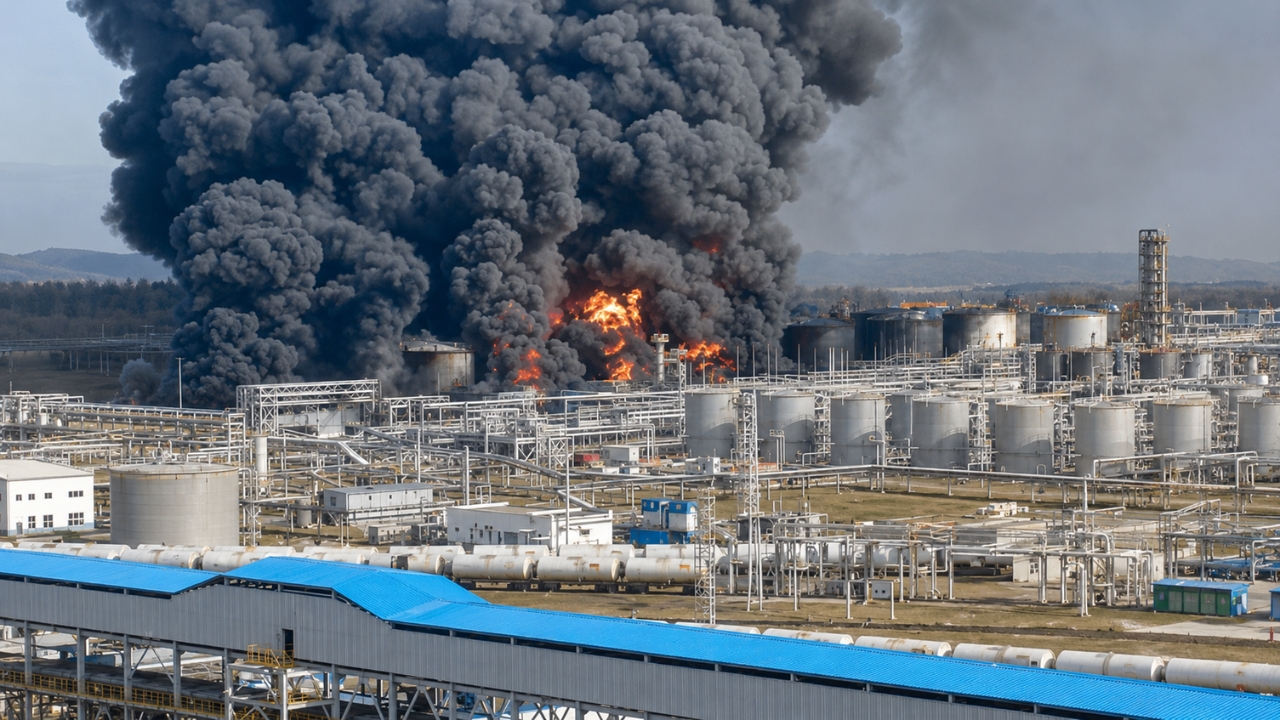
Recent Ukrainian drone attacks on Russian refineries have reduced up to 20% of the country’s refining capacity, thus demonstrating how conflicts directly affect the oil production and distribution chain.
However, even with these risks, oil has closed lower, suggesting that the market is reacting more to the expectation of greater supply than to isolated disruptions in production.
The global economy also plays an important role in this equation.
After the post-pandemic recovery period, demand for oil has stabilized, but, on the other hand, is not growing at the same pace as production, especially in countries investing in energy alternatives such as solar, wind, and biofuels.
Consequently, this delicate balance between supply and demand explains why barrel prices, both for Brent and WTI, fluctuate rapidly.
Recently, Brent closed with a 2.23% decrease, while WTI dropped 2.47%, reflecting these combined pressures.
The impact of oil closing lower is not limited to financial markets.
Transport companies, chemical industries, and governments that rely on fuel tax revenues feel the effects directly.
In fact, periods of falling oil prices reduce the revenue of producing countries, but benefit consumers and energy-importing industries.
This duality showcases the complexity of the market and how strategic production decisions and international policies affect different sectors.
Furthermore, countries that maintain strategic oil reserves can cushion the impacts of crises or production excesses, temporarily balancing prices and offering greater energy security to the domestic economy.
Volatility and Market Reaction
Another important point is the volatility caused by forecasts and expectations.
In the past, the oil market reacted intensely to rumors of war, trade agreements, or changes in production by major exporting countries.
Today, thanks to technology, real-time trading and global production monitoring make reactions quicker and more precise.
Therefore, even attacks on refinery facilities can have limited effects if the market believes there will be sufficient capacity to meet demand.
The history of oil also shows that crises and periods of abundance alternate.
During the 1980s, a significant increase in production by non-OPEC countries caused a prolonged drop in prices, hurting the revenues of major exporters.
In the 2000s, the rising demand from emerging economies, such as China and India, led to a surge in prices, reflecting the importance of external factors beyond OPEC+’s control.
These historical episodes help explain why the market reacts so sensitively to news about supply and demand.
Technological evolution also boosts production.
New extraction techniques, such as hydraulic fracturing and deeper drilling, rapidly expand production capacity, directly influencing oil closing lower when production exceeds demand.
Expectations of Supply and Energy Transition
In the current scenario, oil has closed lower because investors assess that global production may temporarily exceed demand.
Moreover, OPEC+ has signaled its intention to increase production while analysts believe that part of this expansion will be absorbed by storage or sales in emerging markets.
Thus, the oil sector heavily depends on the coordination among producing countries and the ability to adapt to sudden changes in supply.
The global energy transition adds another layer of complexity.
Countries that invest in renewable energies and reduce the consumption of fossil fuels decrease long-term pressure on oil demand.
Therefore, even with increases in production, the market may not react with rising prices, consolidating downward cycles, such as the one currently observed.
Additionally, the growth of the digital economy and electric mobility influences the demand for oil.
Electric vehicles, more efficient public transport, and carbon reduction policies in major cities reduce global dependence on fossil fuels, putting pressure on prices even in scenarios of increased supply.
A Market in Constant Adjustment
In summary, oil has closed lower amid expectations of greater supply, geopolitical tensions, and adjustments in global demand.
Historically, the oil sector has always shown cycles of highs and lows, strongly influenced by decisions from major producers, international crises, and technological advancements.
Thus, the recent drop in prices is not an isolated event but part of a sequence of adjustments that reflect the complexity of the global energy market.
Understanding these movements requires tracking both the history of the sector and current trends, including the growing importance of renewable energies and the coordination among producing countries.
Therefore, the dynamics of supply and demand, combined with political and economic factors, will continue to determine the trajectory of oil.
Thus, even in low moments, like the current situation, the sector maintains its central role in the global economy, influencing investments, energy policies, and strategic decisions worldwide.