





 Portuguese
  English
  Spanish
  3 min of reading
  0 comments


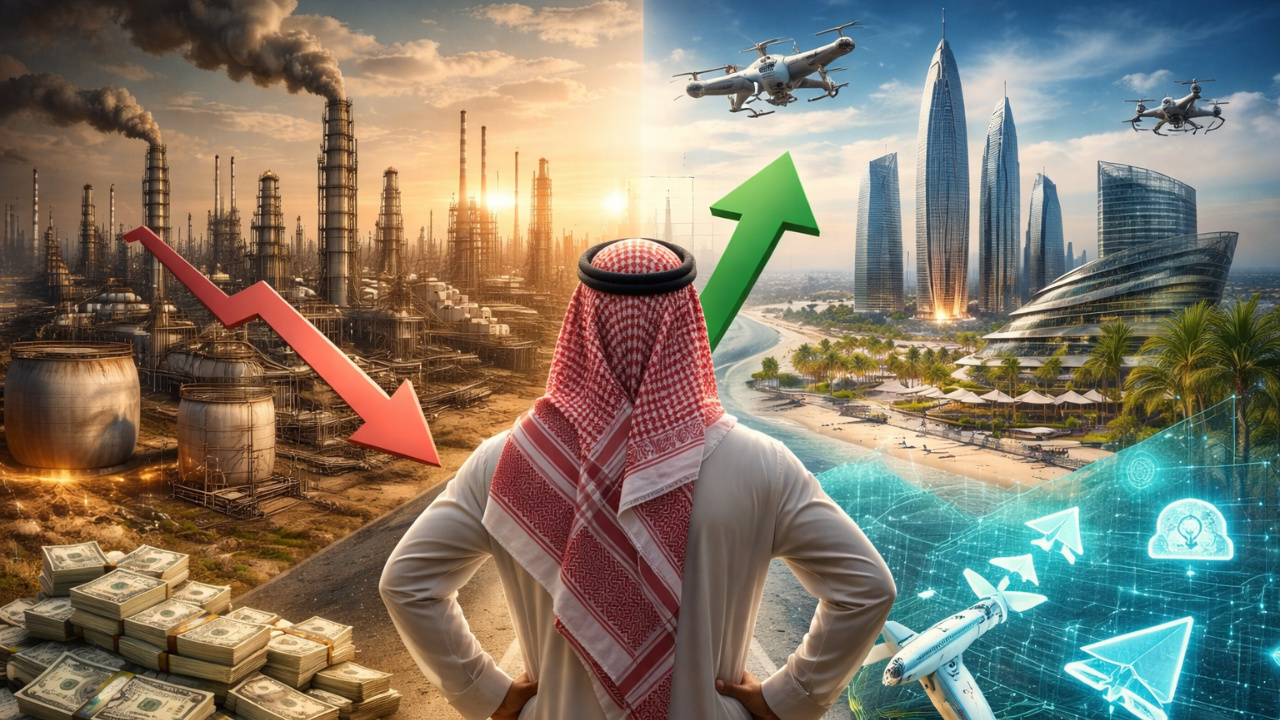
Pressed By The Fall In Oil Revenues, Saudi Arabia Revises Its Economic Strategy And Bets On Tourism, Technology And Private Investments To Avoid A Billion-Dollar Deficit.
Even trying to distance itself from the dependence on oil, Saudi Arabia remains bound to the ups and downs of the energy market. In recent years, the country has made significant investments to change this scenario.
However, the drop in oil prices and the increase in public spending have opened a gap in the government’s accounts, forcing an urgent revision of the famous Vision 2030.
At the same time, Saudi authorities admit that the rapid pace of investments needs to be adjusted. Therefore, a new strategy for the next five years is already being devised.
-
Farmer drills well in Ceará in search of water, accidentally finds crude oil and sees million-dollar discovery hindered by a rule that completely changes the future of the site.

-
Family finds oil on a 49-hectare site in Ceará, but exploration has no timeline or guarantee of happening

-
When drilling an artesian well, a farmer wanted water but found oil: ANP confirms that the dark liquid found by a farmer on a site in Ceará is crude oil.

-
European stocks rise with oil drop after Trump’s remarks on Iran as investors monitor global tension




Government Admits Review And Cites New Areas Beyond Oil
During the AlUla Conference for Emerging Market Economies, Finance Minister Mohammed Al-Jadaan revealed that the government is discussing how to present this new phase of the economic plan to the public.
He cited tourism, manufacturing, logistics, and technology as the main focuses of the new phase, although he did not reveal timelines or details. The goal is to reduce dependence on oil, which still accounts for the majority of the country’s revenues.


Additionally, the International Monetary Fund is pressuring the government for more clarity. According to the IMF, billion-dollar projects, such as the stadiums for the 2034 World Cup, need more transparent explanations.
Vision 2030 Is Expensive And Faces The Weight Of Oil
The so-called Vision 2030 was created to transform the Saudi economy. However, the price is high. Estimates suggest that the plan could cost around US$ 2 trillion, including public and private investments.
Meanwhile, the volatility of oil has made it difficult to balance the accounts. Since 2022, the country has been running deficits because spending on diversification exceeds the revenues generated from energy exports.
Still, the government claims that these deficits are a strategic choice to maintain investments and avoid stalling growth.
Deficit, Debt And Bets In The International Market
For this year, the government expects that the deficit will decrease from 5.3% to 3.3% of GDP. However, Wall Street economists estimate that the shortfall may be greater.
As a result, Saudi Arabia estimates that it will need about US$ 58 billion in financing. Part of this amount will come from the sale of up to US$ 17 billion in international bonds.
“We have a fairly broad network of channels that we can utilize if we need more than planned,” Al-Jadaan stated.

Oil Still Drives Economic Growth
Despite all the plans to reduce dependence on oil, the energy sector has once again boosted the country’s growth. In 2025, Saudi GDP grew at the fastest pace in three years, thanks to OPEC+’s new production policy.
In other words, even when seeking other paths, the kingdom still directly relies on oil performance to sustain its economy.
Do you think it is possible to free oneself from oil after so long depending on barrels?



-

-

5 people reacted to this.