






 Portuguese
  Spanish
  4 min of reading
  0 comments


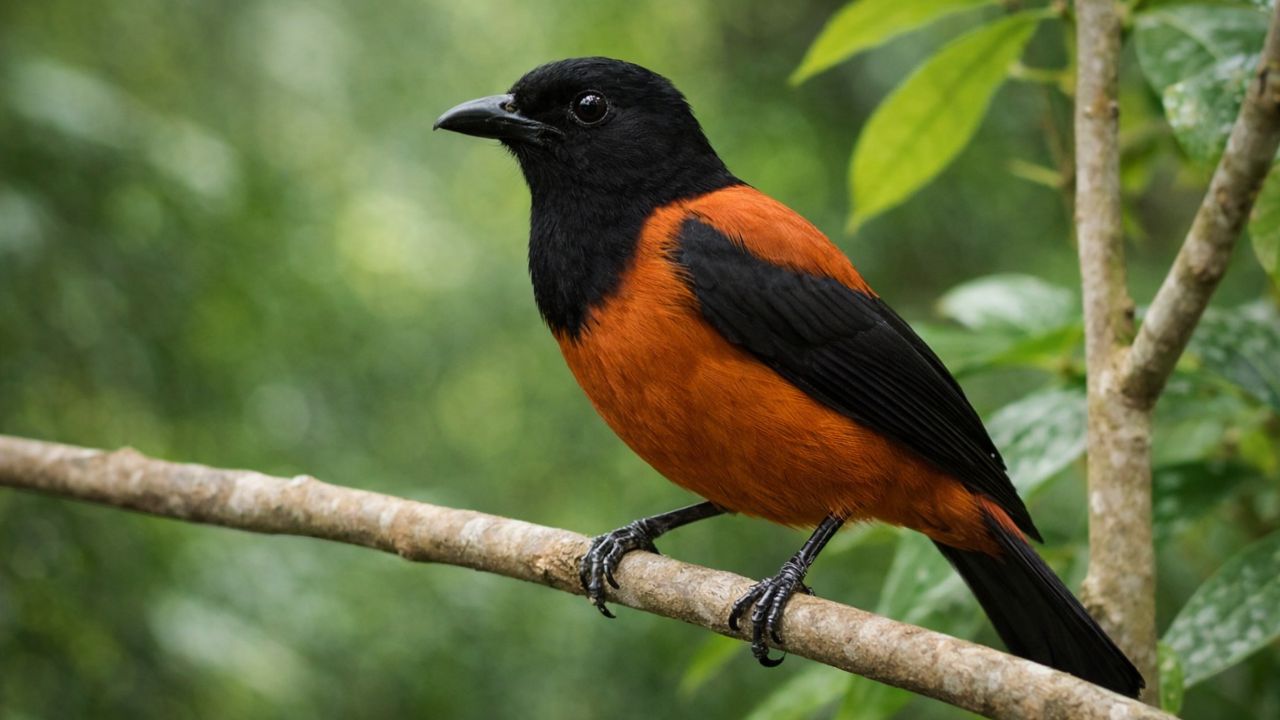
Researchers Investigate a Bird from New Guinea (Crowned Pitohui) that Carries a Poison More Deadly than Cyanide, Batrachotoxin. Understand the Discovery, the Mysteries, and What is Still Left to Reveal.
A bird that lives in the tropical rainforests of New Guinea continues to intrigue scientists more than three decades after being identified as a bearer of a poison more deadly than cyanide.
The bird, known as the crowned pitohui, carries batrachotoxin in its skin and feathers, a substance that is extremely lethal.
The phenomenon was discovered in 1989, when ornithologist Jack Dumbacher had direct contact with the animal during a scientific expedition, and to this day raises questions about evolution, chemical defense, and biological adaptation.
-
Engineering students create a low-cost 3D-printed wheelchair for dogs and help the paralyzed dog Bili, who was born without legs, walk again for R$ 448.

-
Man creates ingenious hack with pipes buried 2.4 meters deep and transforms snow into a tropical fruit greenhouse; system created by a retired mailman uses ground heat, produces oranges and lemons in Nebraska’s winter and has already turned into more than 700 kits sold.
-
An African fish is terraforming lakes by altering sediments, increasing turbidity, and changing the food chain: the silent advance of the tilapia Oreochromis niloticus

-
In the USA, thousands of people are being paid to wash dishes and clean the house with body cameras, every movement turning into data to train robots to imitate humans, in a new “digital gig” that could redefine the future of domestic work.



Crowned Pitohui: An Enigma Concentrated in the South Pacific
Although there are isolated records of toxic birds in North America and Europe, the vast majority of known species with this characteristic is concentrated in New Guinea, the second largest island in the world.
At least five species of pitohui and the blue-capped ifrit are part of this rare group, almost all of which carry batrachotoxin.
Until today, science has recognized very few birds with proven toxicity.
The European quail and the Eurasian hoopoe have poisons different from each other. Still, it is in New Guinea that the largest known concentration of poisonous birds in the world is found.
The Discovery of the Poisonous Bird that Began by Chance
The starting point of this story happened unexpectedly. During his first expedition to the tropical forests of the island in 1989, Dumbacher found a black and orange plumaged bird trapped. When attempting to free it, he ended up scratched.
“They are birds the size of a jay, with sharp claws and beaks,” says Dumbacher. When he brought his finger to his mouth, he felt something unusual: “My mouth started to tingle and burn, and then it became numb, which lasted until night.”
The reaction of the local guides left no doubt. They explained that the locals avoided the so-called “garbage birds” and only consumed them after removing the skin and preparing them carefully, a traditional knowledge that science had not yet documented.
Scientific Confirmation of the Poison
Intrigued, Dumbacher, then a graduate student at the University of Chicago, spent the next year collecting samples and seeking support from chemists to identify the substance responsible for the symptoms.
In 1992, he and his collaborators published their findings: the crowned pitohui carries batrachotoxin.
The compound is considered more lethal than cyanide and is among the most deadly toxins in the animal kingdom.
The same substance is found in certain poisonous frogs, such as the famous golden poison frog, which drew attention to potential similar evolutionary pathways among such distinct animals.

Where Does Batrachotoxin Come From?
Despite confirmation of the poison, its origin is still uncertain. One of the most discussed hypotheses involves the birds’ diet.
“It has been suggested that they eat the Choresine beetles and that is how they obtain the toxin,” comments Knud Jønsson. “But, in reality, we don’t know.”
Dumbacher himself raises doubts about this explanation. “This is because most information suggests that the beetles cannot produce these steroidal alkaloids,” he says.
“Therefore, it is very possible that the beetles are obtaining the toxin from some other source.”
To advance this answer, researchers plan to compare the stomach content of the birds with insects captured in the same areas.
“It is very much like looking for a needle in a haystack, but this is the first step we can take,” explains Jønsson.
How Do Birds Survive Their Own Poison?
Another mystery involves the resistance of these birds to batrachotoxin. The substance binds to sodium ion channels in nerve, muscle, and heart cells, potentially causing seizures, paralysis, and death.
<p“It binds to these channels and keeps them open, so the nerves continue to contract,” states Jønsson.
An old theory suggests mutations in these channels, preventing the action of the toxin. However, subsequent tests raised new doubts.
Daniel Minor, a biophysicist at the University of California, believes the explanation might lie in an unidentified protein.
“Perhaps it is the same with batrachotoxin,” he says, comparing the case to other venomous animals.
Bodawatta assesses that the mechanisms may act complementarily. “In any case, the birds need to transport the batrachotoxin from the intestine to the skin,” he comments.
What More Can Be Discovered
New expeditions led by Jønsson and Kasun Bodawatta have already yielded results.
In 2023, the team identified two new species of toxic birds, the first discovery of this kind in nearly 20 years.
The group plans to visit New Guinea annually until 2028.
For scientists, understanding how these animals evolved to coexist with such a powerful poison can reveal valuable clues about natural selection, adaptation, and even future applications in biology.

With information from National Geographic







-

-

-

-

-

29 people reacted to this.