






 Portuguese
  Spanish
  4 min of reading
  1 comment


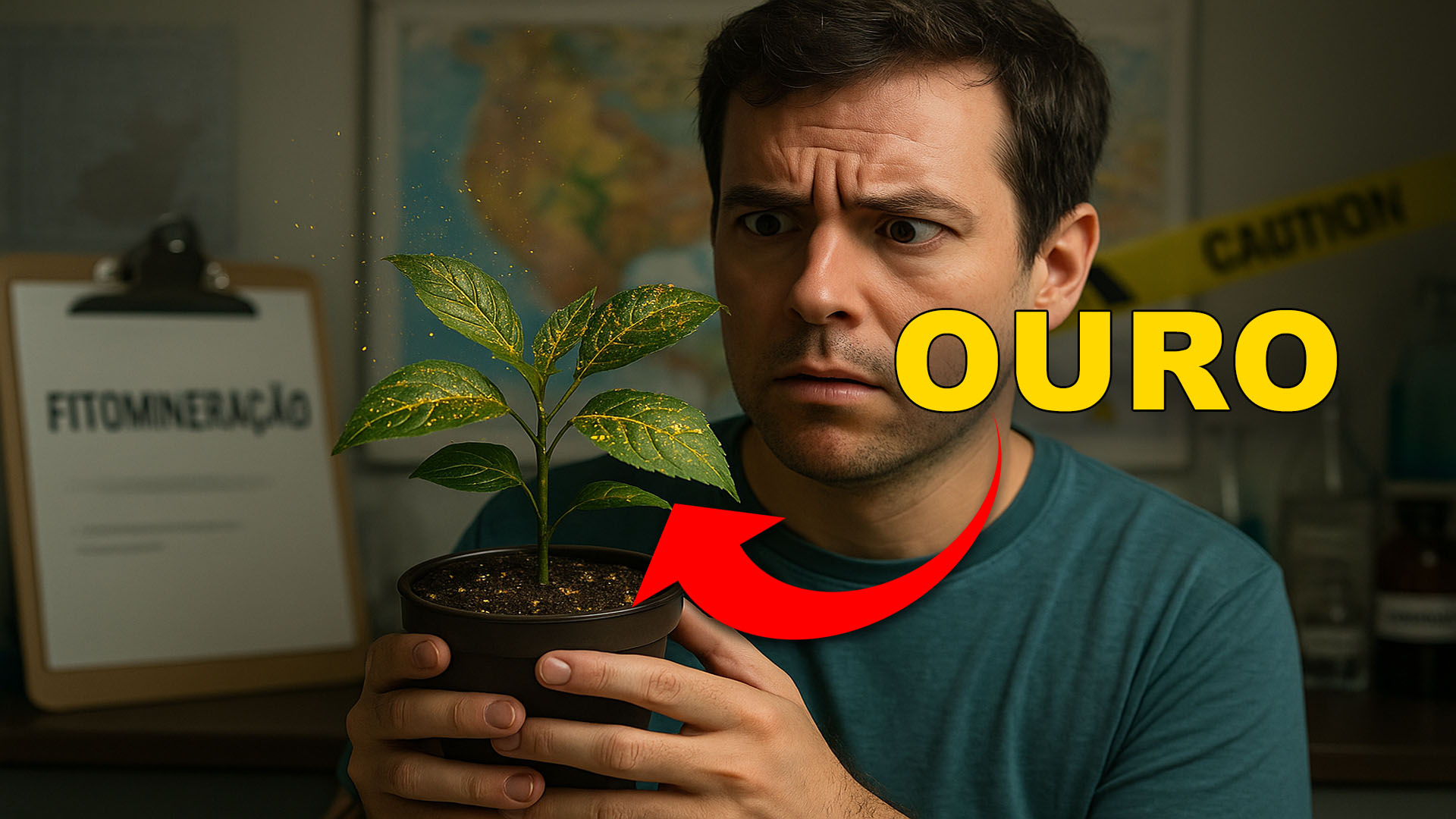


Plants Can Concentrate Gold From Already Mineralized Soils. This Is Not Domestic Cultivation, But Phytomining, An Environmental Technique With Specific Uses.
The idea of growing a “plant that produces gold at home” circulates on social media. Know that the science behind this exists, but under another name and scale: phytomining.
It involves using plants to extract and concentrate metals present in the soil in very low quantities. The targets can be gold, nickel, or palladium, among others.
The method is appealing because it is less aggressive than conventional mining in poor areas or tailings. However, it requires already mineralized areas, agronomic management, and controlled chemical protocols. It is not a home practice.
-
The only Brazilian in the Candy Crush World Championship, a woman from Bahia defeated players from the USA, Spain, Germany, and Portugal in London and won R$ 2.5 million.

-
With a boat smaller than many sofas, 1.2 meters, an Englishman attempts to cross the Atlantic, over 3,000 km, to break a historical record but calls for help in two days and sees the adventure end in rescue.
-
Man creates homemade system with laptop batteries and reduces dependence on the power grid; the project has been operating since 2016 with reused batteries, 24 solar panels, and more than 10 kW.
-
Morocco wants to end water scarcity and the sea is the secret: the country invests $14 billion, builds the largest desalination plant in Africa, and aims to source 60% of its drinking water from the ocean by 2030.



Classic and recent studies explain how this works and where it makes sense to apply. The following outlines what is consensus among researchers.
What Is Phytomining And Why It Matters
Phytomining is the process of planting species capable of absorbing and accumulating metals and then processing the biomass to recover the metal. The technique relies on hyperaccumulators, plants with specialized physiology to handle metals.
Environmentally, the proposal is to reutilize degraded areas or tailings with low concentrations, reducing soil disturbance and water consumption from conventional mining.
Recent reviews indicate that the most viable route already demonstrated at a pilot scale is for nickel, while gold is in the applied research phase and localized demonstrations.
It is important to highlight that the plant does not create gold. It concentrates what already exists in the soil, at trace levels, until reaching economically recoverable concentrations.
The Plants That “Find” Gold
A 2013 study showed nanometric gold particles in eucalyptus leaves growing over buried deposits in Australia. The interpretation was not “tree produces gold,” but rather biogeochemistry for prospecting.
In phytomining trials, Indian mustard (Brassica juncea) has been the model species to increase gold uptake under controlled conditions. Field results indicated elevated concentrations after chemical induction of the soil.
Another relevant group consists of species from the Alyssum genus, famous for hyperaccumulating nickel and the basis of commercial nickel phytomining projects, serving as a reference for the agronomic design of the technique.
How Gold Enters The Plant And How It Is Recovered
Gold in the soil is poorly soluble. Researchers use leaching agents to “mobilize” the metal, such as thiosulfate or cyanide in controlled concentrations, allowing the roots to absorb the gold. It is a technical and regulated stage.
Once absorbed, gold accumulates as nanoparticles in tissues, especially leaves and stems. They are not visible nuggets. The plant is then harvested and incinerated; the ashes rich in metal go on to metallurgical processes.
This “grow–harvest–burn–refine” flow is the essence of phytomining. Efficiency depends on the soil concentration, the species, and the chemical management.
Attention: Due to involving reagents and emissions, the process requires environmental licenses and infrastructure. It is neither advisable nor allowed as a home hobby.
What Has Been Tested And What Are The Limits
Field trials in the early 2000s, including the use of Brassica juncea, reported plant gold levels of several mg/kg after soil induction. These studies validated the proof of concept but also revealed high variability and scaling challenges.
Technical reviews highlight that the gold route still faces economic limitations and operational safety when compared to the nickel route, currently considered the most mature in terms of phytomining.
There are also geological restrictions: the soil must contain gold, even if in traces, and adequate conditions of pH, organic matter, and drainage. In arid climates, there are promising results, but dependent on precise management.
Brazil: Where The Technique Fits
In Brazil, academic groups study phytotechnologies to recover areas contaminated by mining. Reviews in Portuguese point to the potential of phytomining and emphasize the greater viability for nickel today.
Priority applications include tailings and degraded areas, focusing on environmental remediation and potential co-production of metals. For gold, the trend is to use phytomining in a complementary manner in environments with low concentrations and favorable logistics.
For the general public, the message is simple: there is no “plant pot that produces gold” at home. There is serious research that combines botany, soil, and metallurgy to recover value where conventional mining fails.
Do you think Brazil should encourage phytomining pilots in tailings to recover areas and generate income, or does the chemical risk and uncertain return not justify specific public policies yet?


Que reportagem horrível. Isso é uma ferramenta científica, usar a palavra “casa” é muita baixaria da sua parte, Sr. Geovane Souza,.