






 Portuguese
  Spanish


Salvador-Itaparica Bridge Project Mobilizes Billions and Rekindles Environmental, Economic and Cultural Debates, Directly Impacting Thousands of Residents in Bahia.
After five decades of discussions and deadlocks, the project for the bridge intended to connect Salvador to the Island of Itaparica, in Bahia, is back at the center of national debate.
The project, publicly supported by President Luiz Inácio Lula da Silva and included in the new cycle of the Growth Acceleration Program (PAC), has been confirmed as a priority and is already in the preparation phase for the start of construction.
However, according to information published by the newspaper O Globo, the initiative is facing increasing resistance from environmentalists, experts, and traditional communities, who point out risks to biodiversity, cultural heritage, and local ways of life.
-
Brazil’s 2026 Tax Refund: Record 9.58 Million Filers in Largest Payout Ever, But a Key Detail on Priority Recipients Draws Nationwide Attention

-
Itaú Alters Hybrid Work Model, Increasing Office Days from 2028, Prompting Employees to Adjust to New Routine
-
Facing Labor Shortage, Japan Plans to Invest $34 Million to Attract Foreign Workers in Construction, Healthcare, Industry, and Commerce

-
Brazilian City Makes Remarkable Leap, Becomes 4th Wealthiest in the Country with GDP of R$ 134.1 Billion




Extension and Impact of the Salvador-Itaparica Bridge
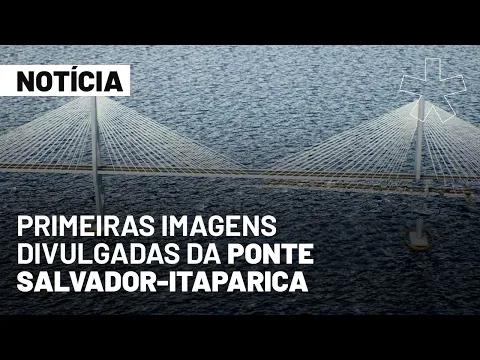
The proposal foresees the construction of a bridge with 12.4 kilometers in length over the waters of Baía de Todos os Santos.
If realized, the structure will be the longest bridge in Latin America, surpassing the current record-holder, the Rio-Niterói Bridge, in Rio de Janeiro.
The project, presented as strategic for the economic development of Bahia, estimates a total investment of R$ 11 billion, with funds coming from a Public-Private Partnership (PPP) between the state government and a Chinese consortium.
The contract signed with the consortium also establishes that the Asian company will be responsible for the construction, operation, and maintenance of the facility for 35 years.

Chinese Investment and Project Planning
According to the government of Bahia, led by Jerônimo Rodrigues, construction should begin by June 2026, mobilizing sites in Salvador and Vera Cruz.
The promise is for integration between regions, stimulation of local economies, and encouragement of income redistribution for approximately 250 cities in Bahia.
According to the Salvador-Itaparica Bridge Concessionaire, the expectation is that the project will benefit over 70% of the state’s population, creating new development hubs and reducing travel time between Salvador and the Recôncavo Baiano.
Environmental and Social Resistance
Despite the optimistic discourse from the public and private sectors, the project faces serious objections from environmental entities, researchers, fishermen, quilombo residents, indigenous people, and religious leaders of terreiros.
The main concern is related to the environmental and social impacts of the bridge’s construction, especially in Baía de Todos os Santos, considered one of the most important marine ecosystems in Brazil.
The region is home to threatened species, such as whales, dolphins, turtles, and migratory fish, as well as mangroves and breeding areas for various aquatic species.
Traditional Communities and Cultural Heritage
Studies presented in public hearings conducted by the Federal Public Ministry (MPF) and the Public Ministry of Bahia (MP-BA) highlight the presence of more than 120 terreiros of African-based religions, quilombo communities, gypsies, indigenous peoples, and dozens of small fishing colonies in the areas directly affected.
According to official documents, the environmental licensing process has shown gaps and inconsistencies, leading prosecutors to demand revisions and new impact assessments.
Prosecutor Cristina Seixas, from MP-BA, states that “there are indications of problems in the studies conducted so far.”
According to her, failures were identified in the prior consultation of traditional communities, as required by Convention 169 of the International Labor Organization (ILO), which guarantees the right of participation of indigenous and traditional peoples in decisions affecting their territories.
One recommendation resulted in the signing of a Conduct Adjustment Term (TAC) between the Federal Public Defender’s Office (DPU) and the state government, aimed at minimizing harm to vulnerable populations.
Risks to Biodiversity and Ways of Life
Environmental engineer Joselito Alves, a resident of Itaparica, emphasizes that the bridge could favor the expansion of agribusiness and mining, increasing pressures on natural areas and traditional populations.
He warns that Baía de Todos os Santos “is an important fishing production area and a migratory route for marine species,” which heightens the risk of ecological imbalance.
Local fishermen also fear real estate speculation, deforestation, and worsening sanitation issues, especially in rivers already affected by sewage.
Arguments from the Government and the Chinese Consortium
The Secretary of the Civil House of Bahia, Afonso Florence, argues that the bridge is essential to ensure metropolitan growth for Salvador, stating that the capital no longer has space for expansion without integration with other regions.
“My impression is that the project is widely approved in Bahia. Even the opposition criticizes the delay in its execution,” he asserts.
According to Florence, all demands from impacted communities are being considered, and the consultation and negotiation process is ongoing.
The Chinese consortium that won the auction for the project, held in December 2019, initially estimated the cost at R$ 7.6 billion.
However, the value was readjusted to R$ 10.4 billion after revisions by the State Court of Accounts (TCE), considering increases in material prices and fluctuations in the international market.
In addition, the Asian company secured exemption from federal taxes, which was confirmed by President Lula himself earlier this month during a press interview.
“The construction is already confirmed and will be a revolution for the development of Bahia,” Lula declared on July 2, 2025.
Environmental Licensing and Political Debate
The debate on the flexibilization of environmental licensing regulations has gained momentum with the recent approval of a bill in the National Congress.
Experts consulted by environmental entities warn that any changes to the legislation, if sanctioned by the president, could undermine the protection of traditional peoples and reduce the requirement for consultations and in-depth studies.
According to political scientist Marcos Woortmann from the Institute of Democracy and Sustainability (IDS), the flexibilization may transfer most environmental harms onto indigenous, quilombo, and riverside communities, directly impacting health, water supply, and food security.
The internal division within the federal government on this issue is evident.
The Minister of the Environment, Marina Silva, and environmentalists are advocating for a veto of the bill, while members linked to economic development believe that the measure could unlock infrastructure projects and generate electoral dividends.
The impasse reveals the challenges of reconciling growth, environmental protection, and respect for the rights of affected populations.
Perspectives and Challenges for the Salvador-Itaparica Bridge
Given the magnitude of the project and the potential impacts pointed out by different sectors of society, the Salvador-Itaparica bridge represents one of the largest infrastructure challenges in the country at the beginning of the second half of the decade.
With construction expected to start in less than a year, doubts persist about the effectiveness of environmental protection and compensation measures, as well as guarantees of participation and reparation for affected traditional communities.
In light of such an ambitious and controversial project, the question remains: what should be the limit between development and environmental preservation in Bahia when it comes to mega-projects like the Salvador-Itaparica bridge?








