






 Portuguese
  Spanish
  4 min of reading
  0 comments


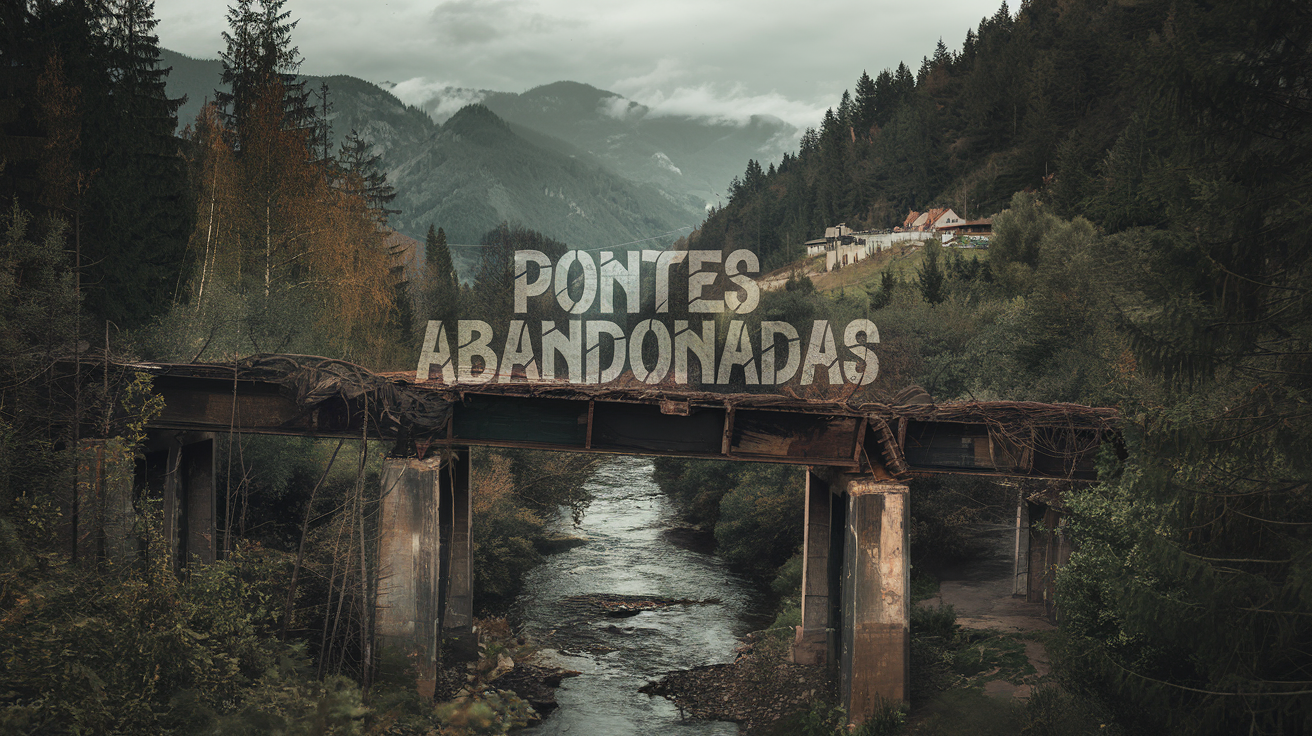
Unfinished Bridges of the BR Illustrate a Problem That Haunts Brazilian Infrastructure: The Abandonment of Million-Dollar Projects. Without Conclusion for Decades, These Overpasses Left Communities Isolated and Without Access to Progress.
In Brazil, where federal roads connect major urban centers and drive the economy, some unfinished projects have become true symbols of neglect.
Among them, two unfinished bridges in the Vale do Despraiado remain an enigma on the edge of BR-101, one of the country’s main highways.
While traffic flows for thousands of kilometers between the North and South of Brazil, this stretch simply never got off the drawing board.
-
He started with a jigsaw, his father’s screwdriver, and many drawings made during classes; years later, the young man who built a roller coaster in his own backyard went viral on the internet, was hired by Cacau Park, and now coordinates Brazilian and foreign professionals in the installation of an attraction weighing 737 tons, 55 meters high, one kilometer long, featuring moments of zero gravity and a speed of 120 km/h, in a journey that turned curiosity, calculations, and persistence into a professional career.

-
Between Egypt and Sudan, Bir Tawil is no man’s land that neither country wants on paper, but in practice has gold mining, nomadic tribes, and even fake “kings.”

-
Swimming champion Shavarsh Karapetyan dove about 40 times into a frozen lake in Armenia to rescue a sunken bus, saved 20 lives, and lost his career because of it.
-
Júlia Pimentel, an 11-year-old from Minas Gerais, independently invented a new formula to calculate the square root using simple addition and multiplication, and her method was published in one of the most important mathematical scientific journals in Brazil.


According to the Diário do Litoral portal, located in the territory of Pedro de Toledo, in the Vale do Ribeira, the structures were supposed to be part of BR-101, which spans 4,824 kilometers.
However, decades after the start of construction, what was intended to be an essential link between states remains a scene of abandoned concrete and growing weeds over nonexistent asphalt.
BR-101, also known as Governor Mário Covas Highway, is a crucial axis for road transport in Brazil, crossing 12 states and connecting the country from end to end.
However, the abandonment of strategic stretches, such as in the Vale do Despraiado, demonstrates how Brazilian road infrastructure still faces structural and administrative challenges.
Abandoned Structures and a Silence That Echoes for Years
In the Vale do Despraiado, what should be a busy highway has turned into an almost untouched environment.
Instead of roaring engines, the songs of white-rumped tanagers, blood mimas, and purple-faced parakeets fill the void left by the progress that never arrived.
The local population, scattered across small coastal communities, relies on improvised paths to reach nearby destinations.
BR-101 promised to integrate the region with the rest of the state of São Paulo, but isolation persists, hindering access to essential services.
“If BR-101 had passed through here, we would have progress. Without it, we have been forgotten for 40 years. Only now is it beginning to improve,” says Anderson Apolinário, a public servant in Itanhaém, whose family has lived in Juréia for three generations.
Residents report that without adequate access, the transportation of goods and the flow of agricultural production from the region are compromised.
Many perishable products end up being lost along the way due to logistical difficulties, increasing costs and limiting the competitiveness of local small producers.
Additionally, the lack of infrastructure also hinders the development of eco-tourism, which could be a sustainable economic alternative for the region.
The Vale do Ribeira has one of the last remnants of preserved Atlantic Forest, but without adequate access, its tourism potential remains underutilized.

No Communication, No Infrastructure, and No Answers
The precariousness of the region is reflected in the lack of basic services.
There is no mobile phone coverage, internet only via satellite, and electricity is provided by solar panels or improvised generators.
The State Government once installed a UHF radio-telephony tower in the past, but the equipment was never sufficient to eliminate technological isolation.
The local rural school is no longer operational, and medical care is sporadic, depending on the availability of professionals who travel to the area.
Despite the administrative link with Pedro de Toledo, residents identify more with nearby coastal cities, such as Peruíbe and Iguape, reinforcing the feeling that the Vale do Despraiado remains a forgotten land, distant from state and federal development policies.
Furthermore, the absence of regular policing makes the region vulnerable to criminal activities and wildlife trafficking, a recurring practice in hard-to-reach areas.
Environmentalists warn that without adequate oversight, endangered species face even greater risks.
Why Was the Project Never Completed?
The unfinished stretch of BR-101 in Juréia has been the subject of discussions for decades. Amidst political promises and environmental obstacles, the project never advanced toward completion.
Experts point out that, in addition to the geographical complexity of the region, environmental impact was one of the main reasons for the freezing of construction.
The Juréia is one of the most preserved areas of the state of São Paulo, and any intervention must go through rigorous environmental licensing processes.
Attempts to resume the project faced resistance from environmentalists and residents concerned about environmental degradation.
However, the absence of a viable solution has created a paradox: while the unfinished highway preserves the forest, it also isolates communities that could benefit from sustainable development.
Moreover, bureaucratic hurdles and a lack of investment have kept the project in an eternal stalemate, with no solution in sight.
The Future of BR-101: Is There Any Hope?
In recent years, new debates regarding the feasibility of completing this stretch of BR-101 have emerged, especially with the advancement of technologies that allow for construction with less environmental impact.
However, to date, there are no concrete plans for the resumption of construction.
Despite the difficulties, there are examples of similar projects that have successfully resumed with innovative solutions.
Sustainable infrastructure projects have been implemented in various countries, utilizing cable-stayed bridges and underground tunnels to reduce environmental impacts.
For something similar to happen in the Vale do Ribeira, a firm commitment among governments, companies, and civil society would be necessary.
Meanwhile, the unfinished bridges remain a silent testimony to neglect regarding infrastructure in Brazil, and local communities remain isolated, waiting for progress that never arrived.


-

-

3 people reacted to this.