






 Portuguese
  Spanish


The Only Brazilian Capital Founded by French, São Luís Blends European, African, and Indigenous Influences and Preserves One of the Largest Colonial Historical Centers in the Country.
Among colonial mansions, Portuguese tiles, and cobblestone streets, there is a Brazilian city that holds a curious historical secret: it was the only capital of Brazil founded by the French. The name, the architectural features, and even the local accent carry echoes of different peoples who competed for its territory. We are talking about São Luís do Maranhão, a city where the European, African, and Indigenous pasts blend in every street, forming one of the country’s most unique cultural heritages.
Established in 1612, at the height of France’s colonial ambitions in America, São Luís was born as a European outpost amid the tropical rainforest. It was named Saint-Louis, in honor of King Louis XIII, and for a few years housed the French colony known as France Equinocial. The French attempt to create a colony in Northern Brazil lasted only three years but was enough to mark the city with a hybrid identity that has crossed centuries.
Today, São Luís is one of the oldest capitals in the country and the only place in Brazil founded by the French, but definitively colonized by the Portuguese and later influenced by the Dutch. This overlay of cultures explains why its architecture, speech, and traditions seem to originate from several worlds at once.
-
Mother and Daughter Convert Small Garage into Full Apartment to Save Money and Stay United

-
Woman Leaves Restaurant Job to Become a Builder in Brazil, Launches Her Own Construction Brand “Construcida”

-
Mother and Daughter Turn Abandoned Warehouse Find into Million-Dollar Business in the U.S., Uncovering 25,000 Caps, 10,000 Sneakers, and Rare Apparel from Nike, Adidas, and Puma
-
After Nearly 30 Years at Beto Carrero, Elephant Baby Begins New Life at Sanctuary in Brazil’s Mato Grosso


The Brief French Invasion That Changed History
At the beginning of the 17th century, while Portugal and Spain competed for dominance in South America, France sought space to establish its own colonies. Under the command of Daniel de La Touche, lord of La Ravardière, a French fleet arrived on the coast of Maranhão and erected the Fort of Saint-Louis, the original nucleus of the city.
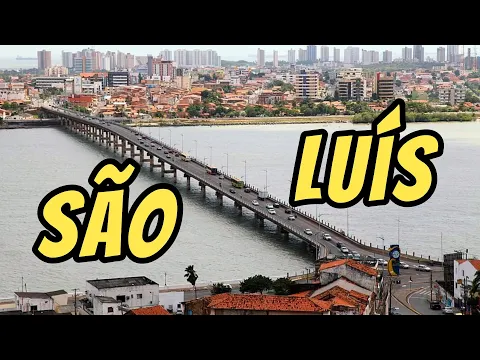
The location was strategically chosen: the estuary of the Rio Anil and the proximity to the Atlantic offered natural shelter and access to the interior of the continent. The French project envisioned the creation of a new France in the tropics, France Équinoxiale — which would be a trade and agricultural exploitation colony.
But in 1615, Portuguese troops, led by Jerônimo de Albuquerque Maranhão, expelled the French after intense battles. The fortification was destroyed, and over its ruins, the city of São Luís officially emerged, now under Portuguese control.
Despite the brief presence, the French influence remained: the name was kept, and many of the early urban records followed geometric layout patterns typical of French cities of the time.
A Fusion of Accents and Cultures
Over the centuries, São Luís became a meeting point for different peoples. The Portuguese solidified the colonization and introduced tiles as an architectural and thermal control element; enslaved Africans brought their religious, musical, and culinary traditions; and the Indigenous peoples in the region, especially the Tremembés and Tupinambás — contributed to the vocabulary and sound of the local language.

The result is a peculiar accent, frequently described as “sung”, that blends influences from French, archaic Portuguese, and Indigenous expressions. It is common to hear words of Tupi origin coexisting with structures of European origin in the Portuguese spoken in the city. This linguistic uniqueness has been the subject of studies by the Universidade Federal do Maranhão (UFMA), which classified the local dialect as one of the most “melodic and distinct” in the country.
Professor Maria do Socorro Carvalho, a phonetics researcher at UFMA, explains:
“The Ludovicense speech is marked by cadence and elongated intonation, sound inheritances from European and African influences. It reflects exactly the intersection of cultures that formed the city.”
A City of Tiles, Music, and High Tides
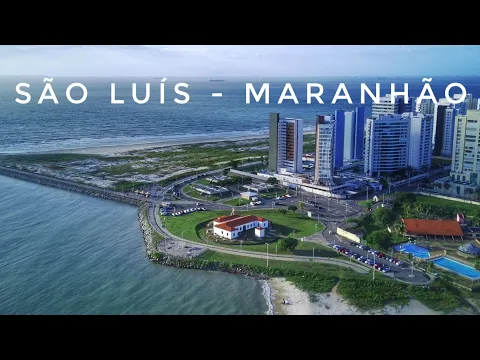
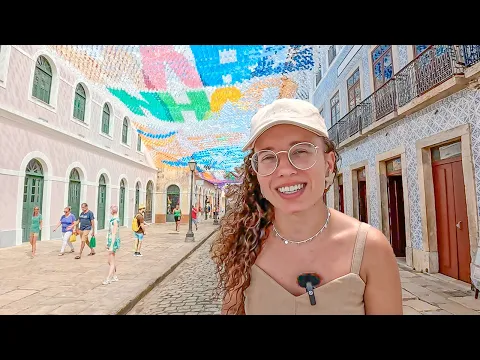
Besides its unique history, São Luís impresses with its aesthetics and geography. The Historic Center, designated as a UNESCO World Heritage Site in 1997, houses more than 3,500 colonial buildings adorned with Portuguese tiles, which reflect sunlight and help mitigate the heat. The preservation of this urban ensemble makes São Luís one of the largest colonial sites in Latin America.
The cobblestone streets, colorful facades, and iron balconies evoke the ambiance of Mediterranean cities, but the sounds echoing at the corners are unique: the tambor de crioula, the bumba meu boi, and the chants from the June festivals create a soundtrack that blends African, Indigenous, and Iberian heritages.
Interestingly, the city is also marked by a rare natural phenomenon. The coastline of São Luís is subject to one of the largest tidal variations in Brazil, reaching over 7 meters in amplitude between high and low tide. This creates landscapes that change hour by hour and even influences the rhythm of life for the residents.
Between the European Past and the Northeastern Soul
Although it was born under foreign influence, São Luís developed a strong and unmistakable Northeastern identity. The urban center retains the elegance of an ancient European city, while popular fairs, markets, and historic neighborhoods exhibit the vigor of a mixed Brazil.
In the 19th century, the Maranhão capital became known as the “Brazilian Athens”, having been the birthplace of poets and intellectuals such as Gonçalves Dias and Sousândrade, and also hosting one of the country’s first printing presses. The intense cultural life continues today — with reggae, literature, and gastronomy festivals making the city a creative hub in the Northeast.
The architect and urban planner Paulo César Garcez, author of studies on the urban layout of São Luís, summarizes this fusion of times and influences:
“São Luís is a synthesis of colonial Brazil. It is a city that was European, African, and Indigenous at the same time — and managed to transform this mixture into identity.”
An Historical Treasure Still Underexplored
Despite its importance, São Luís is still underestimated in national tourism. Most visitors arriving in Maranhão head directly to the Lençóis Maranhenses, in Barreirinhas, leaving the capital in the background.
According to data from Embratur (2024), only 30% of foreign tourists arriving in the state visit the historic center of São Luís, even though it is one of the most preserved in the country.
In recent years, the state government has invested in the restoration of buildings and the creation of routes that highlight the French and Portuguese heritage of the city. Projects like Cores de São Luís, which revitalizes colonial facades, and the Museum of Maranhão Gastronomy, help put the capital back on the tourist and cultural map of Brazil.
The City Where Three Worlds Meet
More than four centuries after its founding, São Luís continues to be a city of unlikely encounters. It is the only piece of France that survived on Brazilian soil, shaped by Portuguese colonization and infused with African musicality.
In every tile, in every drum, in every word sung with its own rhythm, lives the memory of a city that never fully belonged to just one people. And perhaps that is precisely what makes São Luís so unique: a piece of Brazil that speaks, dances, and shines in three languages at the same time.


Aqui em Pernambuco, os portugueses enterravam os invasores franceses na praia, só deixavam a cabeça pra fora, e ficavam esperando a maré encher, afogando todos. AU REVOIR!🤣
Aqui em Pernambuco, os portugueses enterravam os invasores franceses na areia da praia, deixavam só a cabeça pra fora, e ficavam lá até a maré encher, e afogar tudo. AU REVOIR!🤣🤣🤣🤣
Não é a única cidade no Brasil com nome francês, falta muito conhecimento da parte dessa matéria
Bayeux, cidade na Paraiba vocês esqueceram de mencionar 🤫
Falta conhecimento é da sua parte e saber interpretar melhor leitura, São Luís é a ÚNICA cidade do Brasil fundada por franceses é isso que diz a matéria. Bayeux recebe esse nome em homenagem a cidade francesa de mesmo nome mas NÃO foi fundada por franceses. Antes de contestar aprenda
Exato👍.Mas o que mais a gente vê aqui em redes sociais são “historiadores” de YouTube, que ainda acreditam até que a URSS foi um paraíso.🤣