Portuguese
  Spanish


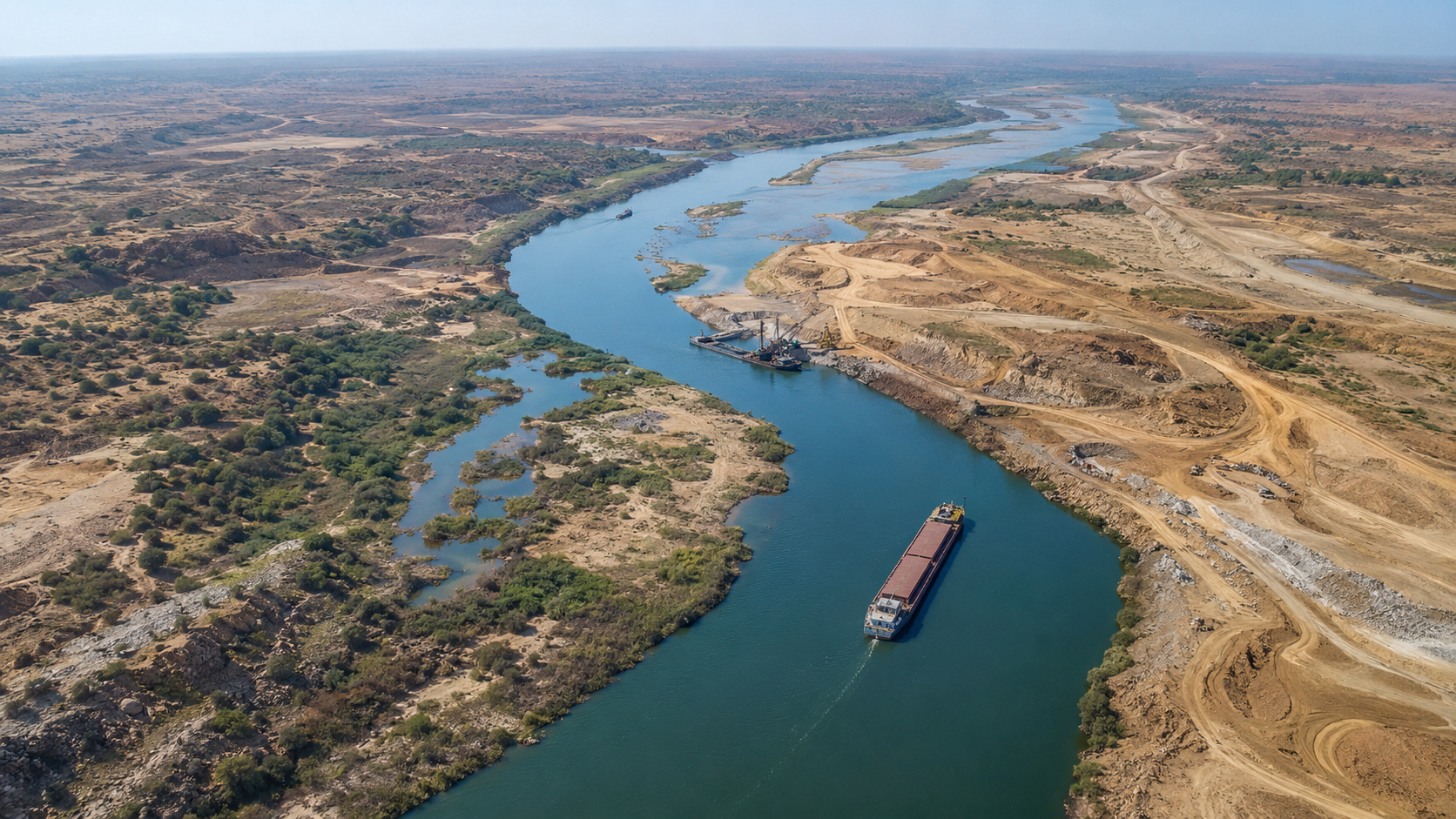

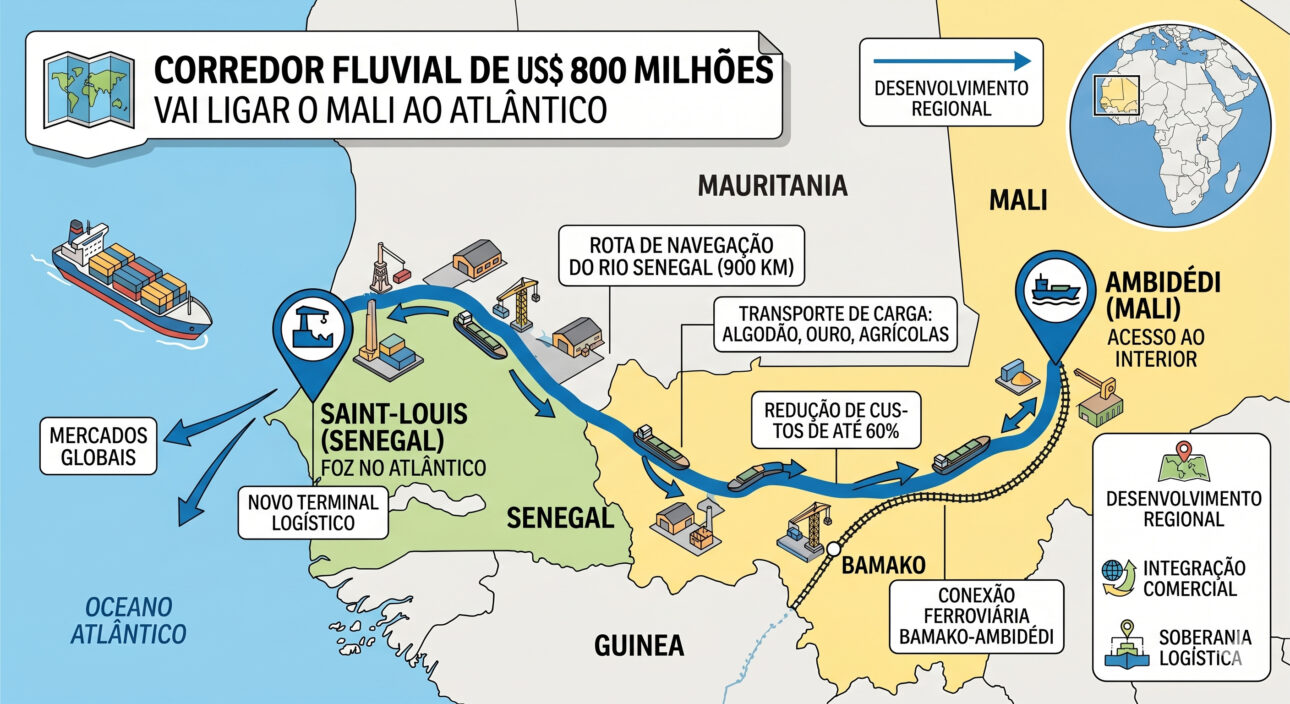
$800 million waterway corridor will connect Mali to the Atlantic for almost 900 km and could cut logistics costs by up to 60% for a landlocked country.
According to Trade Finance Global, the construction of the Saint-Louis–Ambidédi navigation corridor was officially launched in April 2026 with the groundbreaking ceremony. The project will transform the Senegal River into a commercial artery of nearly 900 kilometers, connecting the Atlantic port of Saint-Louis in Senegal to the city of Ambidédi in the Kayes region of Mali. Led by the Organisation pour la Mise en Valeur du Fleuve Sénégal, the OMVS, and its operational arm SOGENAV, the corridor unites Mali, Senegal, Mauritania, and Guinea in a multilateral structure.
The budget exceeds $800 million, about 446 billion CFA francs, and includes dredging, channel signaling, modern river ports, logistics terminals, and sea access structures in Saint-Louis. Preliminary studies indicate that river transport could reduce Mali’s logistics costs by up to 60% compared to current road routes.
Landlocked Mali relies on expensive, slow, and vulnerable routes
According to Trade Finance Global, the geography of Mali acts as a permanent economic limitation. The country is the eighth largest in Africa by area, with 1.24 million km², but it has no coastline and relies entirely on the territory of neighboring countries to reach a seaport.
-
U.S. City Builds Tiny Home Village on Water Company Land to House 136 Homeless People: Inside the Social Housing Units

-
Woman Turns Shipping Container into Home, Embraces Rural Life to Cut Monthly Expenses to Just Over $330
-
France Revamps 530 Social Housing Units with Large Balconies and Glass Facades Without Demolishing Existing Buildings

-
Facing high rent, couple transforms parents’ garage into a fully functional apartment, creating a complete home at a fraction of the market cost.




To export any product, Mali needs to cross at least one country by land. The most used routes go to Abidjan in Côte d’Ivoire, about 1,200 km by truck, to Dakar in Senegal, with 1,300 km, or to Conakry in Guinea, on a route marked by logistical risks and regional instability.


These routes carry recurring issues, such as checkpoints, informal charges, borders subject to political crises, port strikes, and roads with irregular maintenance. According to Trade Finance Global, this vulnerability has directly affected Malian trade operations in past crises and remains a structural cost embedded in every export contract.
Senegal River may change the export cost of gold, cotton, and minerals from Mali
According to Trade Finance Global, gold accounts for more than 70% of Mali’s total exports. The country is the third-largest gold producer in Africa and the ninth-largest in the world, with about 60 tons produced in 2024 and foreign revenues close to US$ 3 billion.
Gold has a high value per weight, which reduces the relative impact of land freight. But Mali also exports cotton, livestock, iron ore, phosphate, and agricultural products, items where logistical costs weigh much more on the final margin.
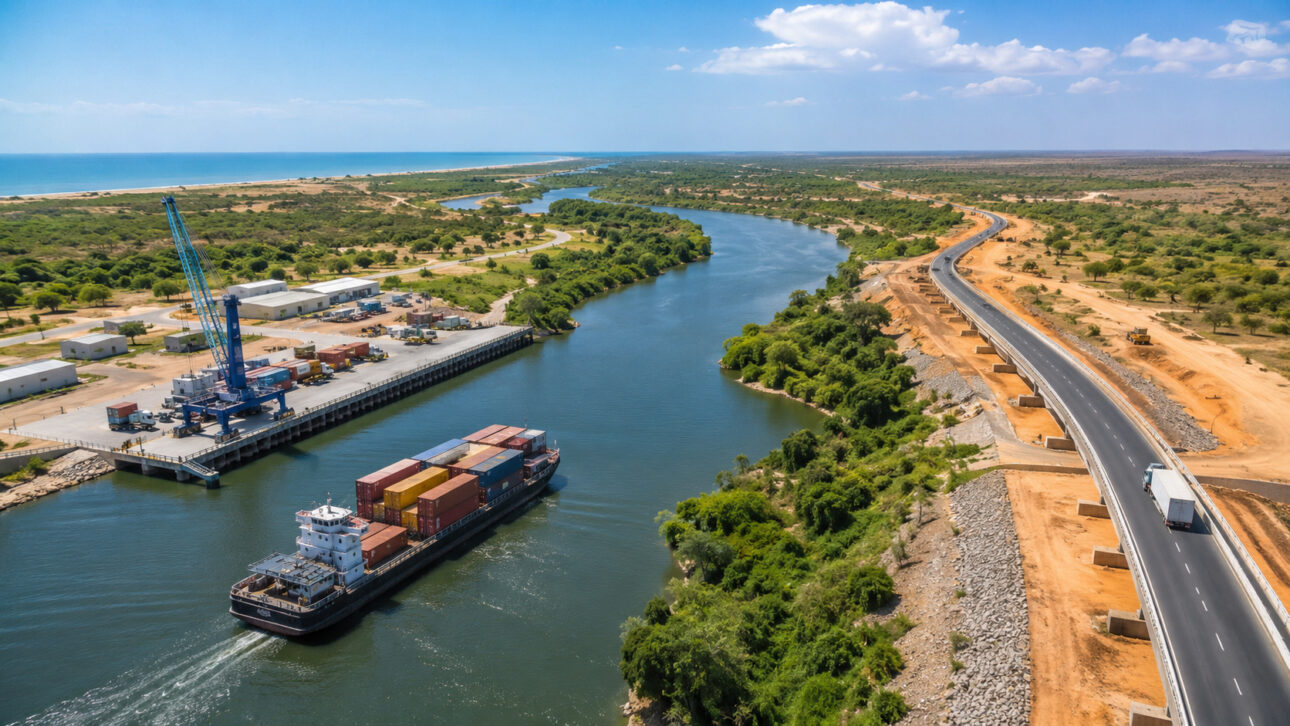
For these cargos, river transport can be transformative because the waterway mode is globally recognized as one of the cheapest per ton per kilometer.
If the reduction of up to 60% in logistical costs is confirmed, Malian products currently pressured by expensive freight will start to compete with a much more favorable cost structure. This changes not only current exports but also the viability of sectors that currently operate at the economic limit.
Saint-Louis–Ambidédi Corridor depends on dredging, terminals, and continuous operation
According to Trade Finance Global, the Senegal River is not a uniform river. It has seasonal level variations, with floods between July and October and drought in the following months, as well as mobile sandbanks that require regular dredging to maintain commercial navigability.
The OMVS already has real operational experience in the Senegal River basin. Established in 1972, the organization coordinates hydroelectricity, irrigation, and transport projects among the basin countries. The Manantali Dam, built in the 1980s with support from the World Bank, helps stabilize part of the river’s flow but does not completely eliminate seasonal variation.
Therefore, the success of the corridor will depend not only on the initial construction but also on the ability to maintain continuous dredging, port efficiency, dock equipment, and integration with road and rail networks. The promised cost reduction will only materialize if the entire chain operates in a coordinated manner.
Project emerges amid Sahel geopolitical crisis and Mali’s isolation
According to Trade Finance Global, the river corridor does not emerge in a neutral environment. It advances at a time when the Sahel is experiencing strong political instability and when Mali sees its access routes to the sea becoming even more sensitive.
The country went through two military coups in 2020 and 2021, broke with France, expelled French troops, and approached Russia. In 2023, Mali, Niger, and Burkina Faso announced their departure from ECOWAS, which increased uncertainty about free transit and regional circulation agreements.

In this context, the Senegal River corridor is not just an infrastructure project but also an attempt to reduce strategic dependence on land routes traversed by countries with their own political agendas and subject to diplomatic or security shocks.
River corridor could redefine trade and logistics in West Africa
According to Trade Finance Global, the project is not only of interest to Mali. Burkina Faso and Niger, which also have no access to the sea, could benefit from a new regional logic of access to the Atlantic based on waterways, river terminals, and multimodal connection.
The scale of the impact led Global Finance Magazine to state that an US$ 800 million river corridor could redefine the commercial architecture of West Africa. The phrase summarizes the magnitude of the bet: it’s not just about moving cargo, but about changing the logic of connection between the interior of the continent and global trade.
Success, however, still depends on three decisive factors highlighted by the publication: political stability of the four countries involved, maintenance of funding over several years, and operational efficiency of the terminals when the project is completed.
The cornerstone was laid in April 2026. Now, what will determine the historical significance of the corridor is the ability to transform logistical promise into functional infrastructure.