






 Portuguese
  Spanish
  2 min of reading
  0 comments


Mars and Earth Began with Similar Conditions, But Took Opposite Paths. One Planet Sustained Life for Billions of Years. The Other Became a Frozen Desert. The Reason? The Way Each Handled Atmospheric Carbon.
Mars and Earth were born with similar characteristics. Both are rocky planets, with water, carbon, and located in potentially habitable regions.
But while Earth maintained a life-sustaining environment, Mars became a cold desert. The difference lies in how each planet dealt with carbon.
The Secret of Earth: Balance of CO₂
On Earth, there is a natural cycle between the absorption and release of carbon dioxide.
-
The Amaterasu particle, a cosmic ray with energy millions of times greater than that of the world’s largest accelerator, hit the Earth coming from the Local Void, a region of space that is practically empty where, in theory, there should be nothing capable of creating it.

-
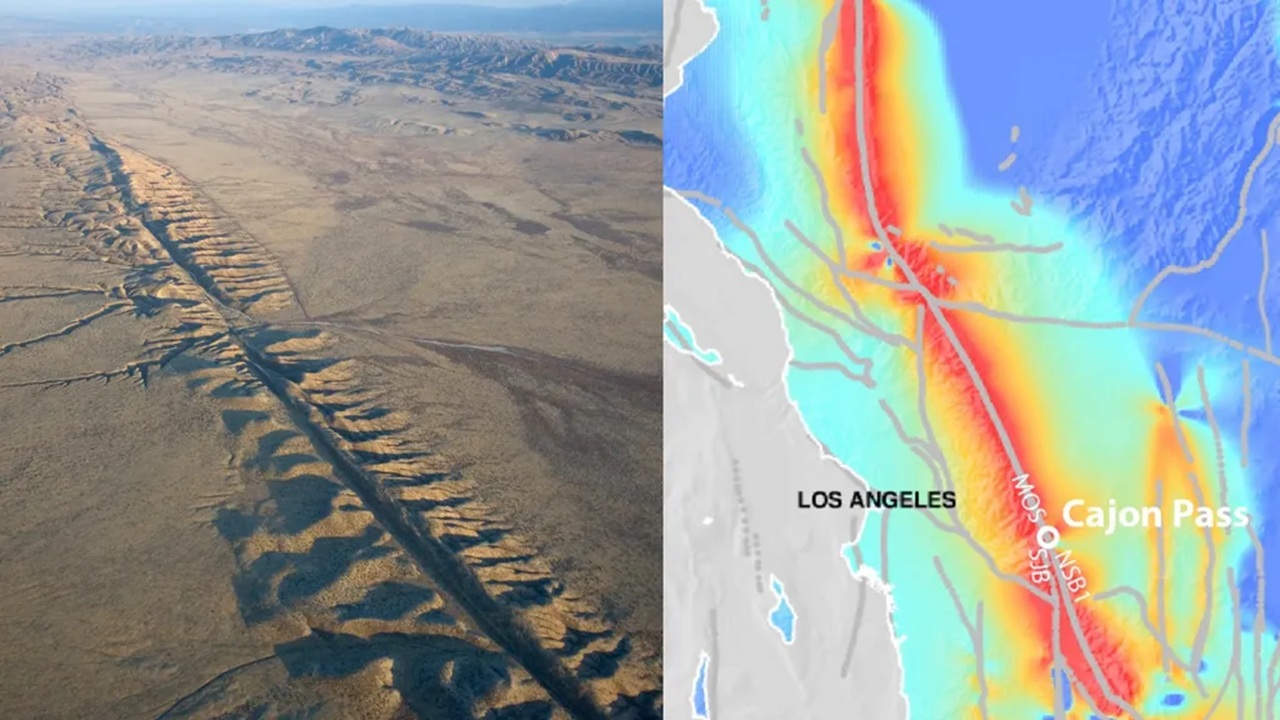
Giant earthquake returns to haunt California after study points out San Andreas and San Jacinto faults at highest stress level in 1,000 years, with risk involving Los Angeles and other populated areas.

-
Scientists have mapped for the first time the largest biological network on the planet, formed by underground fungi with an extension of 110 quadrillion km that transport 4 billion tons of CO₂ to the soil per year.
-
Where does the light go when you turn off the lamp? The answer involves invisible particles called photons, which disappear in fractions of a second inside the room but can travel billions of years through space to reach our eyes.




Oceans and sedimentary rocks, such as limestone, capture the CO₂ from the atmosphere.
But this carbon does not stay trapped forever.
Volcanism releases the gas back into the air, stabilizing the climate. Even in extreme glacial periods, this process ensured a return to milder temperatures.
Mars: The Collapse of the Greenhouse Effect
Mars, on the other hand, did not have the same luck. When there was liquid water on its surface, it reacted with CO₂, forming carbonates and trapping carbon in the soil.
Without active volcanoes to reverse this process, the gas ceased to circulate. This led to the loss of the greenhouse effect, essential for maintaining heat. The result: Mars cooled drastically and permanently.
The Geological Failure of Mars
The significant factor lies in internal dynamics. Earth has active tectonic plates and a magma mantle that fuels frequent eruptions.
Mars, being smaller and colder, lost its geological activity early. Without carbon recycling, its wet periods were fleeting.
Models show that habitable phases on Mars lasted only millions of years. On Earth, the climate remained stable for billions of years.
This stability allowed life to emerge and evolve. Mars, lacking this natural control, lost the chance to be a habitable world early on.




Be the first to react!