Portuguese
  Spanish


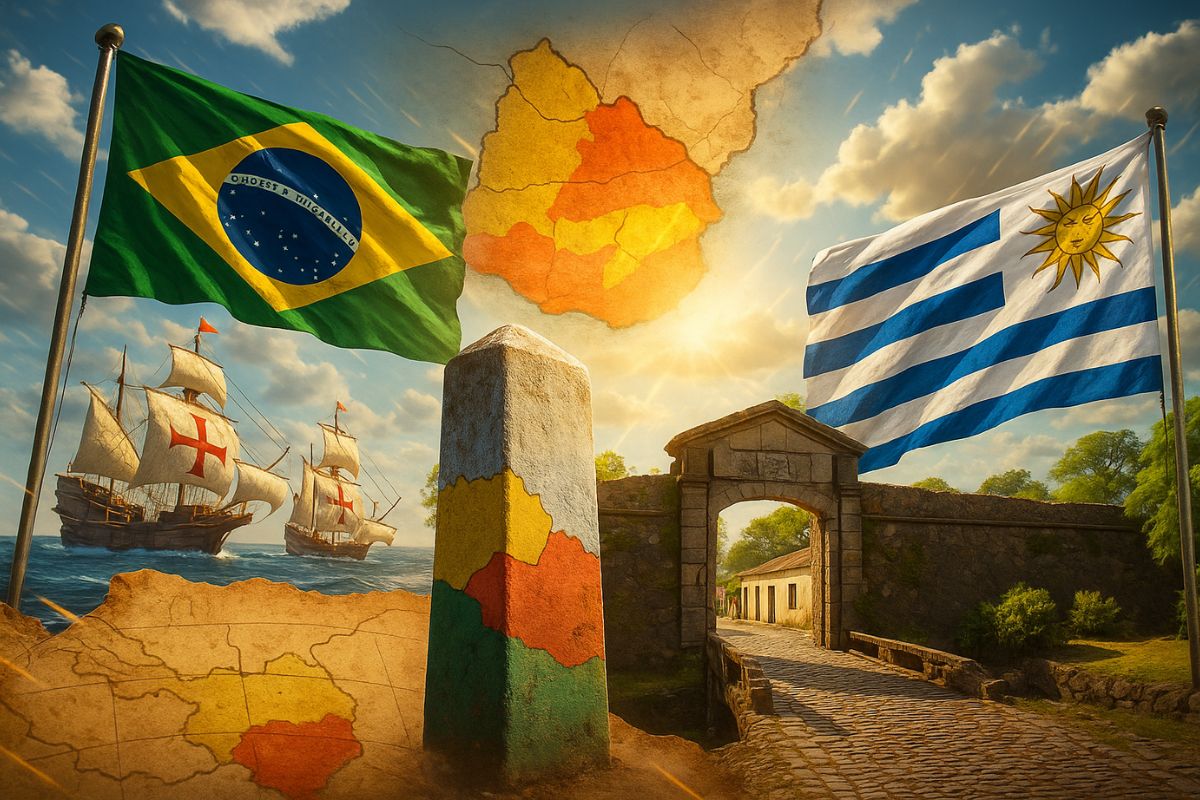


Among Lusitan Influences And Iberian Disputes, Uruguay Holds Deep Marks Of Portuguese Presence That Shaped Its Language, Its Borders, And Part Of Its Cultural Identity.
The Uruguay is a unique case in South America. Although Spanish is the official language, Portuguese is widely spoken in the north of the country and remains alive in schools, commerce, and even in the media. This presence is not just a result of proximity to Brazil, but a direct outcome of centuries of territorial disputes and the legacy of the former Colony of Sacramento, one of the most strategic points in the region’s colonial history.
During the colonial period, Uruguay was the center of a long dispute between Portugal and Spain. The Portuguese language survived the borders, resisting treaties, wars, and political divisions. Today, this mixture is reflected in customs, accents, and even in the way Uruguayans name their homes, preserving an identity that spans centuries.
Portuguese Roots In Uruguayan Territory
The origin of this heritage dates back to the 17th century, when the Portuguese established the Colony of Sacramento across from Buenos Aires to contest control over the trade of the Río de la Plata estuary.
-
Japanese Botanist’s Miyawaki Method Grows Native Forests in Small Spaces in Just Years, Not Decades

-
800-Year-Old Cliffside Temple in Greece Amazes with Secret Cave, Drawbridge, and Stunning Views

-
Japan’s “Akiya” Homes: Abandoned Properties Attract Foreign Buyers as Locals Shun Them
-
Lawyer Turned Entrepreneur Earns $60,000 Annually Selling Brazilian Cheese Bread: Athena Rodrigues Started with $400 and Founded Dona Zelda, Bringing a Taste of Minas Gerais to São Paulo’s Heart


The city grew rapidly, becoming an important outpost between Portuguese America and the Hispanic world.
Even after the signing of the Treaty of Santo Ildefonso in 1777, which officially transferred the territory to Spain, Portuguese culture and language remained rooted.
The children and grandchildren of the colonists maintained the language in daily life, and trade with Brazil ensured the continuity of this linguistic connection.
The Role Of Brazilian Borders
In the regions of Artigas, Rivera, Cerro Largo, and Tacuarembó, Portuguese has been naturally spoken for generations.
There, daily interaction with Brazilians created an atmosphere of spontaneous bilingualism.
“Portunhol” became part of the local identity, mixing expressions, accents, and grammatical structures of both languages.
Over time, Uruguay solidified Portuguese teaching in public and private schools, recognizing its cultural and economic importance.
Fluency in the language facilitates trade with Brazil, strengthens tourism, and expands educational opportunities.
More than a million Uruguayans currently dominate Portuguese.
Cultural Heritage And Shared Identity
Portuguese also left marks on customs and traditions.
On the border, houses receive proper names instead of numbers, a practice that has been in place since the colonial period when residents identified their homes as “Baker’s House” or “Silva’s House.”
This tradition survives as a symbol of identity and belonging.
Moreover, music, cinema, and cultural festivals have established the language as an essential part of Uruguayan life.
The exchange with Brazil goes far beyond geography: it is a linguistic and cultural bond that keeps alive a history of encounters and disputes.
Independence And The Language That Resisted
When Uruguay gained its independence in 1828, it adopted Spanish as its official language. However, Portuguese was already part of the country’s soul.
It continued to be spoken in families, farms, and cities in the north, demonstrating that identity does not fade away with political decrees.
Today, the presence of Portuguese reflects a unique coexistence: two languages that cross without borders, uniting peoples who share historical, economic, and emotional roots.
And you, do you believe that bilingualism in Uruguay is a symbol of cultural integration or a result of a border that has never ceased to be Brazilian?