






 Portuguese
  Spanish


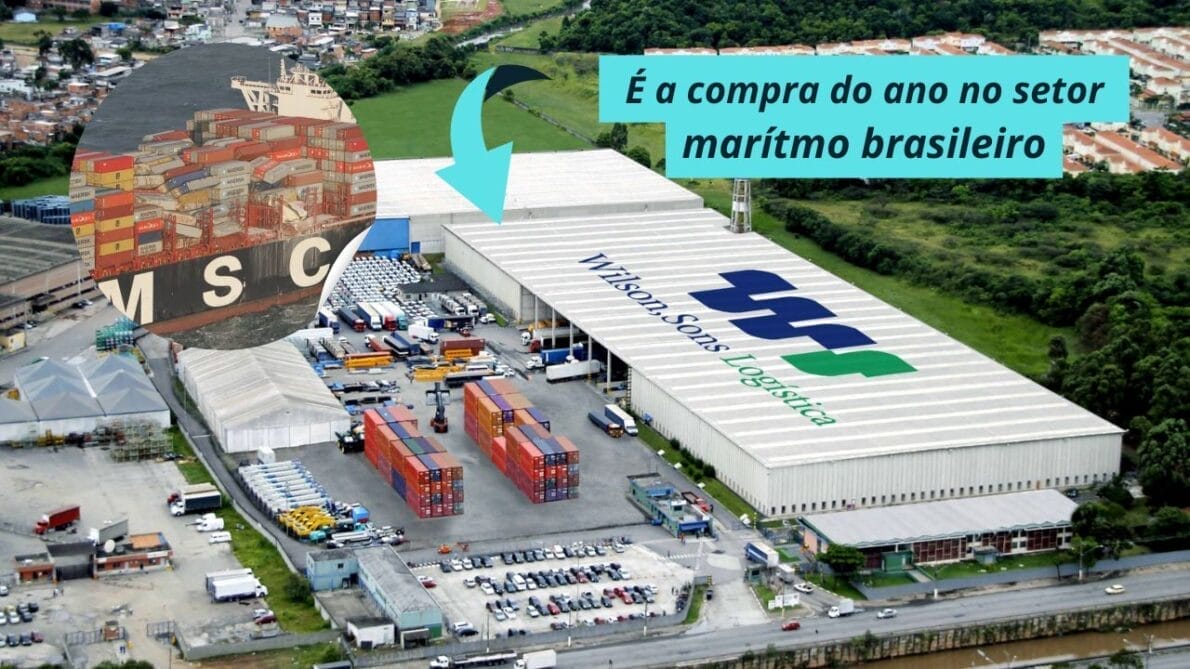

In a Move That Shook the Maritime Transport Sector on Monday (21), MSC (Mediterranean Shipping Company) Announced the Acquisition of the Historic Brazilian Port and Maritime Logistics Company Wilson Sons for Nothing Less Than R$ 4.35 Billion. That’s Right: Billion! It’s the Acquisition of the Year in the Sector. And as if That Was Not Enough, This Transaction Not Only Represents an Expansion of MSC in Brazil but Also Seals the Future of One of the Oldest Companies in the Country.
Founded Back in 1837 by Two Scottish Brothers Who Landed in Salvador, Wilson Sons Continues to Show Its Relevance Even 187 Years Later. Specialized in Tugboat Services and Port Operations, the Brazilian Port and Maritime Logistics Company Attracted the Interest of MSC, a Global Giant in the Sector, Which Now Adds the Container Terminals Operated by Wilson Sons in Rio Grande (RS) and Salvador (BA) to Its Portfolio of Brazilian Operations.
What’s at Stake in the MSC and Wilson Sons Negotiation?
With an impressive track record and a net revenue of approximately R$ 1.3 billion in the First Half of 2024, Wilson Sons is a key player in the national maritime transport market. Its Services Range from Towing Large Vessels, Essential for Safe Docking in Ports, to Logistic Support on Oil and Gas Exploration Platforms.
Its Presence in Two of the Country’s Most Strategic Ports – Rio Grande and Salvador – Reinforces Its Importance in the Container Terminal Sector.
-
Three Chinese companies manufacture more than 96% of the world’s dry cargo containers and 100% of refrigerated ones, in a dominance built over 40 years that has made it almost impossible for the West to compete in this market.

-
The Panama Canal stores water in Gatún and Alhajuela lakes to maintain 38 daily crossings and prevent a drought linked to El Niño from once again stalling ships, raising freight rates, and putting pressure on global supply chains as occurred in 2023 and 2024.

-
While the US Navy still relied for decades on the subsonic Harpoon and Tomahawk missiles for naval combat, the US Air Force reactivated the AGM-183A ARRW program on May 12, 2026, in an anti-ship version capable of making a Nimitz-class aircraft carrier disappear in minutes.

-
While commercial hydrogen fuel cells do not exceed 80 degrees Celsius due to the requirement of liquid water in the membranes, researchers at Monash University on May 18 made an ultrathin graphene and boron nitride-based membrane operate at 250 degrees Celsius without needing water.


For Those Following the Sector Closely, This Billion-Dollar Acquisition of the Brazilian Port and Maritime Logistics Company Wilson Sons by MSC Was Expected, Given the Growing Interest of the Swiss Company in Expanding Its Operations in Brazil. In addition to Its Already Operational Terminals in Navegantes (SC) and Its Joint Venture in the Port of Santos with Maersk, MSC Can Now Further Consolidate Its Operations in the Country.
Next Steps
However, the Transaction Still Depends on Approval from the Administrative Council for Economic Defense (Cade) and the National Agency for Waterway Transportation (Antaq). If All Goes as Planned, the Sale of Wilson Sons Will be Officially Concluded in the Second Half of 2025. Until Then, the Coming Months Will Involve Intense Regulatory Analysis to Ensure That the Operation Does Not Compromise Market Competitiveness.
And What Does This Acquisition Mean? For MSC, It’s a Decisive Step to Further Dominate the Brazilian Maritime Transport and Logistics Market. For Wilson Sons, Merging with One of the Largest Maritime Companies in the World Can Be Seen as Recognition of the Excellence Built Over Nearly Two Centuries. The Future, It Seems, is One of Expansion and New Challenges.
With Final Approval, It’s Expected That the Impact of This Billion-Dollar Negotiation Will Resonate Throughout the Sector, Redesigning Brazil’s Port Logistics Landscape. The Market Will Undoubtedly Be Watching Closely.








