Portuguese
  Spanish


While Boeing and Lockheed Martin invest billions in more efficient turbofan engines to extend the range of military aircraft, the American startup CycloKinetics revealed on May 17, 2026, a synthetic liquid fuel capable of increasing the range of planes, missiles, and rockets by 32% just by changing the tank, according to a report by NewAtlas.
The fuel is based on cycloparaffinic hydrocarbons with a ring molecular structure. The engineering of the molecule concentrates more energy per unit of mass than traditional Jet-A aviation kerosene, allowing for the performance leap.
CEO and founder Mukund Karanjikar presented the project as a direct result of the company’s technical heritage, now reorganized as an entity dedicated to defense.
-
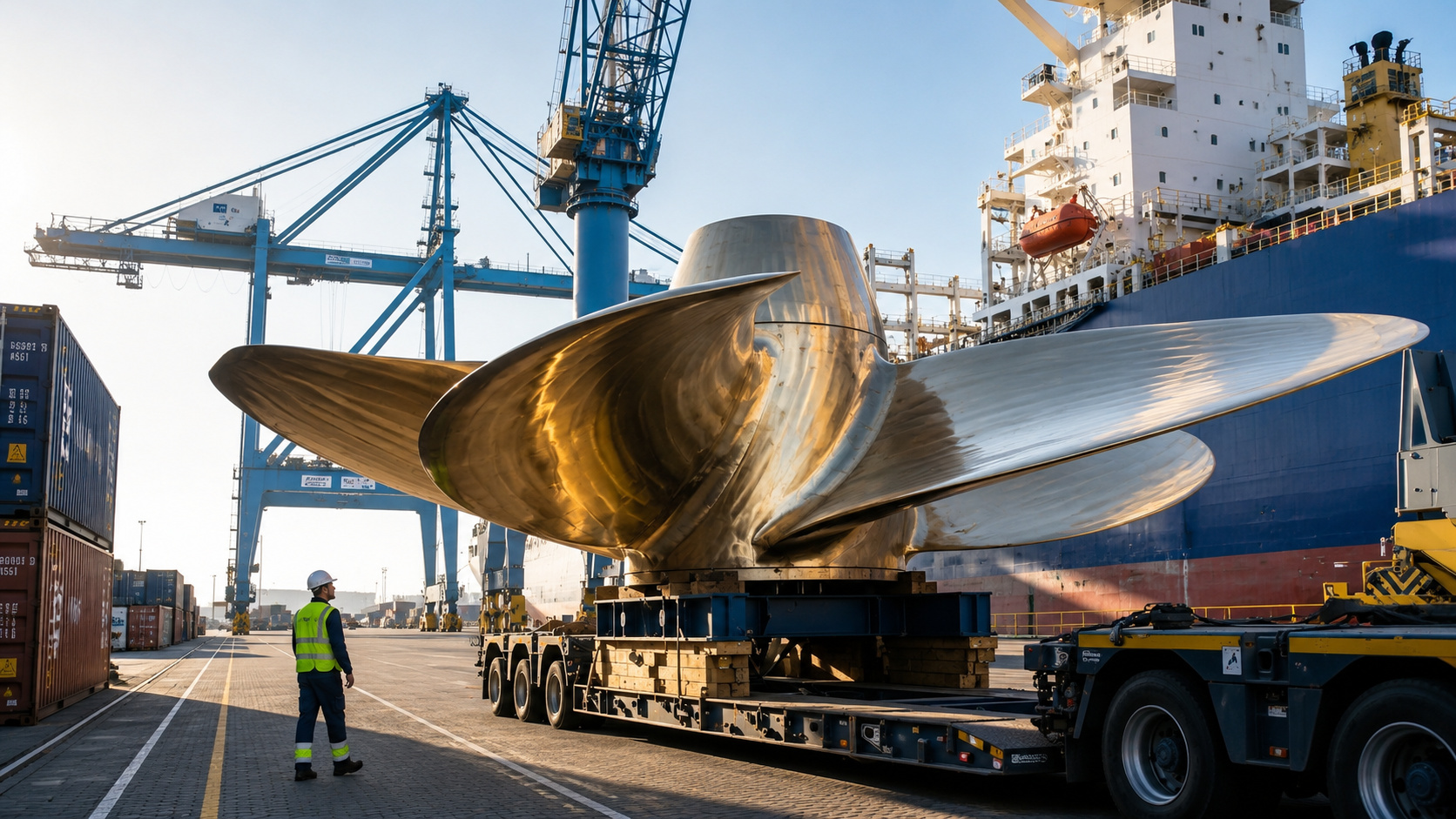
131-Ton Naval Propeller, Costing Up to $4 Million and Taking 4 Months to Manufacture, Powers the World’s Largest Cargo Ships Almost Invisibly

-
Brazil’s Maceió Port Joins Decarbonization Efforts with Study to Supply Clean Energy to Cruise Ships

-
Brazilian Port Expands Ship Capacity to 9.5 Meters, Boosting Cargo Transport and Reducing Logistics Costs
-
New Smart Radar Begins Issuing Fines to Solo Drivers in Carpool Lanes, Uses Cameras to Count Occupants, Changing Traffic Enforcement Rules on Busy European Roads


The current production capacity is 60,000 gallons per year (≈ 227,000 liters) in 2025, with plans to scale up.
What the 32% increase means in real distance
The scale is measured in nautical miles, the standard unit in aviation. A military aircraft capable of flying 1,500 nautical miles (≈ 2,780 km) with traditional Jet-A fuel can extend the range to 1,950 nautical miles (≈ 3,612 km) using the superfuel.
As detailed by NewAtlas, the 32% range gain comes from two combined factors. The first is higher energy density per mass.
The second is higher energy density per volume, allowing more energy to be carried in the same physical tank.
For cruise missiles like the Tomahawk, with a standard range of 2,500 km, the gain would put the weapon at 3,300 km.
For hypersonic missiles like the ARRW, with 1,600 km, the range would rise to 2,112 km.
In parallel, small rockets gain even greater capacity. SpaceX’s Falcon 9 uses refined RP-1 kerosene.
Replacing RP-1 with cycloparaffinic would increase the payload in low orbit by up to 15%, according to CycloKinetics’ own estimates.
The project’s numbers in 2026
The current industrial scale is modest but strategic. CycloKinetics’ production capacity in 2025 reached 60,000 gallons per year at a pilot plant. This volume serves tests and military qualification.
According to NewAtlas, the leap to commercial scale requires an industrial plant of 5 to 10 million gallons/year. The company’s public schedule places this phase between 2028 and 2030, with an estimated investment of $200 to $300 million.
For comparison, the annual military aviation consumption in the US reaches 4 billion gallons. The US Air Force alone uses about 2.4 billion gallons/year.
The initial superfuel covers only specific fractions: operational tests, research programs, and premium strategic missiles.
In parallel, the estimated price of the superfuel is about 3 to 5 times higher than Jet-A. The average price of Jet-A in 2025 was $2.80 per gallon.
The initial superfuel should range between $8.40 and $14.00 per gallon. The economic justification is the multiplied range, not direct fuel savings.

Technical reveal: how the molecular rings concentrate energy
In the background, the technical key lies in molecular geometry. Traditional fuels like Jet-A use linear or branched hydrocarbons, with 10 to 16 carbon atoms in an open chain.
According to a technical analysis by Aviation Week, cycloparaffinic hydrocarbons have closed ring structures of 5 or 6 carbons. This packs more atoms into the same volume, increasing the liquid’s density.
The density of typical Jet-A is 0.81 g/cm³. Pure cycloparaffins can reach 0.93 g/cm³, a 15% increase per volume.
Combined with a higher heat of combustion, the total energy gain reaches the 32% cited by CycloKinetics.
In parallel, there is historical precedent. The US Navy’s JP-10 fuel, used in Tomahawk missiles since the 1980s, is also cycloparaffinic.
CycloKinetics claims to operate with a molecule 4 times denser than JP-10. The main patent is from 2023, under USPTO code 11,851,234.
Who is CycloKinetics and the path until May 2026
The company was founded in 2019 in Houston, Texas, by Mukund Karanjikar, an Indian-American chemist with 22 years of career in petrochemical catalysis.
He started the company after 15 years at Saudi Aramco and Honeywell UOP.
According to Securities and Exchange Commission records, CycloKinetics raised $47 million in 4 investment rounds between 2020 and 2024.
Investors include In-Q-Tel (CIA’s venture capital arm), Lockheed Martin Ventures, and Texas venture capitalists.
The company began as a spin-off researching ramjet propellants for hypersonic missiles. As cited by NewAtlas, “creating CycloKinetics as a dedicated defense entity is the logical result of this history,” according to Karanjikar.
In parallel, CycloKinetics has 38 employees in 2026. The team includes 17 PhD chemists, 12 process engineers, and 9 administrative professionals.
The headquarters is in the Houston Energy Corridor, a historical hub for hydrocarbon research.

Human reveal: Mukund Karanjikar and 22 years of catalysis
The human face of the project is Mukund Karanjikar, CEO and founder. He holds a PhD in Chemical Engineering from the University of Pennsylvania (1998) and has worked in petrochemical catalysis since the 1990s.
According to professional records, Karanjikar worked for 9 years at Saudi Aramco (1998-2007) in catalyst research for refining. He then spent 6 years at Honeywell UOP (2007-2013) in hydrocracking process development.
In 2019, he founded CycloKinetics with 2 founding partners: chemical engineer Rajesh Patel and chemist Carolina Vega. The three still make up the company’s technical board.
On the other hand, the research team collaborates with Texas A&M University, Rice University, and the U.S.
Naval Research Laboratory. Each partner contributes to a specific front: computational simulation, molecule synthesis, and real engine tests.
How the superfuel compares to competitors
The synthetic fuels sector for defense has 4 main players in 2026. The Air Force Research Laboratory maintains internal research on propellants.
Honeywell UOP is a historical supplier of JP-10. British Reaction Engines develops fuel for the hypersonic SABRE engine.
According to Defense News, the FAA’s SAF (Sustainable Aviation Fuel) program targets biological fuels with up to 80% fewer emissions. The focus is distinct from CycloKinetics, which prioritizes military performance over sustainability.
In parallel, the UK’s Reaction Engines tests the SABRE engine with liquid hydrogen fuel. The system would be capable of sustained Mach 5, but demands cryogenic hydrogen infrastructure unfeasible in mobile military applications.
Above all, the global market for special fuels for defense moves about $14 billion in 2025. The missile propellant segment represents 28% of this total.
CycloKinetics initially targets the niche of tactical military aviation and hypersonic missiles.

Future reveal: the schedule until commercial production in 2030
The next step planned by CycloKinetics is military qualification by the Naval Research Laboratory. The process includes 3 successive phases: chemical characterization, bench engine tests, and operational aircraft trials.
In parallel, the company’s public schedule includes 4 critical milestones until 2030. Naval Research Lab qualification by 2027.
Air Force Mobility Command approval in 2028. Industrial plant of 5 million gallons/year in 2029. First commercial sale in 2030.
According to an analysis by Aviation Week, the total market for advanced fuels for defense could reach $28 billion by 2032. CycloKinetics aims to capture between 5% and 10% of this market, equivalent to $1.4 to $2.8 billion annually.
It is worth remembering the coverage of sectoral transformations in other fields of the economy.
- Announcement: May 17, 2026, CycloKinetics in Houston
- Range increase: 32% over traditional Jet-A
- Aircraft example: 1,500 → 1,950 nautical miles (≈ 2,780 → 3,612 km)
- Material: cycloparaffinic hydrocarbons in rings
- Density: 0.93 g/cm³ vs 0.81 of Jet-A (15% increase)
- Current capacity: 60,000 gallons/year (227,000 liters)
- Estimated price: $8.40 to $14.00 per gallon (3-5× Jet-A)
- CEO and founder: Mukund Karanjikar (PhD Chemical Engineering UPenn)

The points that still depend on military qualification
Despite the announcement, 3 fronts still depend on practical validation. Qualification by the Naval Research Laboratory is expected to take between 18 and 30 months in the usual testing standard.
On the other hand, compatibility with existing engines needs to be tested turbine by turbine. Finally, the cost of production on a commercial scale needs to decrease for the economic argument to hold in a full fleet.
The outcome of these variables defines the pace of adoption by the US Air Force.