Portuguese
  Spanish


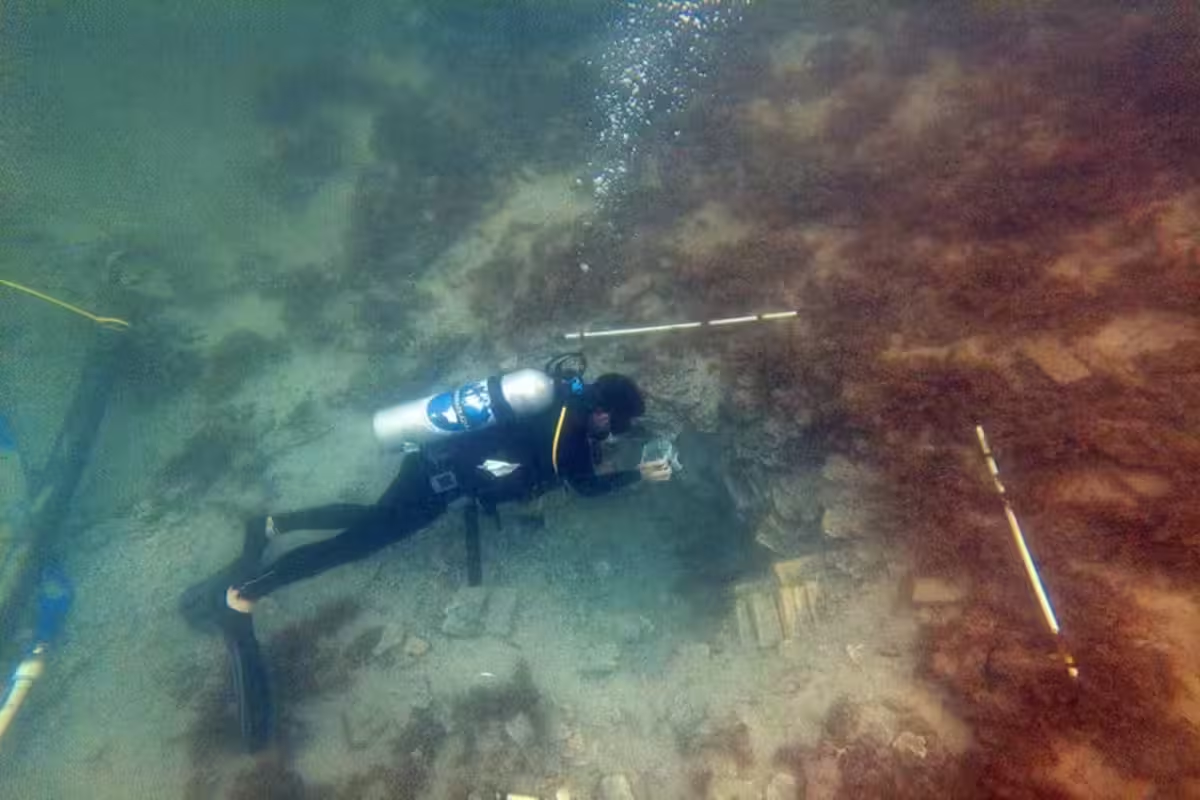

After Centuries of Mystery, Archaeologists Confirm the Identity of Two Danish Ships Involved in the Trafficking of Enslaved People That Sank in 1710 off the Coast of Costa Rica
Two Danish ships involved in the trafficking of enslaved people in the 18th century have finally been identified after centuries of mystery. The wrecks, located in Cahuita National Park, Costa Rica, belong to the vessels “Fridericus Quartus” and “Christianus Quintus”, which sank in 1710.
For many years, the remains of the ships were confused with pirate vessels. But excavations carried out in 2023 by archaeologists from the National Museum of Denmark and the Viking Ship Museum, in collaboration with Costa Rican institutions, revealed the true origin of the wreckage.
Material Evidence Confirms Danish Origin of the Ships
The team analyzed samples of wood, bricks, and clay pipes. The materials proved that the ships were of Danish origin, with components consistent with production from Northern Europe in the late 17th century.
-
The Trap of Modern Technology: How Screen Overload and Digital Connections Can Impact Your Mental Health and Well-being

-
Wyoming Couple Grows Tropical Fruits Year-Round in -40°C Using Geothermal Greenhouse, Demonstrating Earth’s Heat Can Produce Oranges and Lemons in Snow Without Traditional Heating

-
Ship Returns from Brazilian Coast with Thirty Newly Discovered Life Forms
-
Nigerian Professor Invents Electricity-Free Refrigerator Using Clay Pots and Wet Sand, Extending Shelf Life of Vegetables to 27 Days; 7,000 Units Distributed in Energy-Deprived Villages



“The material is very convincing,” said archaeologist David Gregory from the National Museum of Denmark. “The bricks are Danish, as are the woods — which are still carbonized and covered in soot. This confirms historical accounts that said one of the ships caught fire.”
Distinct Stories of the Ships
According to old documents, the “Fridericus Quartus” caught fire, while the “Christianus Quintus” was dragged to shore after losing its anchor. The exact location of the wrecks remained unknown until 2015, when American archaeologists found yellow bricks in one of the wrecks.
These bricks drew attention for their similarity to those produced in Flensburg, an important Danish manufacturing region in the 18th century. The wood was also dated between 1690 and 1695, and the pipes were identified as Dutch, common on ships of the time.
Long Process and Historical Discoveries
The discovery was considered a milestone for the history of Denmark and for underwater archaeology. Archaeologist Andreas Kallmeyer Bloch, who led the excavation, reported that the identification process took years. “It was a long process, and I was close to giving up,” he said. “But this is undoubtedly the craziest excavation I have participated in.”
The National Museum of Denmark reported that the country banned the trafficking of enslaved people in 1792, but the definitive abolition of slavery in its colonies only occurred in 1847.
Now, with the confirmation of the wrecks, researchers claim to have found one of the most dramatic episodes in Danish maritime history.
With information from Galileu Magazine.