






 Portuguese
  Spanish


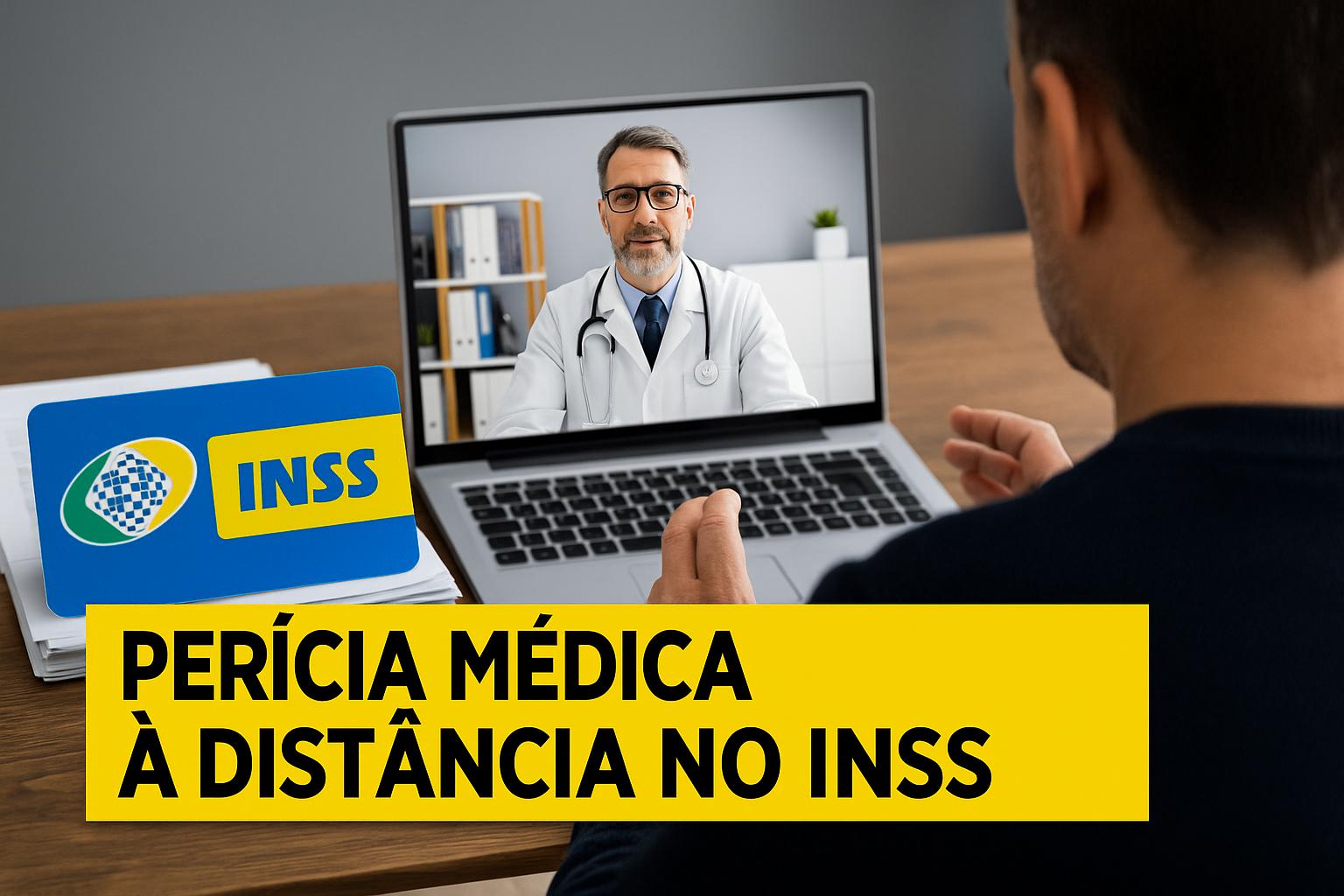


Ordinance No. 674/2024 Allows Remote Medical Examinations at INSS. Insured Individuals Under Certain Conditions Will Be Able to Avoid In-Person Queues and Expedite Benefits.
The Brazilian social security system is undergoing a transformation. The Ordinance No. 674/2024, published by the Ministry of Social Security, established new rules for using telemedicine in medical examinations at INSS. This decision promises to relieve the burden on millions of insured individuals, who until now have had to face long queues and travel to obtain the medical evaluation that grants benefits such as sickness assistance, disability retirement, and the Continuous Cash Benefit (BPC).
This is a historic step: for the first time, Brazilian legislation officially recognizes that medical examinations can be conducted remotely on a national scale, using technological resources for clinical analysis, interviews, and document validation.
What Ordinance No. 674/2024 Determines
The Ordinance MPS No. 674/2024 authorized the performance of remote medical examinations (telemedicine) in specific situations to reduce in-person queues at INSS. The text states that the resource can be used for both new requests and re-evaluations, in addition to allowing combination with document analysis. The covered conditions are:
-
Brazilian Supreme Court Pauses Fines for Workplace Regulation Violations for 90 Days, but Companies Must Still Address Harassment and Overwork

-
Seniors Over 60 Can Travel for Free Across Brazil: Elderly Statute Ensures Two Free Bus Seats and 50% Discount When Full for Low-Income Passengers

-
Detran RJ starts requiring a toxicological test for those obtaining their first driver’s license in the car and motorcycle category starting June 29; see who will be affected.
-
Florida takes TikTok to court and accuses the Chinese giant ByteDance of ignoring the law that bars minors under 14, while parents and authorities demand more protection for children on social networks.



- Retirement Due to Permanent Disability (Invalidity) – provided in § 1-A of art. 42 of Law 8.213/91.
- Assistance Due to Temporary Disability (Sickness Assistance) – as per § 11-A of art. 60 of Law 8.213/91.
- Re-evaluation of Benefits Due to Disability – according to § 6 of art. 101 of Law 8.213/91.
- Continuous Cash Benefit (BPC) for Persons with Disabilities – as per § 2 of art. 40-B of Law 8.742/1993.
- Biopsychosocial Evaluation of Disability – provided in § 3 of art. 2 of Law 13.146/2015 (Statute of the Person with Disabilities).
- Other Medical Examinations Under Federal Examination Authority – according to § 3 of art. 30 of Law 11.907/2009.
The ordinance establishes that the remote examination may occur via videoconference or digital document analysis, as long as the presented reports and exams are sufficient for the medical conclusion. Additionally, it will be up to the federal medical expert to decide whether the case can be analyzed remotely or not.
The Government’s Justification
The Ministry of Social Security argues that the measure aims to relieve the burden on the INSS examination system, which has suffered for years from a shortage of professionals and backlog of processes.
In some states, the wait for an in-person evaluation exceeds 90 days, harming workers on leave who go without income.
With the ordinance, the government hopes to reduce the average analysis time and make the process more efficient, especially in regions with fewer available experts. The technology, according to the ministry, will enable more inclusive and efficient service.
Who Will Benefit
Not all cases will be automatically analyzed by telemedicine. The text of the ordinance itself restricts its use to specific situations:
- Locations with a shortage of experts or a large backlog of processes;
- Cases where the medical documentation is deemed sufficient;
- Situations where attending in person would pose a disproportionate difficulty for the insured.
This means that there will not be a total exemption from in-person examinations, but rather a new alternative in scenarios of necessity.
Direct Impacts for the Insured
For workers on leave due to illness or accidents, the change may mean less waiting time and fewer displacements.
Especially for those living in rural towns, where there are often no INSS offices with experts, telemedicine can represent the difference between receiving the benefit in weeks or waiting months.
Moreover, the measure is also expected to benefit people with severe physical disabilities, who currently face enormous difficulty in attending INSS offices.
The Role of Telemedicine and Its Criticisms
The advancement of telemedicine in Brazil gained momentum during the pandemic when remote consultations were authorized on an emergency basis. Since then, the Federal Council of Medicine (CFM) has regulated the service, but there are still criticisms regarding the reliability of exams conducted remotely.
In the case of INSS examinations, experts warn that not all diagnoses can be made via video or document analysis. Conditions requiring detailed physical examination still demand in-person evaluation.
Even so, the government argues that the measure does not completely replace in-person service but expands the range of possibilities to make the system more agile and fair.
Previous Experiences and the Future of Examinations
It is worth noting that tele-examinations had already been tested in pilot projects between 2021 and 2023, in states in the North and Northeast region, with results considered positive. Ordinance No. 674/2024, therefore, represents the consolidation of this model on a national scale.
Experts believe that, in the future, the integration of digital medical reports, electronic medical records, and artificial intelligence may automate part of the screening of benefit requests, further accelerating the process.
What Changes for INSS and Society
With the official adoption of telemedicine, the INSS will have to invest in digital infrastructure, data security, and training for experts. But the social impact could be significant: fewer delays, greater efficiency, and increased inclusion of insured individuals who currently live in remote locations or face mobility challenges.
For workers, the change also represents a recognition of new technologies as allies of social rights.
After all, if health can already be monitored digitally, why not use the same resources to expedite social security benefits?
Telemedicine at INSS with Ordinance No. 674/2024
The enactment of Ordinance No. 674/2024 marks a new era in medical examinations at INSS. There are still challenges and resistance, but the measure is already considered a historic milestone in the modernization of Brazilian Social Security.
By allowing remote medical examinations, the government paves the way for a future where technology can reduce queues, expedite benefits, and ensure more dignity for workers in times of vulnerability.


Quatro amigos fizeram perícia pela Telemedicina e todos foram reprovados. Acho super errado perícia desta forma. A lei. A perícia tem que ser presencial e mais pro segurado.
O meu também cessado 😡😡😡
i
Ótima notícia, eu não tenho dinheiro pra ir pra outra cidade fazer perícia
Colega quando tem deslocamento o INSS tem que pagar os seus gastos.
Se nem o que é de direito da pessoa eles se negam a pagar quanto mais isso.