Portuguese
  Spanish


Agreement Between Navy and APS Brings Innovation, Sustainability, and Strengthening Port Security in Guarujá
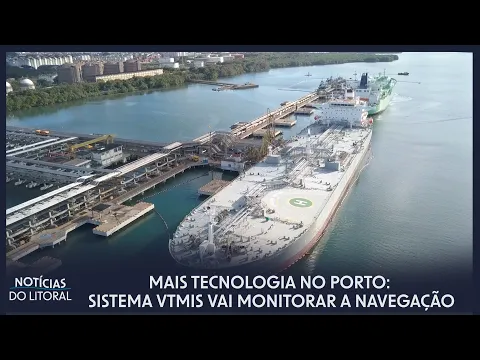
On Tuesday, June 3, 2025, the Port Authority of Santos (APS) and the Brazilian Navy signed a Technical Cooperation Agreement for the installation of the Vessel Traffic Management Information System (VTMIS) on Moela Island, located in the municipality of Guarujá, São Paulo coastline.
This system represents an important step for enhancing safety and efficiency in navigation. At the same time, it modernizes the control of port operations in the largest complex in Latin America.
As a direct result of this agreement, modern equipment, such as maritime radars, electro-optical cameras, weather stations, and antennas, will be installed in areas managed by the Navy.
-
Brazilian Port Expands Ship Capacity to 9.5 Meters, Boosting Cargo Transport and Reducing Logistics Costs

-
Three Chinese companies manufacture more than 96% of the world’s dry cargo containers and 100% of refrigerated ones, in a dominance built over 40 years that has made it almost impossible for the West to compete in this market.

-
The Panama Canal stores water in Gatún and Alhajuela lakes to maintain 38 daily crossings and prevent a drought linked to El Niño from once again stalling ships, raising freight rates, and putting pressure on global supply chains as occurred in 2023 and 2024.
-
While the US Navy still relied for decades on the subsonic Harpoon and Tomahawk missiles for naval combat, the US Air Force reactivated the AGM-183A ARRW program on May 12, 2026, in an anti-ship version capable of making a Nimitz-class aircraft carrier disappear in minutes.


Full Coverage and Sustainability in Focus
The new unit on Moela Island will be one of four stations that make up the structure of the VTMIS. The other strategic facilities will be positioned at the top of the Serra do Mar, at the Morro do Tejereba (also in Guarujá) and on Barnabé Island, located in the municipality of Santos.
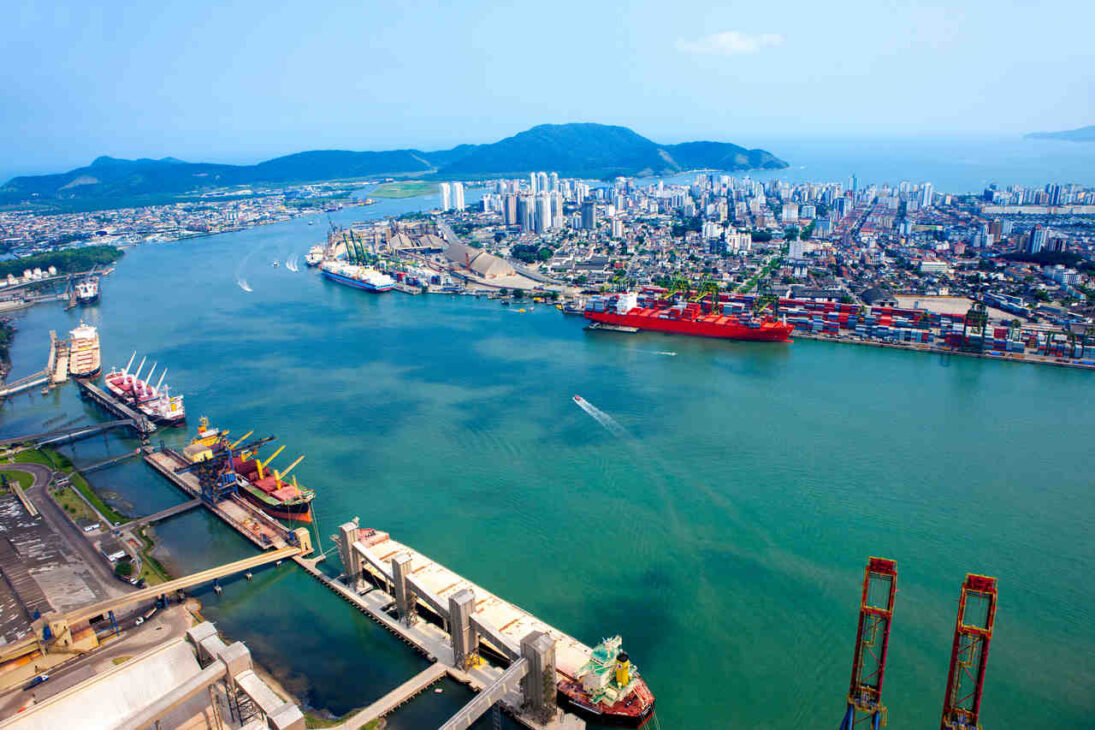
Thus, the entire region of the Santos Port channel, including anchorage areas, will be fully monitored and protected.
According to the APS, all these stations will be powered by photovoltaic solar energy. This decision reinforces the port management’s commitment to sustainable development.
The goal is to reduce environmental impacts and ensure long-term energy efficiency.

Integrated Room Centralizes Supervision and Data Intelligence
During the signing ceremony of the agreement, held at the APS Naval Inspection Bridge, the president of the Port Authority and senior Navy officials were present.
The situation room that will be set up at the APS headquarters will bring together, in real-time, representatives from the Federal Revenue Service, Federal Police, Port Captaincy, pilots, and other supervisory bodies.
Through this integrated center, it will be possible to elevate security levels, track vessels accurately, and combat illegal activities more quickly and efficiently.
The new system will bring significant gains to port logistics. This will boost the competitiveness of the port and position Santos prominently on the global stage.
The city will stand alongside the most modern port terminals in the world.
Cutting-Edge Technology Strengthens Fight Against Trafficking and Environmental Risks
The vice admiral, in an official statement released by the APS, emphasized that the VTMIS will radically enhance the situational awareness of the involved authorities.
This is due to the ability to share and visualize detailed information of all movements in the Port of Santos. This measure is essential to prevent operational risks, avoid accidents, and detect threats such as drug trafficking.
Moreover, the system provides a strategic advancement in defense actions.
It allows decision-making based on real-time data. Thus, responses become faster and more coordinated.
Bidding for Installation Will Be Launched Still in 2025
APS has finally confirmed the start of construction for the installation of the VTMIS after more than a decade of expectations. The port authority itself announced that it will publish the bidding document for project contracting later this year.
This will mark the initial stage of the physical implementation of the system.
The proposal not only addresses the historical demands of the port community but also aligns with the modernization and governance guidelines adopted by the sector.
Thus, the Port of Santos moves towards a safer, more sustainable, and efficient model. This model could serve as a reference for other terminals in Brazil.
With this implementation, the country strengthens its strategic position in international trade and elevates its standard of maritime security.