Portuguese
  Spanish


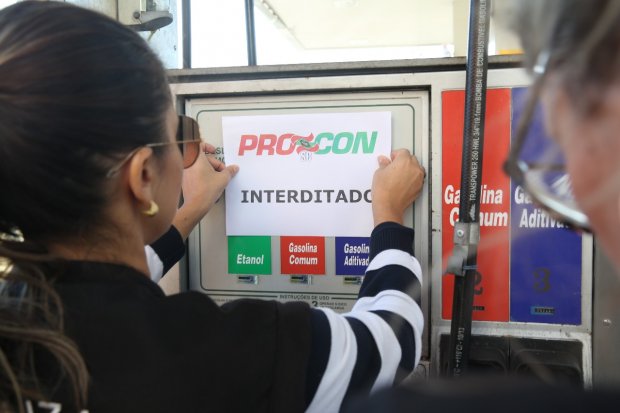

Fuel Stations That Adopt Abusive Pricing Practices Amid The Oil Crisis May Be Penalized, ANP Said In A Statement.
On Tuesday, September 17, the National Agency of Petroleum, Natural Gas and Biofuels – ANP, began monitoring fuel stations to investigate abusive pricing practices following reports of soaring international oil prices. The Bombing of the Refinery in Saudi Arabia and Its Consequences for Brazil
“There is no reason for price increases, since Petrobras has not implemented any adjustments. And, even if it had, there are stocks in the chain and the impact would take time to reach consumers”, said ANP Director-General, Décio Oddone.
-
Over 2,000 Tons of Discarded Fishing Nets Since 2020 Repurposed into Durable Caps, Fins, and Parts

-
Seals and Sea Lions Lose Habitat and Food as Climate Change Advances, Impacting Ice, Prey, and Coastal Communities

-
Brazilian Innovator Uses 3D-Printed Device to Cool Two Rooms with One Air Conditioner
-
China Uses 432 Robots to Move a 7,500-Ton Historic Building in Shanghai, Preserving Architecture While Creating Space for Underground Center


According to Décio Oddone, fuel prices are free in the country – neither the government nor the ANP have legal authority over price setting – but the executive states that the monitoring is prompted by media reports regarding abusive increases.
Consumer protection agencies across the country have been mobilized by the ANP to assist in monitoring. State consumer protection agencies may fine stations that engage in abusive pricing practices.
The Administrative Council for Economic Defense – Cade may be activated to investigate suspicions of collusion in price setting, in cases of cartel formation – when stations in the same region raise prices simultaneously.
Petrobras stated in a notice on Monday, 16, after a 13% increase in international prices, that it will wait for the market to stabilize before deciding on adjustments, in order not to pass on to consumers the volatility caused by attacks on oil facilities in Saudi Arabia.
On Tuesday, Brent fell 6.5%, reacting to an interview in which the Saudi government claims that production recovery will be swift. Market expectations are that volatility will persist in the coming days. “What will continue is a greater perception of risk in the sector”, Oddone emphasized.
Brazil has 164 distributors and about 41,000 fuel stations, which have the freedom to set their selling prices. The price charged by Petrobras represents approximately 30% of the final gasoline price. In the case of diesel, the state company’s share is equivalent to half of the final price.
In a statement, the ANP said it is “attentive to the fuel prices charged in Brazil”. “In light of reports of abusive pricing, the ANP conducts field actions to confirm these suspicions. When it confirms the practice of abusive pricing, the agency works with consumer protection agencies to penalize offenders.”
Last week, the average price of gasoline at Brazilian stations was R$ 4.310 per liter. Diesel was sold, on average, at R$ 3.562 per liter. The ANP receives reports through its Consumer Relations Center, by phone at 0800-970-0267.
Rio Will Collapse If The Law Changing Oil Royalties Distribution Is Approved In November.