






 Portuguese
  Spanish


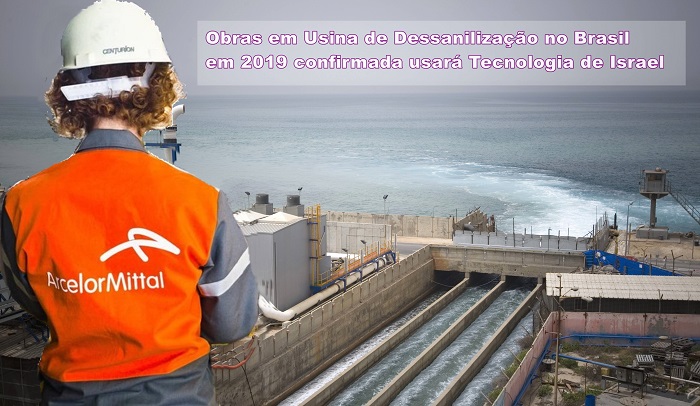

ArcelorMittal Will Use Desalination Technology Used in Israel for Water Supply to Its Steel Mill in Espírito Santo, Signaling Jobs and Construction.
ArcelorMittal SA (MT.AS), the world’s largest steelmaker, is set to build its first desalination unit in Brazil to meet unexpected water needs at its factory in eastern Espírito Santo, senior executives said in an interview on Friday. The unit aims to reduce the company’s dependency on the state water supply company Cesan and avoid production cuts during water crises, such as the state experienced in 2015 and 2016, said Jorge Ribeiro, president of ArcelorMittal’s Flat Steel Division in Brazil.
Although the plant will be ArcelorMittal’s first, desalination facilities have already become common in several rival steel mills and mining operations, which tend to be water-intensive.
-
Lenovo Unveils Legion Y700 Tablet with RGB Backlighting, 5G, and SIM Card Support
-
Lenovo Unveils Legion Y700 Tablet with RGB Backlighting, 5G, and SIM Card Support
-
Northern Brazilian City Prepares Task Force to Mitigate El Niño Impacts with Stockpiled Fish, Drone Monitoring, Firefighting, and Water Supply Reinforcement in Remote Areas

-
Brazil to Issue “Panda Bonds” in China, Aiming to Raise Up to 5 Billion Yuan at Lower Interest Rates Than Dollar Debt

The planned investment is around 50 million reais (US $ 13.32 million) and the project is expected to start operating in two years, he said.
In an initial module, the plant will be able to desalinate 500 cubic meters (132,100 gallons) of seawater per hour.
“It’s a modular process, more modules can be added in the future”, Ribeiro said.
The CEO of ArcelorMittal Brazil, Benjamin Baptista Filho, noted that during the 2015 water crisis in Espírito Santo, the company received a directive from the state government to reduce Cesan consumption by 30%.
“What we are doing is safe, because if there is another rationing event, we can respond… If there is another rationing, without desalination, we would have to halt part of production,” Filho stated.
According to Filho, the desalination plant will be the first in Brazil to operate exclusively with seawater. The plant will use reverse osmosis technology and will consume electricity produced by the steel mill itself.







