






 Portuguese
  Spanish
  2 min of reading
  0 comments


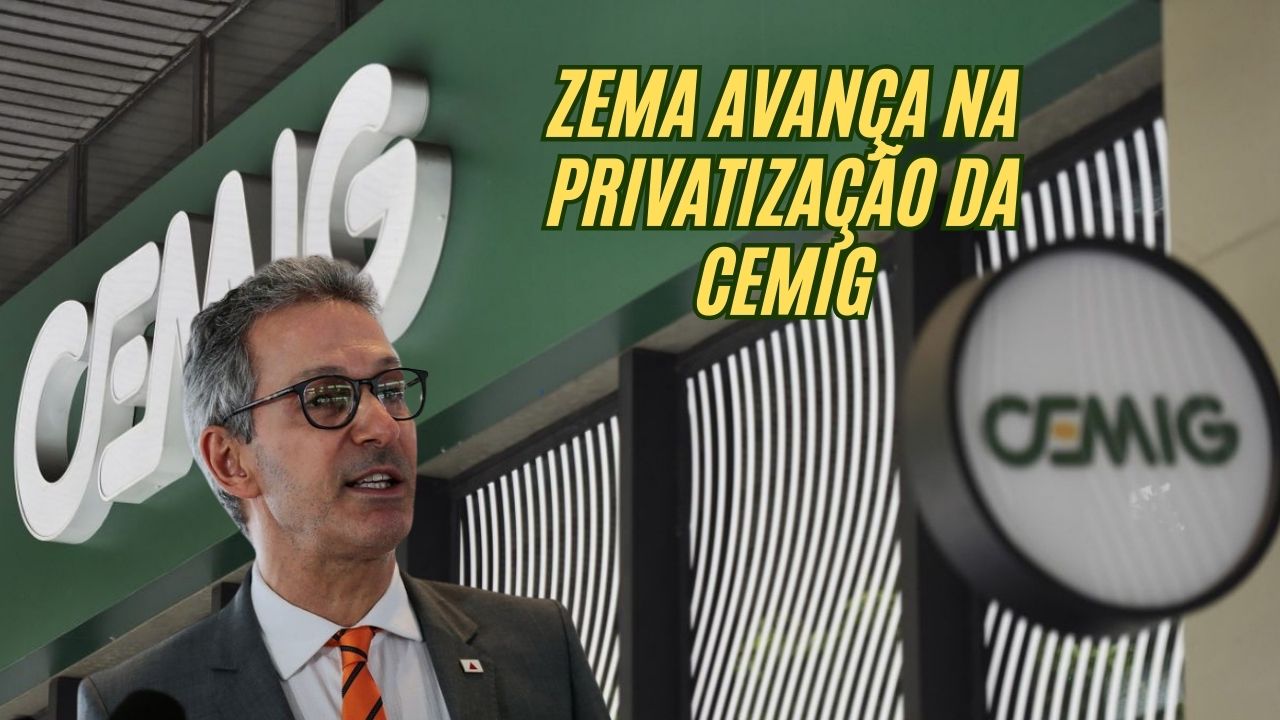
Governor Sends Bills to Legislative Assembly and Proposes Model Similar to Eletrobras and Copel. Opposition Criticizes Privatization Plans for Cemig.
The governor of Minas Gerais, Romeu Zema, took another step in his promise to privatize Cemig and Copasa. Two new bills were sent to the Legislative Assembly, proposing the dilution of stock control of the state companies through stock offerings, drawing inspiration from the model adopted in the privatization of Eletrobras and Copel in Paraná.
The proposal marks a change in strategy: Zema gave up trying to amend the Minas Gerais Constitution, which requires popular referendums for privatizations. The constitutional change would demand broader support from the deputies, which the government has not been able to consolidate.
Old Promise, Strengthened Opposition
Since the beginning of his first term, Romeu Zema has advocated for the privatization of state-owned companies like Cemig, but faces considerable resistance. Reelected in 2022, the governor now encounters additional barriers at the federal government level. The Minister of Mines and Energy, Alexandre Silveira, and the President of the Senate, Rodrigo Pacheco, both from the PSD and with bases in Minas Gerais, have already positioned themselves against the plans.
-
High Interest Rates and Record Defaults Lead to Surge in Vehicle Repossessions and Crowded Car Auctions in Brazil by 2026

-
São Paulo Offers Over 13,000 Job Openings: Opportunities in Industry, Logistics, and More Across the State

-
Brazil’s BNDES Allocates $65 Million to Fund 85,000 E-Bikes for App-Based Delivery Workers, Offering Purchase Discounts and Leasing Options to Boost Income and Improve Delivery Operations
-
JBS Invests Nearly $160 Million in Texas Megaproject to Expand Beef Production and Operations Through 2027


Pacheco proposed an alternative: the federalization of Cemig and Copasa, as part of a solution to that Minas Gerais’ fiscal crisis, whose debt exceeds R$ 165 billion. The state government, in turn, believes that its stakes in the companies have a market value exceeding R$ 15 billion.
Opposition Strikes: “Serious Setback” at Cemig
The opposition, which comprises about 20 of the 77 state deputies, classifies the privatization attempt as a “serious setback.” For the group, there are risks of service deterioration, citing the case of the Italian company Enel in São Paulo, identified as responsible for frequent blackouts and degradation of service following privatization.
Another point of criticism involves Gasmig, the natural gas distributor in Minas Gerais. If the plans move forward, Gasmig could be included in the process, as happened in Paraná, where Compagas was acquired by the Cosan group.
What’s at Stake?
The clash over Cemig goes beyond the management model. It involves political issues, such as the relationship between the state government and the Lula government, and the dispute between different visions for solving the fiscal crisis in Minas Gerais. While Zema bets on privatization, the opposition advocates for an alternative path, emphasizing federalization and strengthening public control.
The future of Cemig remains uncertain, but one thing is clear: the battle promises new intense chapters in the Legislative Assembly and the national political scene.





Be the first to react!