






 Portuguese
  Spanish


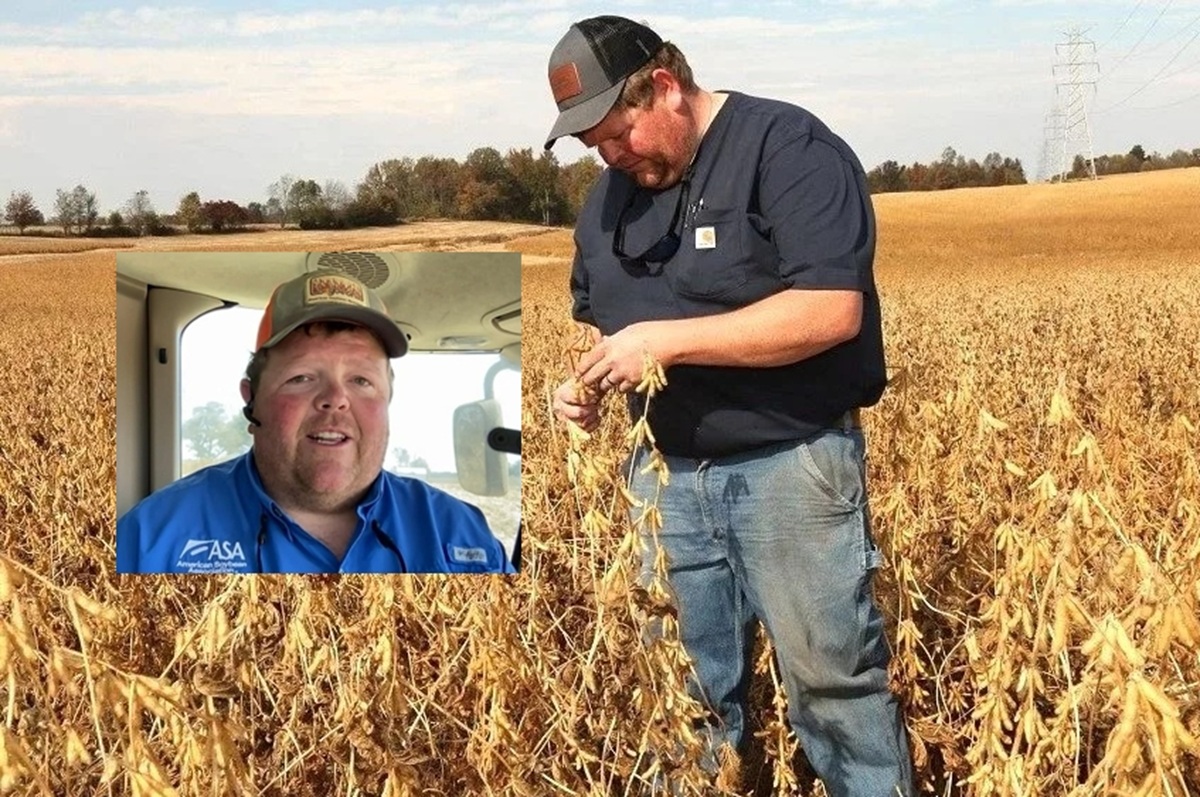

American Producers Face Billion-Dollar Losses With Tariffs And Lack Of Market As Workers Disappear And The Crisis Threatens Survival In The Field.
The pressure on American farmers is increasing with each harvest. On one side, the Trump administration’s immigration policy has restricted the entry of workers.
On the other, trade tariffs have drastically reduced soybean exports to China, the world’s largest consumer market.
The result is a scenario of billion-dollar losses, stockpiled inventories, and an uncertain future for thousands of families who depend on the field.
-
In Rural Brazil, José Sirval Operates a Water-Powered Mill Grinding 125 Kilograms of Corn Daily Using His Great-Grandfather’s Century-Old Monjolo

-
From Market Stall to Agribusiness: Patagonian Fruit Grower Owns 550 Hectares and Processes 18 Million Kilos of Pears and Apples Annually, Exporting Directly to Brazil
-
At 93, Brazilian Farmer Restores 56 Hectares of Forest and Revives Spring in the Amazon, Installs First Climate Tower in the Region
-
Brazilian Cheesemaker Wins European Award for Ant-Infused Cheese with Nutty Flavor Inspired by Indigenous Tradition


Drastic Decline In Workforce
Data from the Bureau of Labor Statistics reveals that the agricultural workforce in the United States fell by 7% between March and July.
The decline represents 155 thousand workers fewer in just four months. Information from Pew Research points to an even greater loss: around 150 thousand immigrant workers between January and July.
This reduction directly affects properties that depend on temporary labor for harvesting.
In Congress, a Republican lawmaker from Pennsylvania is preparing a bill to try to alleviate the crisis. However, experts are already warning that the measure may come too late for many producers.
Tariffs Hit Exports
The situation becomes even more complicated with the effects of the trade war.
The Trump administration imposed tariffs that triggered retaliatory measures from China.
Data from the American Soybean Association shows the severity: in 2024, Beijing spent over US$ 3 billion on American soybeans just in the second quarter. This year, so far, it has not purchased anything.
The void left by the Chinese brutally affects producers. Caleb Ragland, president of the American Soybean Association, described the impact as a “large-scale wildfire” for the sector.
He noted that China accounts for 61% of global soybean consumption and that 25% of U.S. production was destined for this market.
“We’re starting the harvest and have sold 0 to China. That means 25% of our sales have simply disappeared. With the tariffs, our price is 20% higher than Brazilian soybeans. So, the Chinese are buying from other suppliers. Farming families are suffering,” he stated.
Losses On The Rise
With the market stalled, the supply exceeds demand and prices plunge. Ragland cited the case of Chicago, where soybeans reached just over US$ 9 per bushel.
In areas with higher transport costs, such as North Dakota, the price dropped to just above US$ 8.
The problem worsens because the average production cost is around US$ 12 per bushel. In other words, each unit sold incurs a loss. “The American farmer is already facing high production costs. With tariffs on inputs like fertilizers and equipment, the situation worsens. Tariffs on steel, for example, directly increase the cost of agricultural machinery,” Ragland emphasized.
Long-Term Threatened
The bill is heavy. Estimates indicate that farmers could lose more than US$ 200 per acre with the current harvest. Ragland, who farms 1,200 acres of soybeans, calculates a loss of US$ 240 thousand this cycle. “There is no Airbnb or corn maze that can compensate for losses of this magnitude. These are long-term investments in land, machinery, and infrastructure. You can’t just enter and exit the sector from one year to the next,” he stressed.
Additionally, he recalled that the trade relationship with China took over 40 years to build. “It was an extremely important partnership. We don’t need artificial barriers that make us less competitive. We need an open market. Soybeans are the main agricultural export product of our country. If we lose this space, there is no adequate substitute,” he concluded.
Uncertain Paths
Some American farmers are trying to diversify their income. Experiences with agritourism, lodging, and leisure activities on farms have gained traction. But, for most grain producers, these alternatives do not make up for the million-dollar losses.
The fear is that many will not be able to stay in business. “We have entire families dedicated to production. It is not just about statistics, but about the survival of entire communities,” Ragland warned.
The agricultural sector has always been seen as the backbone of the economy and American identity. However, the simultaneous pressures of labor shortages and the loss of international markets put this pillar at risk.
Pressure On The Government
As farmers face losses, pressure is rising on authorities in Washington. Lawmakers are discussing emergency measures, but the complexity of the problem requires medium and long-term solutions.
It is necessary to balance security in immigration policy without choking off the supply of workers in the field, in addition to reassessing the impacts of tariffs on inputs and exports.
With each harvest, urgency increases. Stocks grow, prices fall, and producers see their financial commitments pile up.
For Ragland and the more than 500 thousand soybean farmers in the country, the response needs to come quickly. “We know how to produce. We have quality. What is lacking is opportunity. We need to compete under fair conditions. Without that, American agriculture will bleed and lose the ground it has gained over decades,” he concluded.
With information from ABC News.


