






 Portuguese
  Spanish


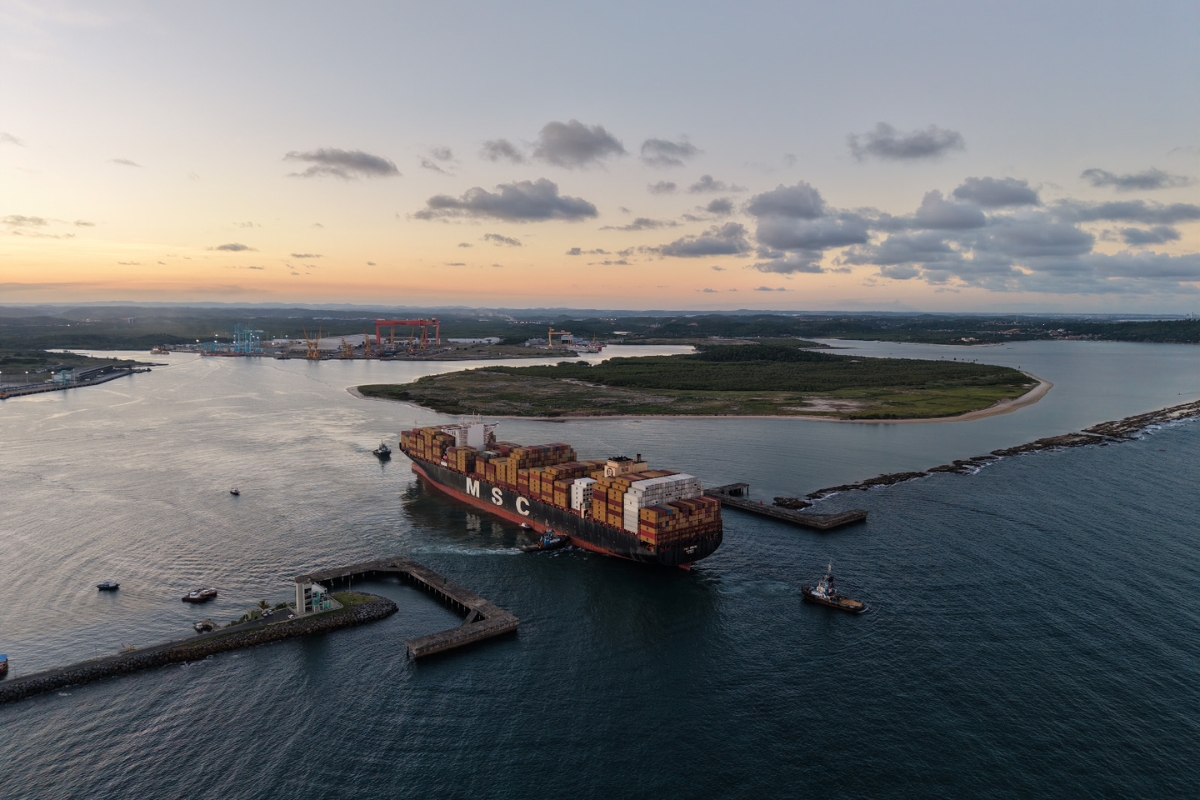

With 17.7 meters of depth and infrastructure to accommodate ships of up to 170 thousand tons, Suape gains strength as a route to ease Brazil’s exports and imports amid global maritime tension and changes the strategic reading of Latin America
Brazil is facing a delicate moment in international maritime transport. Tensions in strategic corridors and higher costs in global navigation increase pressure on exports and imports, precisely when agribusiness needs safer and more efficient routes.
In this scenario, the Port of Suape gains ground as a concrete alternative to ease national logistics. With robust infrastructure, strategic location, and capacity to accommodate large vessels, the Pernambuco complex enters the radar as an important support for the flow of Brazilian production.
The strength of this movement lies in its practical effect. When the country expands its port options, it reduces dependence on already overloaded corridors and improves its response to international crises that block the flow of goods.
-
131-Ton Naval Propeller, Costing Up to $4 Million and Taking 4 Months to Manufacture, Powers the World’s Largest Cargo Ships Almost Invisibly

-
Brazil’s Maceió Port Joins Decarbonization Efforts with Study to Supply Clean Energy to Cruise Ships

-
Brazilian Port Expands Ship Capacity to 9.5 Meters, Boosting Cargo Transport and Reducing Logistics Costs
-
Three Chinese companies manufacture more than 96% of the world’s dry cargo containers and 100% of refrigerated ones, in a dominance built over 40 years that has made it almost impossible for the West to compete in this market.

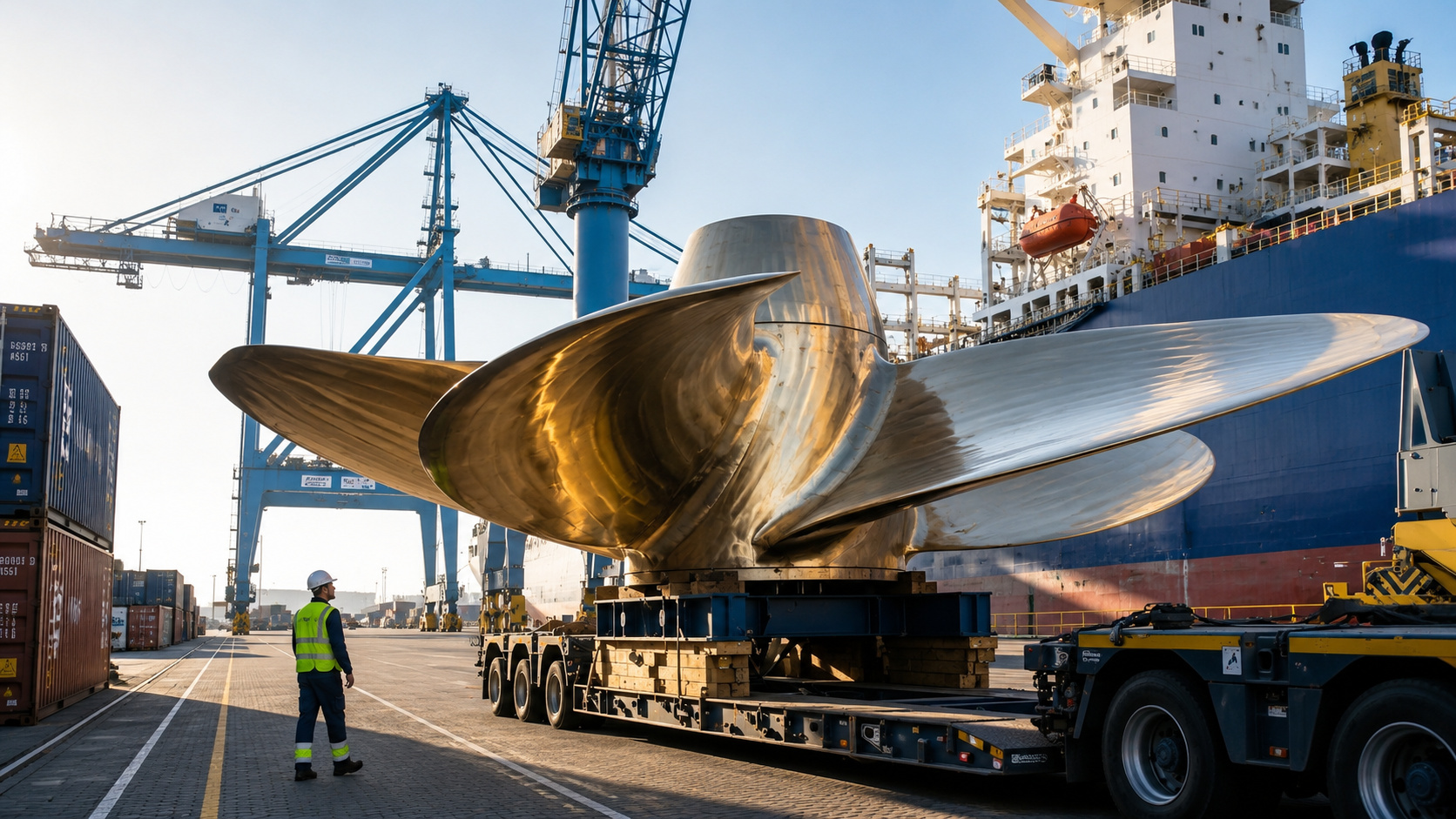


Suape’s port structure expands capacity for large-scale cargo

Suape brings together operational conditions that attract attention in foreign trade. The port has the infrastructure to accommodate large vessels and operate high volumes of cargo, which is crucial for supply chains that depend on regularity and scale.
At piers PGL 3A and PGL 3B, the complex can receive vessels of up to 170 thousand gross tons, with 17.7 meters of depth. Piers 1, 2, 3, 4, and 5 accommodate ships of up to 120 thousand tons, reinforcing capacity for heavy operations in the national scenario.
Capacity for world-class ships changes Pernambuco’s role
Receiving vessels with high cargo capacity is not just a technical detail. It changes Pernambuco’s position in Brazilian logistics and enhances Suape’s potential as a route for the entry and exit of different goods.
In practice, this type of operation helps accelerate the flow of cargo, reduce bottlenecks, and create a more competitive alternative for producers and companies that depend on the international market. The impact is evident in both agricultural exports and the arrival of inputs and equipment.
Growth in 2026 reinforces the strategic reading of the port

The recent increase in cargo movement shows that Suape is not just a promise. The port is already operating at a strong pace and supports growth that strengthens its logistical weight at a time of greater tension in maritime trade.
In the first months of 2026, the complex recorded a significant increase in movement and the number of dockings. This performance indicates an expanding structure, with the capacity to absorb part of the demand that currently pressures the country’s traditional corridors.
According to Suape, an industrial port complex located on the southern coast of Pernambuco, the current structure already supports the expansion of routes for exports and imports
This reading reinforces the movement of logistical diversification in Brazil. Instead of concentrating the exit of production at a few points, the country now sees Suape as a route with physical capacity, operational scale, and room for growth.
For agribusiness, this represents a significant advantage. The opening of new pathways reduces pressure on the most demanded corridors and creates a more efficient alternative for the flow of grains, fruits, inputs, and other cargo related to the sector.
Suape can ease agribusiness and also strengthen Brazilian imports
The gain is not limited to exports. A port with greater capacity also improves the entry of fertilizers, fuels, machinery, and essential inputs to sustain national production in times of global instability.
This balance between the outflow and inflow of goods makes Suape even more strategic. The complex can serve as a support point for production chains that require predictability, especially when international crises affect sensitive maritime trade routes.
Logistical expansion focused on the Northeast broadens national reach
The location of Suape helps explain part of this strength. The complex is consolidating as a logistics hub for the Northeast and is seen as an important piece to integrate internal and external markets more efficiently.
This advance also favors productive areas that need new outflow channels. By expanding the capacity to connect with agricultural regions, the port strengthens Pernambuco and projects a nationally significant alternative for foreign trade.
The Port of Suape enters a decisive moment for Brazilian logistics. With infrastructure for large vessels, operational growth, and space for new routes, the complex presents itself as a practical response to alleviate some of the pressure on exports and imports.
For agribusiness and foreign trade, the effect is direct. When Brazil expands its network for the outflow and inflow of cargo, it gains the margin to face international shocks more efficiently and changes the strategic reading of Latin America.


