Portuguese
  Spanish


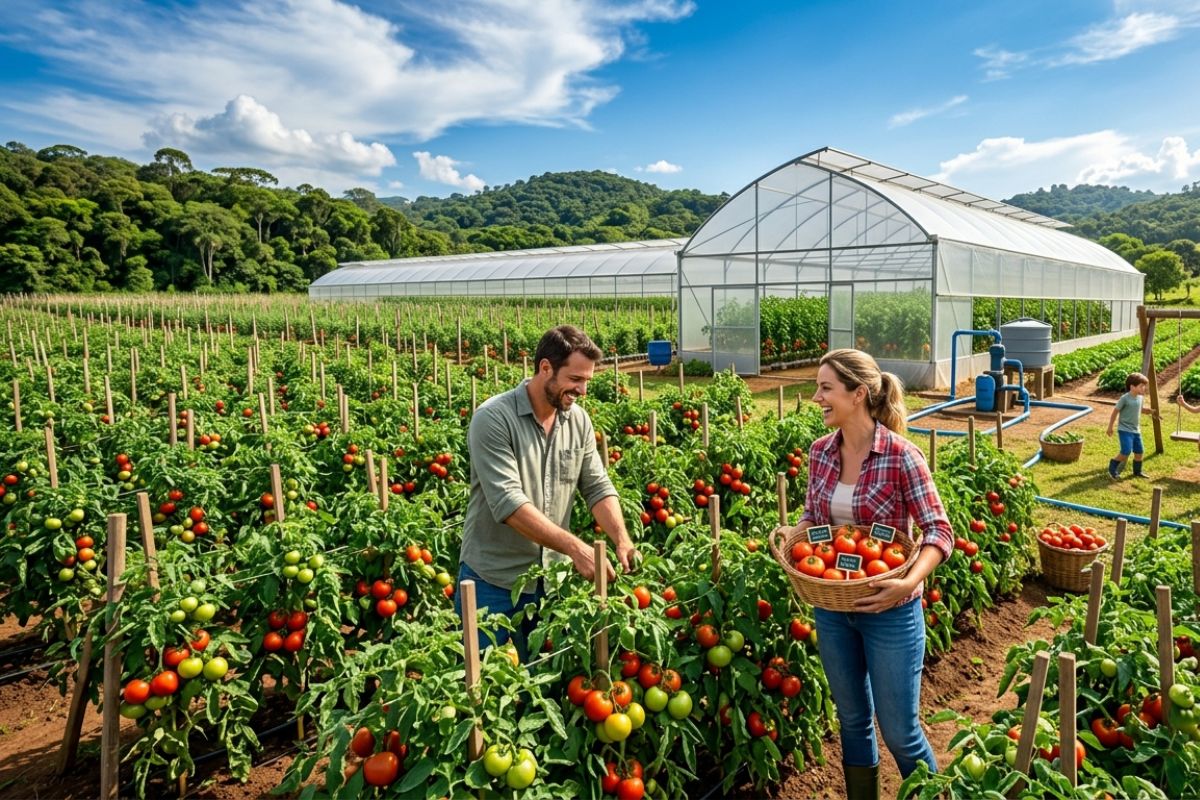

In Nova Fátima, a couple gave up their house and car, invested in a greenhouse and an artesian well, and within 2 years started living off organic production with technical support and a focus on family
Leaving the city behind and starting over from scratch in the countryside. This was the decision of a couple from northern Paraná who chose to exchange urban comfort for a routine of farming, investment, and daily learning.
In just 2 years, the couple transformed a 5,000 m² property into a source of income with certified organic tomatoes. And, according to them, the greatest harvest is not just financial, but also raising their children away from screens, with more contact with nature and responsibility.
The couple’s decision to exchange their house and car for a fresh start in the countryside

The story of this couple begins with a complete turnaround. They lived in the city, had a house considered very good and a car, but decided to make a swap to live in a rural village. The plan was simple yet risky: invest everything to build a new income in the countryside.
-
India’s Sugar Export Cuts and Ethanol Shift Amid El Niño Threat Could Impact Global Prices and Stocks

-
Quarantine Pest Threatening Palm Trees Puts Brazilian Authorities on Alert, Prompts Monitoring at University of Taubaté and Potential Control Measures Across São Paulo
-
Global Alert: Report Finds 159 Pesticides in Coffee Beans Sold in Europe, Posing Serious Risks to Millions of Farm Workers
-
Low-Demand Brazilian Beef Offal Gains Popularity Abroad: Indonesia Purchases $19.5 Million, Boosting Revenue and Reducing Waste



With what they obtained from the negotiation and sales, the couple set up the first greenhouse and opened an artesian well. The budget, according to their account, was zeroed out due to the initial investment.
It was a leap of faith, but also a financial gamble that put the family on a path of intense work.
Why the change became inevitable and how the couple sought knowledge
The life change accelerated when Leandro had to leave his job as a truck driver due to an eye problem. The necessity combined with an old desire: to return to the countryside, where they both grew up.
However, the new routine required learning. Leandro describes that he needed to understand farming, pests, and management, participating in field days and seeking technical guidance.
The couple emphasizes the importance of IDR Paraná in guiding how to plant, prune, and conduct the harvest within the standards required by organic production.
From the greenhouse to grape tomatoes: what the couple produces and how the cycle works

In the greenhouse, the family has already produced cucumbers and peppers. Now, the focus is on grape tomatoes, which have become the flagship of the property. Each plant has a cycle of 6 to 8 months and can yield up to 10 kg of fruit during this period.
The couple states that all products used are organic, which supports a completely organic production. The central idea is to deliver healthy food to consumers while also preserving the health of those who work, as it does not involve the application of strong chemicals.
Organic certification and income: when the countryside becomes the couple’s livelihood
Today, almost all the family’s income comes from the land. The production already has organic identification from IDR Paraná and has also received awards related to sustainability.
Even with the progress, the couple does not hide the challenges. They describe peaks of highs and lows, weariness, and moments of doubt, mainly due to fatigue and the production cycle, which has harvest periods and periods of restart. Still, the couple reinforces that they see results, feel fulfilled, and continue in the process with conviction.
The couple’s greatest harvest: children away from screens and more connection with rural life


For this couple, the most valuable point is not just the income. It is seeing their children grow up in a rural environment, learning responsibility, patience, and respect for nature.
They mention their 11-year-old daughter and 7-year-old son, and talk about raising the children with character, simplicity, and a strong foundation, away from screens, so they can decide their future with more direction. The goal is not to force the children to live off the land, but to form individuals with values and a human perspective.
Next plans: rural tourism and an even more sustainable farm
In addition to maintaining organic production, the couple talks about dreams such as rural tourism and building a “super sustainable” farm.
The property is small, but the project is big, and the strategy involves continuing to learn, improving the structure, and strengthening income with what already works.
And for you: would you have the courage to do what this couple did and trade the city for the countryside to start over from scratch?