






 Portuguese
  Spanish


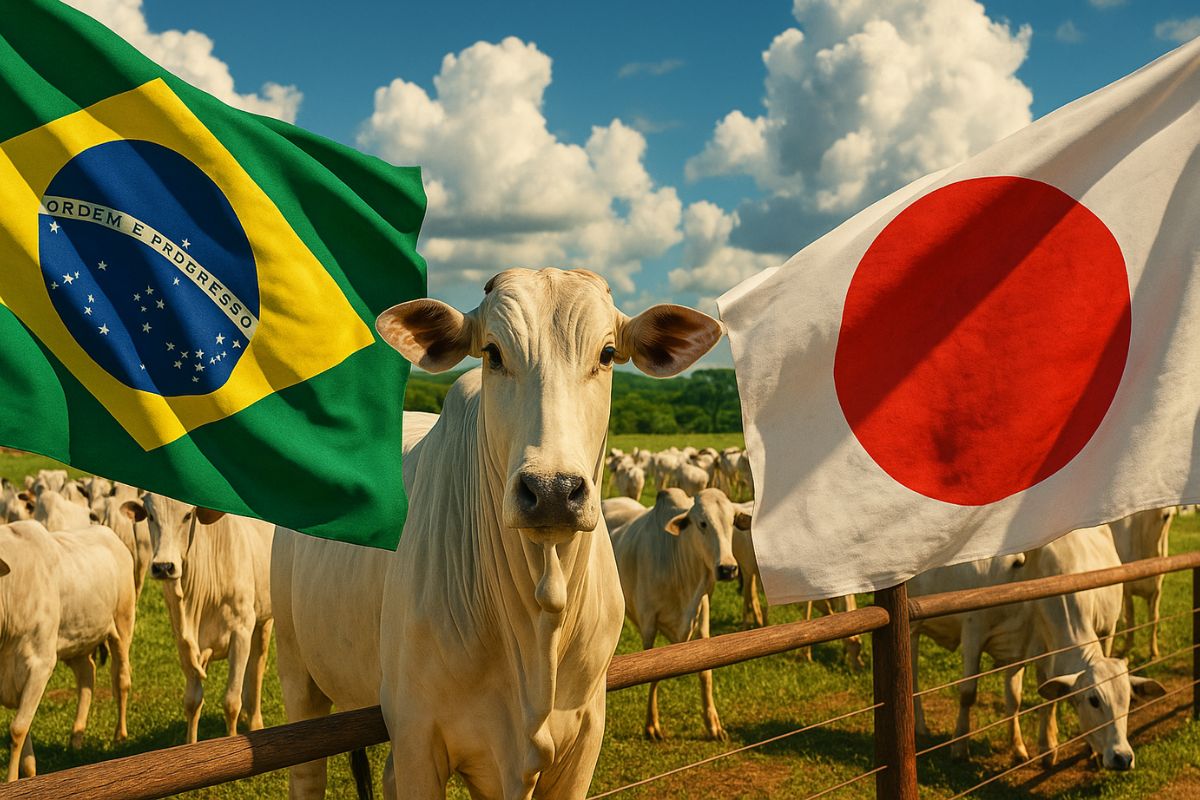


Negotiations Aim to Reduce Losses Caused by Tariffs from the U.S. and Expand Exports from São Paulo
The opening of the Japanese market for beef producers from São Paulo has become a priority for Governor Tarcísio de Freitas. The initiative seeks to offset estimated losses of US$ 1 billion following the imposition of a 50% tariff by the United States, a measure that directly impacted the sector.
According to O Globo, Tarcísio met with the Vice Consul of Japan in São Paulo, Tomu Shimizu, and representatives from São Paulo’s meatpacking companies to showcase the quality and traceability of local beef. The state is betting on feedlot cattle farming, a method that appeals more to Japanese consumers, and its proximity to the Port of Santos as a logistical advantage.
Strategy to Conquer the Japanese Market
The Secretary of Agriculture and Supply of SP announced that negotiations are already underway for the visit of a Japanese technical mission to tour feedlots and farms in the state within this semester. The goal is to demonstrate, on-site, the quality of the product and ensure that Japan’s sanitary requirements are met.
-
Brazil’s 2026 Tax Refund: Record 9.58 Million Filers in Largest Payout Ever, But a Key Detail on Priority Recipients Draws Nationwide Attention

-
Itaú Alters Hybrid Work Model, Increasing Office Days from 2028, Prompting Employees to Adjust to New Routine
-
Facing Labor Shortage, Japan Plans to Invest $34 Million to Attract Foreign Workers in Construction, Healthcare, Industry, and Commerce

-
Brazilian City Makes Remarkable Leap, Becomes 4th Wealthiest in the Country with GDP of R$ 134.1 Billion




State Deputy Lucas Bove (PL), who facilitated the approach, emphasized that Japan imports about 700 thousand tons of beef per year and could consider Brazil as an alternative to Australia and the United States. However, entry into this market depends on meeting strict sanitary criteria.
Challenges and Internal Competition
Brazil was declared free of foot-and-mouth disease by the World Organization for Animal Health (OIE) in May, but the opening of new markets is a slow process. Japan, for instance, prioritizes states that are free of the disease without vaccination status, which is already a reality in southern regions, further along in the documentation process.
The Ministry of Agriculture is also negotiating with Japan, but current discussions are focused on southern meatpacking companies. The Brazilian Association of Exporting Meat Industries (Abiec) advocates that the approval includes meatpacking companies from all over the country to avoid concentrating benefits in just one region.
Do you think São Paulo will manage to carve out space in the Japanese beef market? Could this strategy reduce dependence on exports to the U.S.? Leave your opinion in the comments and join the debate.








