Portuguese
  Spanish


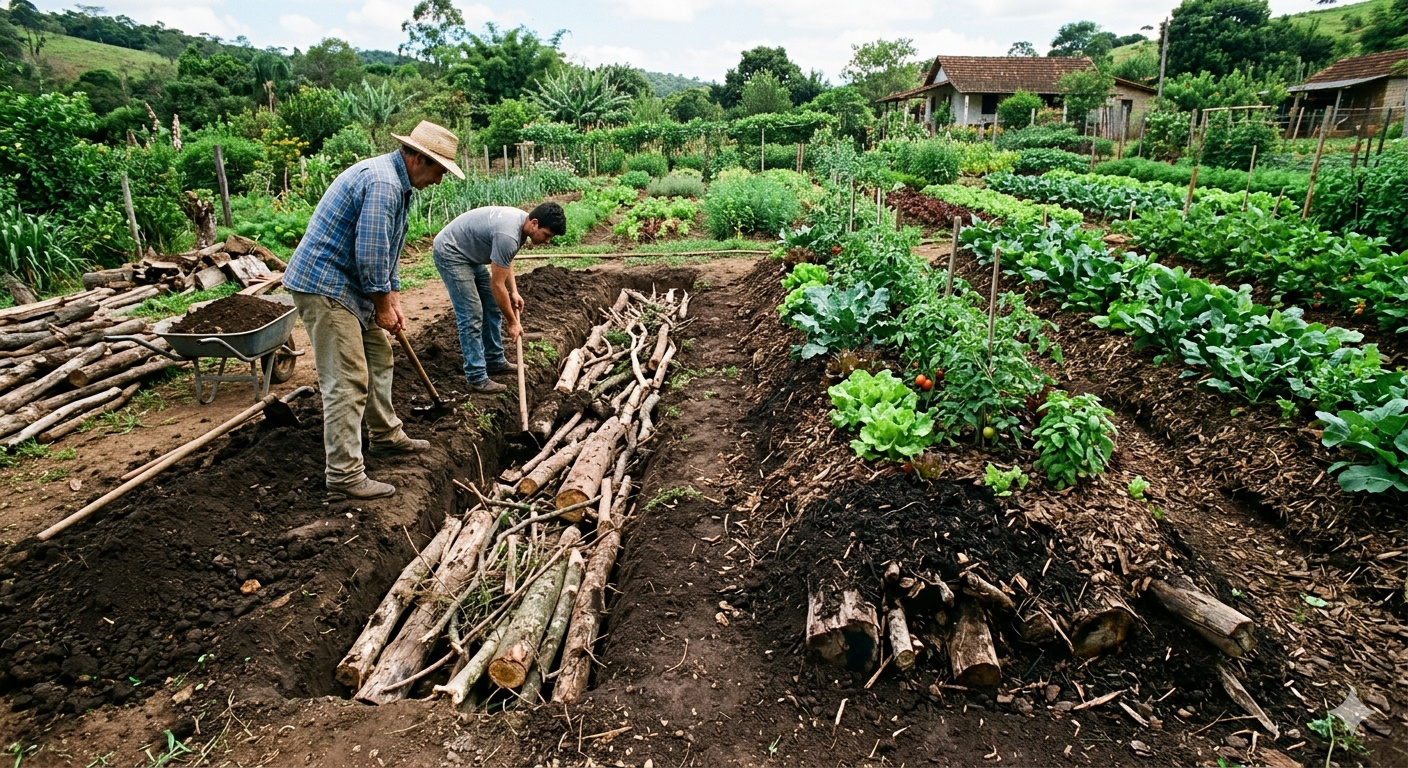


Burying Logs and Branches Beneath Garden Beds Creates a “Subterranean Sponge” That Retains Water and Nutrients in the Soil, Reducing Irrigation and Increasing Garden Fertility.
In various regions around the world, farmers and rural producers have been using a simple technique to improve water retention in the soil and reduce the need for irrigation. The practice consists of buriable logs, branches, and decomposing wood beneath the garden beds, creating a kind of natural moisture reservoir within the soil. The method is internationally known as Hügelkultur, a German word meaning something close to “mound culture.” The technique originates from traditional agricultural practices in Central Europe and has been studied and adapted in sustainable agriculture and permaculture systems. The logic behind the method is relatively simple. The buried wood absorbs rainwater and acts as a natural sponge, storing moisture in the soil for long periods. Over time, this water is slowly released to the plant roots, helping to keep the soil moist even during dry periods.
In addition to storing water, the decomposition of the wood releases nutrients that contribute to soil fertility.
How the Hügelkultur Technique Works – “Subterranean Sponge” Created by Logs
Wood has an internal structure formed by fibers and small channels that originally transported water within the tree. Even after being cut, this structure remains capable of absorbing and retaining liquids.
-
Brazilian Producer Adopts Hydroponic Strawberry Farming in Western Paraná, Achieving Year-Round Harvests and Becoming a Model for Continuous Production

-
Vertical Farming Company Backed by SoftBank and Jeff Bezos Files for Bankruptcy, Valuation Plummets from $1.9 Billion to Under $15 Million

-
Indian Inventor Develops Solar-Powered Machine Enabling Blind Farmers to Independently Manage Crops with Sensors and Audio Alerts

-
Brazilian Honey Supplying U.S. Supermarkets Faces Price Hike and Job Threats Amid New Tariff Round


When logs and branches are buried beneath the soil, these channels function as microscopic water reservoirs. During rain or irrigation, the wood absorbs part of the moisture from the soil. During drier periods, the stored water begins to be slowly released back into the surrounding environment. This process creates a humid microclimate near the plant roots.
This mechanism allows the soil to retain moisture for longer, reducing the frequency of irrigation needed to keep the plants healthy. This effect is particularly useful in regions where the soil dries quickly or where the availability of irrigation water is limited.
Wood Decomposition Also Improves Soil Fertility
Another important benefit of this technique is related to the gradual decomposition of the buried wood. Over time, fungi, bacteria, and other soil organisms begin to decompose the logs and branches. This process releases essential nutrients that help enrich the soil.
Among the released nutrients are compounds that contribute to the increase of soil organic matter, which is fundamental for agricultural fertility.
Additionally, the decomposition of the wood helps improve soil structure, making it more porous and facilitating the circulation of air and water. This type of soil tends to favor the growth of deeper and healthier roots.
Hügelkultur Technique Helps Reduce Irrigation in Gardens and Crops
One of the main advantages of the system is the reduction of constant irrigation needs. Since the buried logs store water and slowly release this moisture, plants can access water reserves even during dry periods without rain.


In home gardens and small rural properties, this can represent a significant water saving. In regions with dry climates or prolonged dry spells, the method can help maintain agricultural production without relying on intensive irrigation systems.
This characteristic makes the technique especially interesting for sustainable agricultural practices.
How Farmers Build This Type of Bed
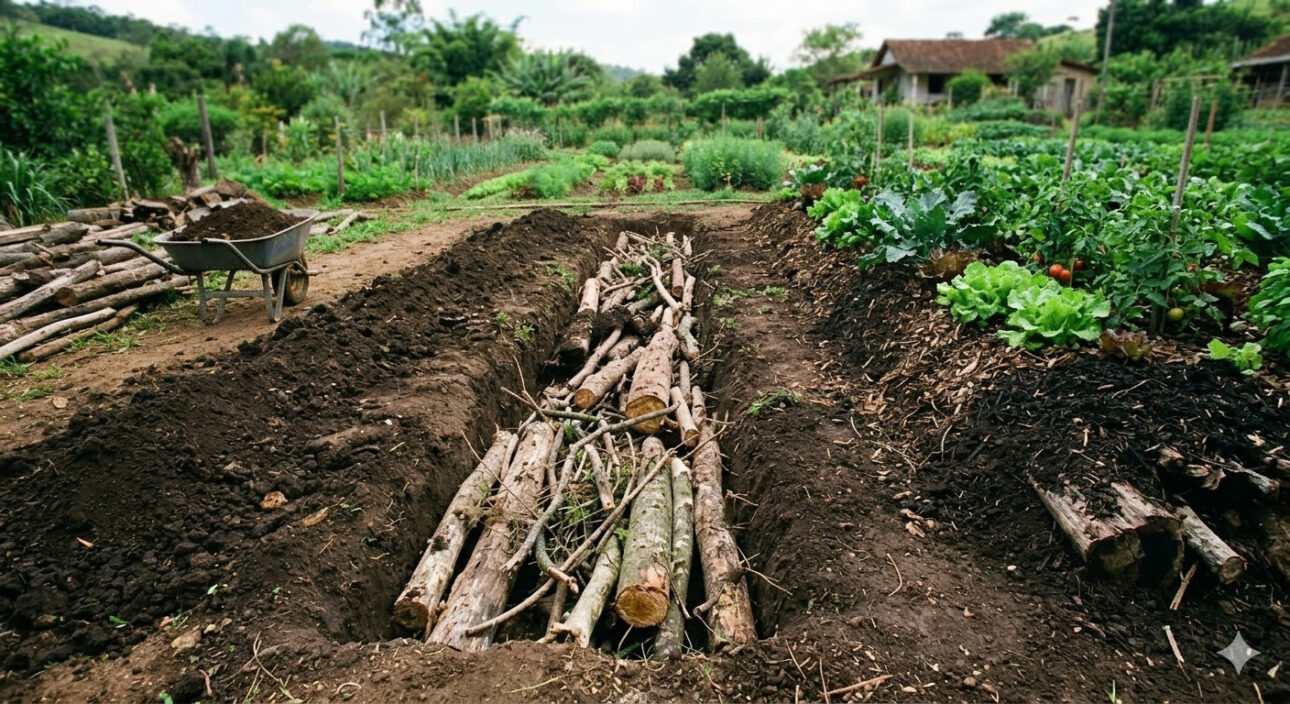
The process of constructing a bed based on this technique usually begins with digging a trench or base where the logs will be placed. First, larger logs or thick pieces of wood are positioned at the bottom of the area. Next, layers of smaller branches and wood scraps are placed on top of this base.
After that, the structure is covered with layers of soil, dried leaves, plant debris, or organic compost. Over time, the material begins to integrate into the soil, creating an environment rich in organic matter with high water retention capacity.
Plants can be grown directly on the formed bed.
Hügelkultur Technique Used in Permaculture Systems to Bury Logs and Branches Beneath the Garden Beds
In recent years, the method has been widely used in permaculture projects, a system of agricultural planning that seeks to imitate natural processes of ecosystems.
The central idea of permaculture is to create agricultural systems that are productive while also sustainable, reducing the need for external inputs such as chemical fertilizers or intensive irrigation. The technique of burying wood in the soil fits well into this concept, as it transforms natural waste — such as branches and logs — into a useful resource for agriculture.
Additionally, the method contributes to increasing soil biodiversity, promoting the growth of beneficial microorganisms and fungi.
Why Wood Works So Well in the Soil with the Hügelkultur Technique
The wood’s ability to store water is related to its cellular composition. Even after being cut, wood retains part of the internal structure that originally transported water and nutrients within the tree. This structure functions as a network of microtubules capable of absorbing and retaining liquids.
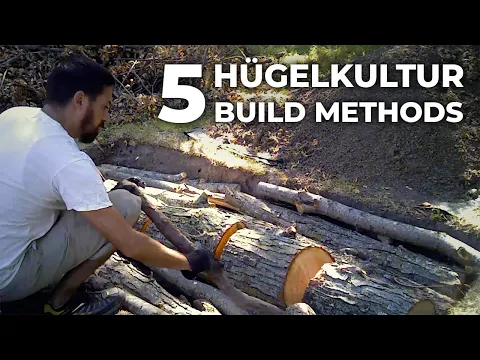
When buried in the soil, wood acts as a reservoir that captures water during rains or irrigation. This storage helps reduce losses due to evaporation and keeps moisture available to the plant roots for longer.
This natural mechanism explains why beds constructed with this technique tend to exhibit moister and more fertile soils.
Additional Benefits for the Soil and Plants When Burying Logs and Branches Beneath the Garden Beds
In addition to water retention and increased fertility, the technique offers other important benefits for agricultural soil. One of them is the improvement of the physical structure of the land. The decomposition of wood creates spaces within the soil that help increase porosity and air circulation.
These spaces also facilitate the infiltration of rainwater, reducing surface runoff and helping to prevent erosion.
Another benefit relates to the development of plant roots. Soils rich in organic matter tend to favor root growth, allowing plants to explore deeper layers of the earth in search of nutrients. This environment usually results in plants that are more resilient to climatic variations.
Simple Technique That Transforms Waste into Agricultural Resource
One of the reasons this technique has attracted increasing interest among farmers and gardeners is its simplicity. Instead of discarding branches, logs, and wood scraps, these materials can be reused as part of the bed structure.
In doing so, natural waste is transformed into a resource that helps improve soil fertility and water use efficiency.
This approach fits into regenerative agriculture practices, which aim to restore soil health and increase its capacity to support agricultural production over time.
A Simple Solution Inspired by Nature Itself – Hügelkultur
The logic behind the technique of burying wood in the soil can also be observed in natural environments. In forests, fallen logs and decomposing branches often remain on the ground for years. During this time, they absorb water, accumulate organic matter, and provide shelter for various soil organisms.
This natural process contributes to maintaining the fertility and moisture of forest soil. By applying this same principle in gardens and crops, farmers can replicate an ecological mechanism that already naturally occurs in ecosystems.
The result is an agricultural system that leverages natural processes to improve the soil and reduce dependence on external resources.