Portuguese
  Spanish


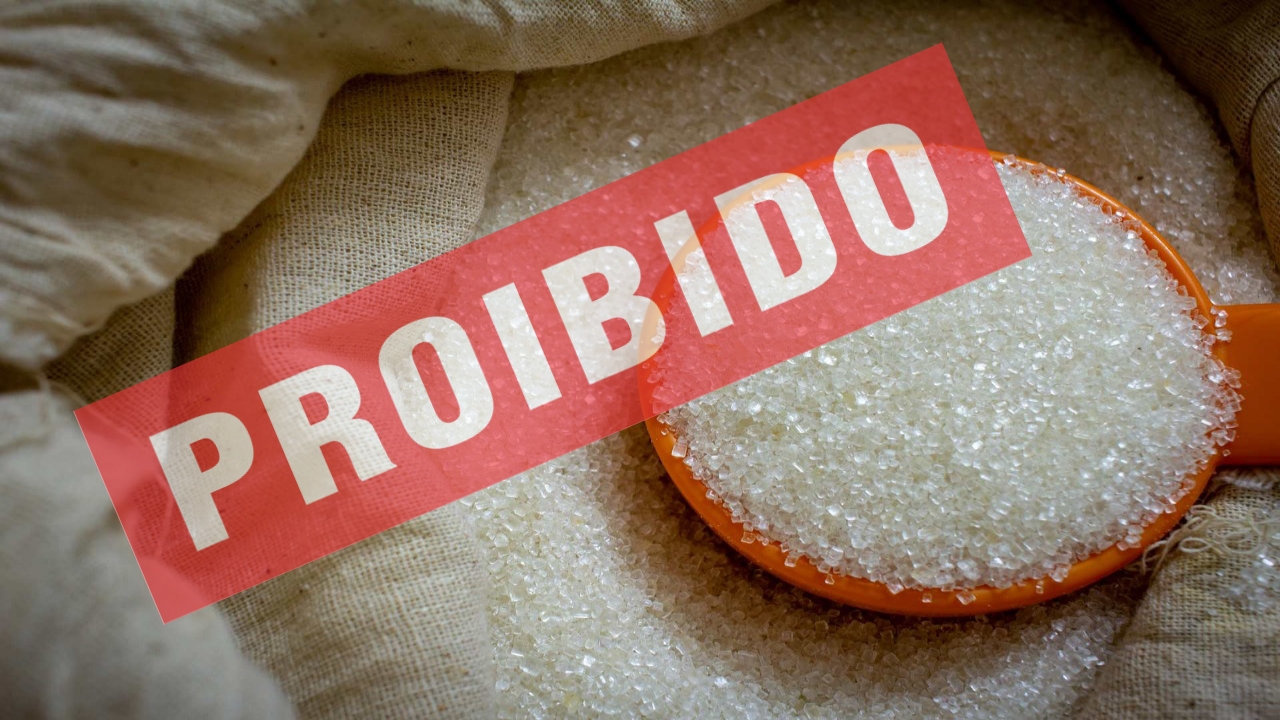

Did You Know That Making Sugar at Home Is Illegal? Understand the Law Created in the 1960s That Still Prohibits Something So Common in Brazil and Why It Remains in Effect
Making your own sugar at home seems like an innocent rural tradition, but in Brazil, this practice can be considered illegal. Yes, there is an old law that still prohibits homemade sugar production, even on small properties.
The curious thing is that this regulation dates back to the military regime and remains technically in force, although many experts claim it no longer makes any sense today.
The Origin of the Prohibition and the Weight of an Old Law
The history of this prohibition began in the 1960s, when the country was under military rule. At that time, the government wanted to have total control over the sugar market, one of the main products of the Brazilian economy.
-
Brazil Approves Proposal to Cap Vehicle Tax at 1% of Car Value

-
Brazilian Senate Approves Bill to Automate Child Support Payments Directly from Debtors’ Accounts

-
Brazilian Congress Advances Bill to Ensure Full Pension Benefits for Families Receiving Reduced INSS Death Benefits
-
Unusual Traffic Signs in Brazil: Wheelbarrow Ban, Crosswind Warning, and Customs Stop


This is when Decree-Law No. 16/1966 and Decree-Law No. 56/1966 were enacted, which stipulated that no one could produce sugar without official authorization.
The agency responsible for this control was the now-defunct Institute of Sugar and Alcohol (IAA). Even after its dissolution, the rules that supported it were never officially revoked, which is why they still exist on paper.
According to the legislation, producing sugar without a license could characterize a “clandestine factory“, subject to six months to two years in detention. In practice, this would even include small artisanal production done at home.
Why Does This Law Still Exist in Brazil?
The lawyer Ysnaider Alcantara Cardozo, a specialist in Criminal and Consumer Law, explains that this law is an authoritarian relic and should be reviewed:
“Decree-Law No. 16, of August 6, 1966, and similar provisions represent an authoritarian relic that needs to be reviewed. […] Domestic sugar production, in itself, is neither unlawful nor poses a danger to the community.”
He points out that the prohibition violates basic constitutional principles, such as freedom of initiative and free competition, both guaranteed by the Federal Constitution.
Moreover, society has evolved: what once required heavy oversight is now seen as part of family agro-industry, a sector that has been growing and gaining traction at fairs and rural cooperatives.
The criminal lawyer Warlem Freire, a professor of Criminal Procedure, goes further. He states that, although the law still exists, it is no longer enforced due to the so-called principle of social adequacy.
This principle recognizes that practices accepted by society that do not pose real danger, such as producing sugar artisanally, cease to be criminalized in practice, even if the text of the law has never been altered.
How Small Producers Can Act Within the Law?
Despite the confusing scenario, there are legal pathways for those who want to work with sugar cane derivatives in a regulated manner. The Ministry of Agriculture and Livestock (MAPA) and state agencies allow for family agro-industrial production, provided that sanitary and labeling standards are followed.
Agricultural producers can manufacture brown sugar, demerara, molasses, and rapadura, typical products of Brazilian rural culture.
To do this, some steps need to be followed:
- Register the establishment with the agricultural and surveillance agencies;
- Comply with good manufacturing practices;
- Maintain adequate labeling with clear information on origin and validity.
According to data from Embrapa, the formalization of family agro-industry has allowed small producers to gain access to new markets and increase income in the countryside, without depending on intermediaries.
Public programs such as PRONAF and PAA also offer credit and technical assistance for those who wish to formalize.
Producing Sugar Only for Personal Consumption: What the Law Says
Those intending to produce sugar at home only for personal consumption do not need to worry about criminal sanctions, as long as they maintain basic sanitary conditions.
The most important point is to ensure that the product does not pose a health risk, that is, to avoid contamination and follow simple hygiene practices in processing sugar cane.
Still, experts argue that the National Congress should update this outdated legislation, which no longer reflects the rural reality of the country.
In a context where family agriculture is responsible for about 70% of the food consumed in Brazil, according to the IBGE, it is inconsistent to maintain laws that penalize traditional and sustainable practices.
A Debate That Mixes Economy, Culture, and Freedom
The debate about homemade sugar production in Brazil goes beyond legality: it touches on the essence of rural autonomy and economic freedom.
While the big industry dominates the market, thousands of families in the countryside continue to transform sugar cane into typical products that feed generations. For many jurists, prohibiting this is denying part of the country’s cultural identity.
The lawyer Warlem Freire summarizes this view well by stating that “criminalizing homemade sugar is the same as punishing the practice of grinding cane in the family — a tradition that represents deep Brazil, which survives even when the State forgets.”
If you believe this law needs to be updated, leave your opinion in the comments or share this article to broaden the debate.