Portuguese
  Spanish


In four years of continuous operation, professional divers removed about 2.4 tons of submerged trash from among the rocky shores of Balneário Camboriú, North Coast of Santa Catarina. The work is the result of a partnership between the city hall, the company Ambiental, and Univali’s Submarine Diving Laboratory, which catalogs and analyzes the waste.
Balneário Camboriú’s tourist image usually focuses on the beachfront skyscrapers, the bustling sandy strip, and the nightlife. Beneath the water’s surface, however, professional divers have been outlining a very different routine, removing a volume of trash from the seabed that surprises even those who follow the environmental area in the municipality.
The operation carried out on the rocky shores of the North Coast of Santa Catarina has already collected about 6 tons of waste between 2022 and 2026. Of this total, approximately 40% came directly from submerged areas, which is equivalent to about 2.4 tons of material hidden among rocks, the seabed, and hard-to-reach spots.
How the operation works at 25 points along the coastline
@portalndmais Uma operação de limpeza subaquática com mergulhadores realizada nos costões rochosos de Balneário Camboriú, Litoral Norte de Santa Catarina, já retirou cerca de seis toneladas de resíduos entre os anos de 2022 e 2026. Do total recolhido no período, aproximadamente 40% foram removidos diretamente das áreas submersas, o equivalente a cerca de 2,4 toneladas de lixo acumulado no fundo do mar e entre as formações rochosas do município. Os serviços abrangem 25 pontos ao longo da orla e dos costões da cidade, incluindo regiões como Laranjeiras, Estaleirinho, Praia do Pinho, Taquaras, Praia do Buraco, Praia dos Amores e Ilha das Cabras. Segundo os responsáveis pela operação, essas áreas acumulam resíduos há anos em razão da atividade humana ligada ao turismo, à pesca esportiva e à maricultura. Além da retirada do lixo, os dados coletados pelas equipes são utilizados para monitoramento ambiental e para auxiliar no planejamento de políticas públicas voltadas à preservação costeira. Entre os resíduos mais encontrados ao longo dos quatro anos da operação estão plásticos e materiais relacionados à atividade pesqueira, além de vidro, cerâmica, metais, tecidos e borrachas. Siga @portalndmais Crédito: Ambiental/Divulgação/ND Mais NDMais Operação SC BalneárioCamboriú MeioAmbiente
ARTICLE CONTINUES BELOW♬ som original – portalndmais – portalndmaisSee also
A 550-million-year-old fossil found in Australia reveals a worm-like creature that already chose the right side to move and may be the first “right-handed” animal known to science.

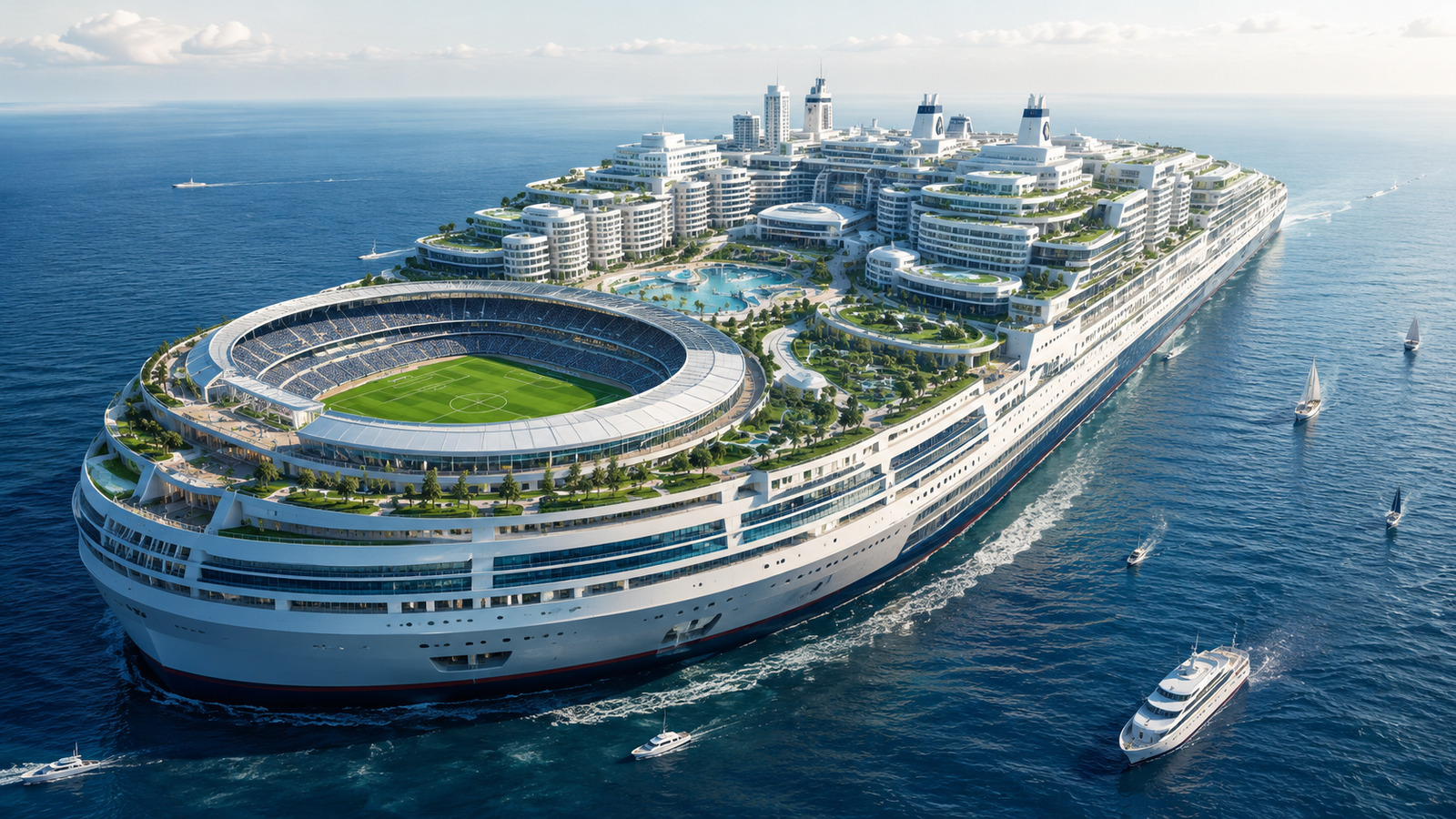
Will it come off the drawing board? Conceived in the 1990s, a floating city for 80,000 people will have a football stadium, hospital, schools, hotels, and parks, but it still hasn’t come off the drawing board.

Mbappé makes a decision and refuses to advertise bets: “they have destroyed many people,” says the French star, who witnessed gambling addiction devastate families and entire neighborhoods where he grew up, becoming a global example of responsibility.
At 17 years old, he received an order for 2,000 Easter eggs without having a factory, worked up to 18 hours a day to deliver everything, turned artisanal chocolate into a national empire, and today Cacau Show has more than 4,000 stores in Brazil.




The work does not happen randomly. The teams operate at 25 points spread along the city’s coastline and rocky shores, in locations such as Laranjeiras, Estaleirinho, Praia do Pinho, Taquaras, Praia do Buraco, Praia dos Amores, and Ilha das Cabras.
These areas have a common characteristic. They have been accumulating waste for years due to human activity linked to tourism, sport fishing, and mariculture, three sectors that drive the region’s economy and leave traces that accumulate in the water.
In recent weeks, the operation focused on Laranjeiras Beach, a very busy tourist spot for much of the year. In the vicinity of the pier and the beach’s rocky shore alone, the teams removed 294.31 kilograms of waste.
The number is impressive when broken down into items. A total of 1,255 objects were collected, combining terrestrial and submerged waste, a balance that shows how even intensely trafficked stretches concentrate large volumes of debris invisible to the average swimmer.
What kind of trash is hidden underwater
The composition of the collected material tells a clear story about the relationship between humans and the sea. Underwater, waste directly linked to fishing and mariculture, traditional activities in the region, predominates.
Nets, cables, nylon lines, sinkers, and chemical light devices used in baits frequently appear. This type of disposal often creates traps for marine fauna and hinders the development of species that depend on the rocky shores to reproduce, according to specialists monitoring the work.
In terrestrial areas near the rocky shores, the profile of the trash found is different. PET bottles, plastic bags, packaging, lids, foams, and cans predominate, materials that usually arrive carried by the tide or discarded directly by those who frequent the coastline.
The combination of the two scenarios helps to paint a broad picture of the problem. The sea receives trash not only from tourists circulating on the beach but also from the economic activity developed on the waters themselves, and any long-term strategy needs to address both fronts simultaneously.
The partnership that sustains the pioneering initiative
The continuity of the work depends on a structure involving three main actors. The City Hall of Balneário Camboriú, the company Ambiental Limpeza Urbana e Saneamento, and the University of Vale do Itajaí, Univali, maintain the agreement that enables the operation.
Each party fulfills a specific function in this arrangement. The university contributes with the Submarine Diving Laboratory, which scientifically organizes, catalogs, and analyzes all the material removed, transforming the collection into a source of research and environmental data.
The laboratory coordinator, Professor Ewerton Wegner, highlights the technical nature of the work. For him, the data generated from the actions are fundamental for environmental monitoring and for planning long-term preservation policies.
The sheer scale of the local coastline explains the complexity of the initiative. Wegner points out that Balneário Camboriú has about 10 kilometers of rocky shores distributed along its coast, with much of these areas in hard-to-reach spots, a factor that historically hindered constant cleaning and monitoring actions.
The technology used in underwater missions
The teams’ daily routine is anything but improvised. The operation uses technical protocols based on Univali’s Scientific Diving Regulation and follows standards aligned with international norms for this type of activity.
Divers work with self-contained underwater breathing apparatus, known by the acronym SCUBA, and have vessels equipped with GPS and environmental monitoring instruments. This structure allows for precise mapping of each collection point and cross-referencing data over time, forming a history that grows with each new mission.
When debris too large to be removed immediately appears, a complementary strategy comes into play. The objects are marked with buoys and flagged for later removal with the support of larger vessels and more robust equipment.
This type of care avoids risks for professionals. Trying to manually pull out a net entangled in rock can cause serious accidents, so the protocol calls for patience and planning, values not always associated with common sense about what a simple beach cleanup is.
Why the initiative is considered unprecedented in Brazil
One-off underwater cleanup operations often appear in different cities along the Brazilian coast, usually conducted by NGOs or volunteers. The case of Balneário Camboriú stands out for another reason, according to Ambiental’s manager, André Renato Kannenberg.
The difference lies in the permanent structure. The city maintains a formal agreement with professional divers focused on the systematic cleaning of rocky shores, a model that, according to Kannenberg, is not known in other cities in the country.
This continuous nature completely changes the effects of the operation. Instead of one-off cleanups that clear a stretch and return months later, the work maintains a regular pace of monitoring, removal, and data analysis over the years.
The choice for permanence also responds to a local reality. Areas like rocky shores require trained teams and tend to accumulate trash constantly, precisely because they concentrate fauna, tourist infrastructure, and fishing activity simultaneously, within a relatively small radius.
The data generated helps shape public policies
The physical removal of trash is only one part of what the operation delivers to the city. The numbers, photos, and classifications produced by the teams feed a database that guides the work of public authorities on a broader scale.
Over the four years, the most common waste found was plastics and materials related to fishing activity. Glass, ceramics, metals, fabrics, and rubbers also frequently appear, a mix that helps to understand the disposal cycle of the different sectors that occupy the local marine environment.
For Balneário Camboriú’s Secretary of Environment, Nelson Oliveira, this type of information is what allows for progress with concrete actions. The combination of technology, specialized professionals, and partnership with Univali, according to him, enables intervention in areas that previously did not receive this type of systematic attention.
The continuity of the work still depends on natural factors. Climatic and maritime conditions need to be favorable for underwater operations to happen safely, so the mission calendar is adjusted according to the weather forecast and sea conditions each week.
And you, have you ever stopped to imagine how much trash might be hidden under the water of the beach you frequent in the summer? Did you find it an exaggeration or does it make sense to maintain a permanent agreement with professional divers for this type of operation?
Tell us in the comments if you think other cities on the Santa Catarina and Brazilian coast should adopt a similar model, if you have witnessed cleanup actions in the sea where you live, and what type of waste bothers you most when it appears floating near the sand. The discussion helps to understand how Brazilians view the relationship between tourism, fishing, and environmental preservation on the coast.