Portuguese
  Spanish


The Joinville Bridge, in northern Santa Catarina, will have a completely free central span of 160 meters over the Cachoeira River, with no support within the watercourse. The structure uses the successive cantilevers method, costs approximately R$ 329 million, and is now scheduled for delivery in 2027 after a recent technical postponement.
Joinville’s largest urban mobility project has gained a technical detail that often captures attention even from those not involved in civil engineering. The future bridge over the Cachoeira River will have a completely free central span of 160 meters, without any pillars embedded in the waters of Babitonga Bay.
The information was confirmed by Paulo Castro, director of Joinville’s Urban Infrastructure Secretariat, during a technical visit by councilwoman Vanessa Falk (Novo). The choice of construction method was directly influenced by the need to protect the local mangrove forest and maintain navigability in the region.
What is the successive cantilevers method

The system chosen to erect the central structure has a technical name and is widely used in large-scale projects. It is called successive cantilevers and allows sections of the bridge to advance progressively from support points outside the water.
-
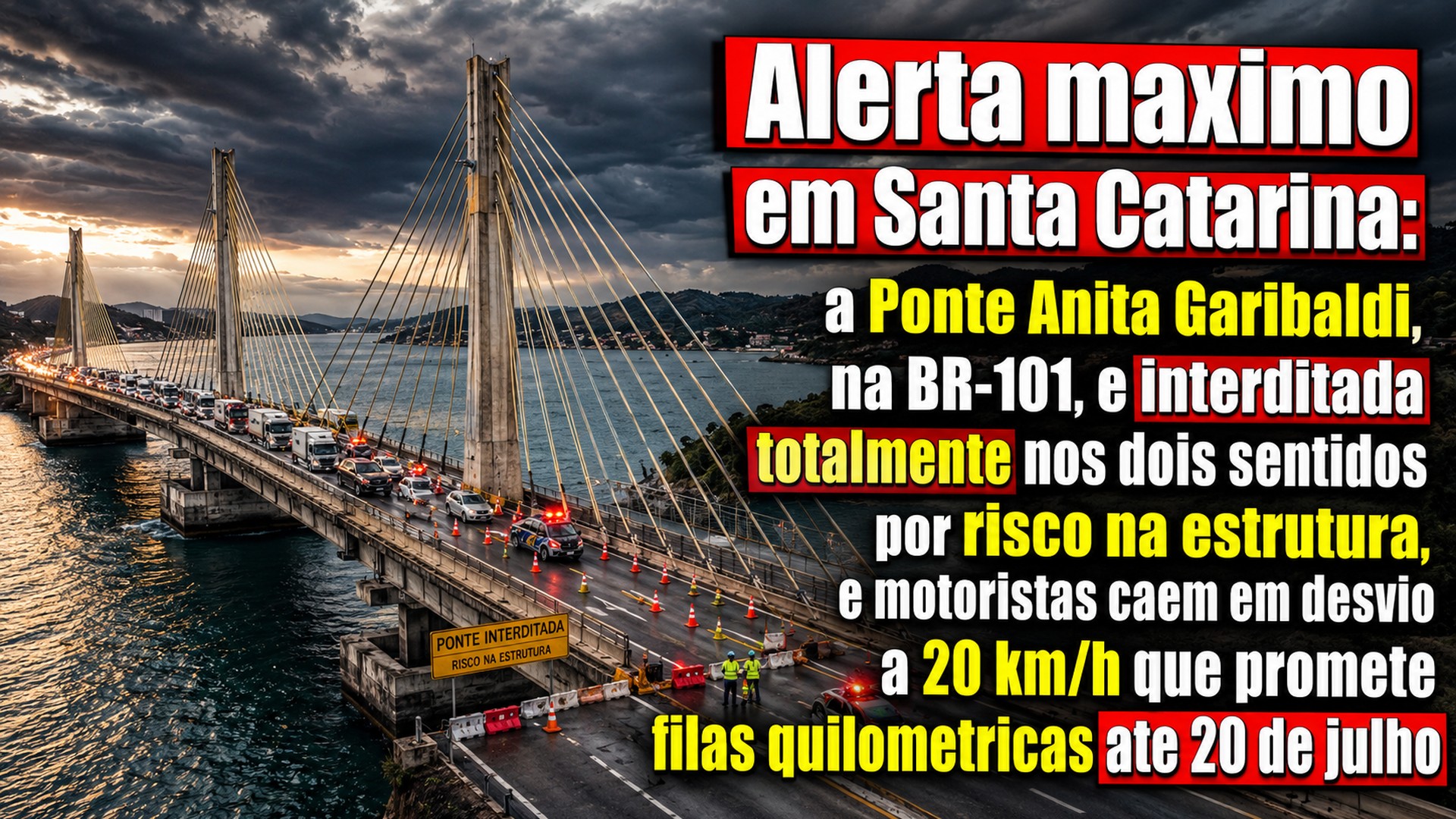
Alert in Santa Catarina: the Anita Garibaldi Bridge on BR-101 is completely closed in both directions due to “structural risk,” and drivers are diverted to a 20 km/h detour that promises kilometer-long queues until July 20.

-
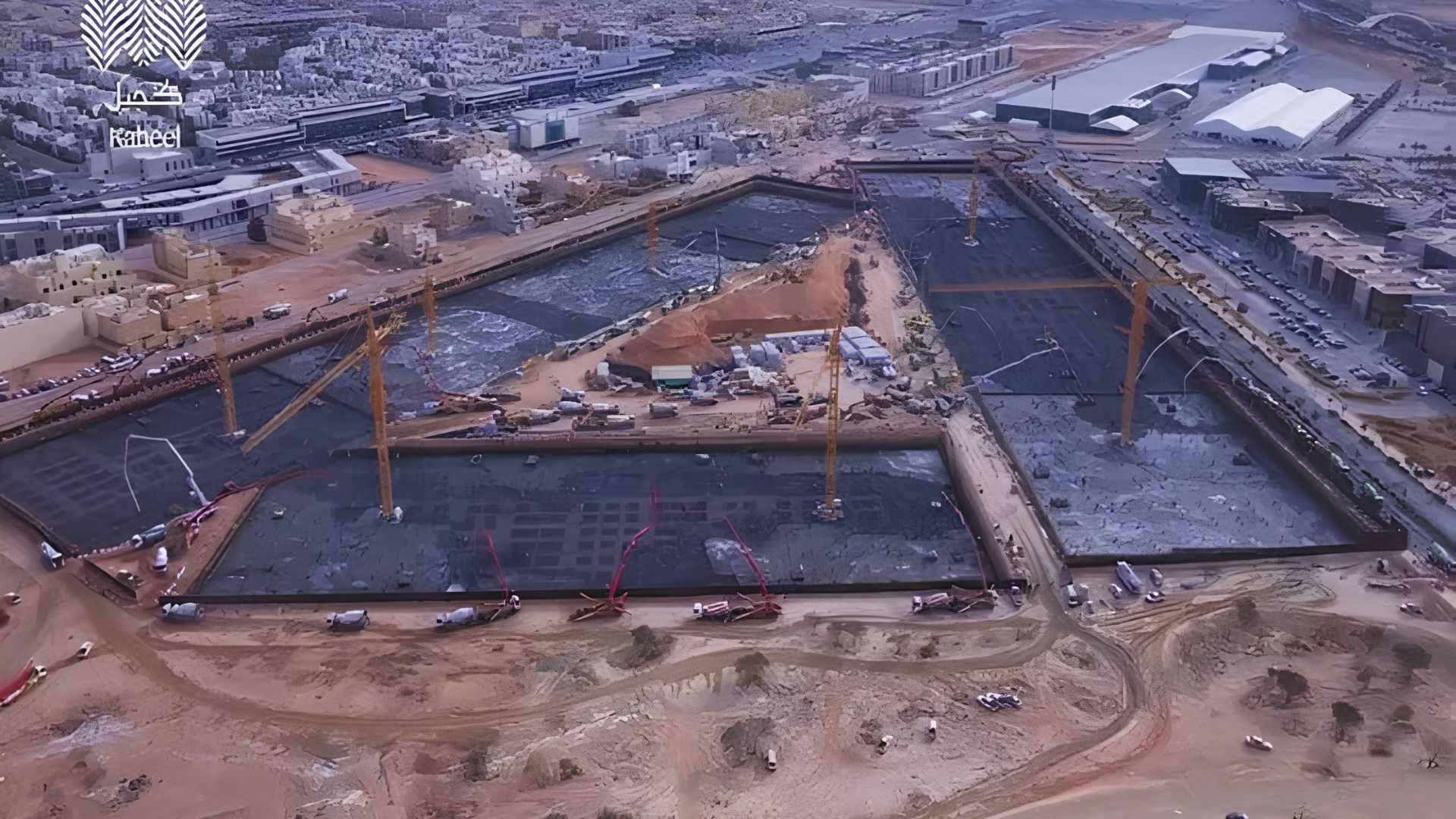
More than 6,000 trucks poured nearly 70,000 cubic meters of concrete without interruption for 72 hours to create the largest continuous concrete pour in history and erect a megaproject in Saudi Arabia.
-
28-meter, 156-ton titans traveled 20,000 km from China to the port of Santa Catarina: Portonave received 7 fully electric megacranes, part of a R$ 210 million package, to double container handling.
-
They exchanged the idea of a large house for a 35 m² warehouse, spent US$ 12,000 on the structure, and created a tiny house in Colorado with space to live and work.



In practice, the main pillars are anchored on solid ground, not within the bed of the Cachoeira River. From these secure points, the structure grows towards the center of the span, piece by piece, without needing any intermediate support on the bay floor.
This format is considered more expensive and slower than the traditional one, but it offers a decisive environmental advantage. By not driving piles into the river, it avoids the destruction of aquatic vegetation, sensitive sediments, and ecosystems that depend on the balance between fresh and saltwater in the region.
The practical consequence is the maintenance of vessel traffic exactly as it is today. Small local boats, fishing passages, and any nautical activity continue without physical barriers in the watercourse, as the 160-meter free span functions as a permanent aerial corridor.
Why the comparison with the Guaratuba Bridge is not appropriate

The Santa Catarina project is frequently compared to the Guaratuba Bridge in Paraná, especially in social media discussions. The similarity in size and investment fuels the debate, but the technical team explains that the contexts are quite different.
The Paraná project crosses an open sea area, in a region without significant vegetation cover. The Joinville Bridge, however, passes directly over a mangrove region, a sensitive ecosystem that harbors specific fauna and plays a central role in the environmental chain of Babitonga Bay.
This difference changes the type of viable construction method in each case. What works over the sea, without harming mangroves, would hardly be the best option in a section cut by channels and mangrove roots like the one in the Santa Catarina city.
The choice of the successive cantilever method, therefore, is neither aesthetic nor random. It was a direct calculation between cost, deadline, and environmental impact, with greater weight given to the attempt to preserve as much of the local mangrove as possible.
Where the project stands today and how much has been executed
The Joinville Bridge construction site continues to advance in the structuring and pile driving phase of the support beams. This is the most critical technical moment, ensuring that the entire foundation will withstand the weight of the final structure over decades.
According to project monitoring data cited by the Infrastructure Secretariat, execution reached 42.7% in the most recent assessment. The total contract is valued at R$ 329 million, a figure that places the undertaking among the largest investments in the city’s recent history in urban mobility.
The very configuration of the terrain explains part of the challenge. Working near a bay requires constant adaptations to tide, salinity, wind, and water level fluctuations, factors that weigh heavily on the routine of any heavy civil construction schedule.
Technicians have emphasized that each completed stage in the current phase is decisive for what comes next. The stability of the base determines whether the next sections of the bridge can advance within the planned timeframe or if new adjustments will be needed along the way.
Postponement to 2027 and the technical reasons
The delivery of the structure underwent a recent adjustment in the official calendar. The initial forecast pointed to 2026 as the target, but the schedule was revised, and the inauguration was rescheduled for 2027.
The justification presented by the municipal administration is directly linked to the technical complexity found in the terrain. It was necessary to drive piles to a greater depth than originally projected, a requirement that added months of work to the foundation phase.
This type of revision is considered common in large public works, especially when the subsoil presents characteristics different from those foreseen in preliminary studies. Even so, delays always generate political discomfort and demands from residents awaiting the promised benefit of the construction.
The city has been following the progress with anticipation, as the bridge is presented by the city hall as a key piece to solve displacement bottlenecks between important regions. The new date, however, may be revised again if new unforeseen events arise during the remainder of the execution.
Who benefits when the bridge is inaugurated
When completed, the structure promises to redesign a significant part of the city’s traffic. The new connection will directly link the Boa Vista and Adhemar Garcia neighborhoods, two points currently separated by longer routes for those who need to cross the region.
The impact should be felt mainly by residents of the East and South regions of Joinville. Thousands of people who currently face daily traffic jams will be able to have shorter routes and faster flow between home, work, and essential services.
The work also has symbolic weight for the municipality, which had been discussing this connection for years before the contract was signed. For the local productive sector, the new crossing opens up logistical options that tend to improve the efficiency of those transporting cargo through the urban perimeter.
The continuation of the schedule now depends on a sequence of equally demanding technical stages. Completing the central span by the balanced cantilever method will be the most visible and photographable test of the entire construction, a moment when the 160 unsupported meters will begin to define the landscape of the Rio Cachoeira in Joinville.
And you, do you live in Joinville or usually cross the Baía Babitonga region and are following the progress of the work? Do you believe the postponement to 2027 will actually be met, or do you bet that this bridge might still be delayed further before being delivered to the population?
Tell us in the comments if you agree with the choice of the more expensive construction method to preserve the mangrove, if you think the R$ 329 million investment will really ease traffic between Boa Vista and Adhemar Garcia, and what you expect on the day it’s finally possible to cross this new connection. The discussion helps to understand how Joinville views the biggest mobility project in its recent history.