Portuguese
  Spanish


The Castor Project attempted to store gas in the Mediterranean, triggered earthquakes, and left a public bill that exceeds 1.6 billion euros.
A project to store gas under the Mediterranean ended up being associated with over 1,000 earthquakes and turned into a public bill that exceeds 1.6 billion euros in Spain. The so-called Castor Project, installed off the coasts of Castellón and Tarragona, was designed to reduce dependence on natural gas but was halted after a gas injection in 2013 was linked to a wave of tremors.
What seemed like a strategic solution turned into a saga of compensations, court decisions, and costs that continue to rise. Behind the impact of the earthquakes, there is a question that still bothers: how does an infrastructure that never worked continue to weigh on so many people’s pockets?
What was the Castor Project and why was it approved
The Castor Project was conceived as a large underwater gas storage facility in an old oil field in the Mediterranean, off Tarragona and Castellón. The idea was to create a kind of reserve for times of high demand, reinforcing energy security.
-
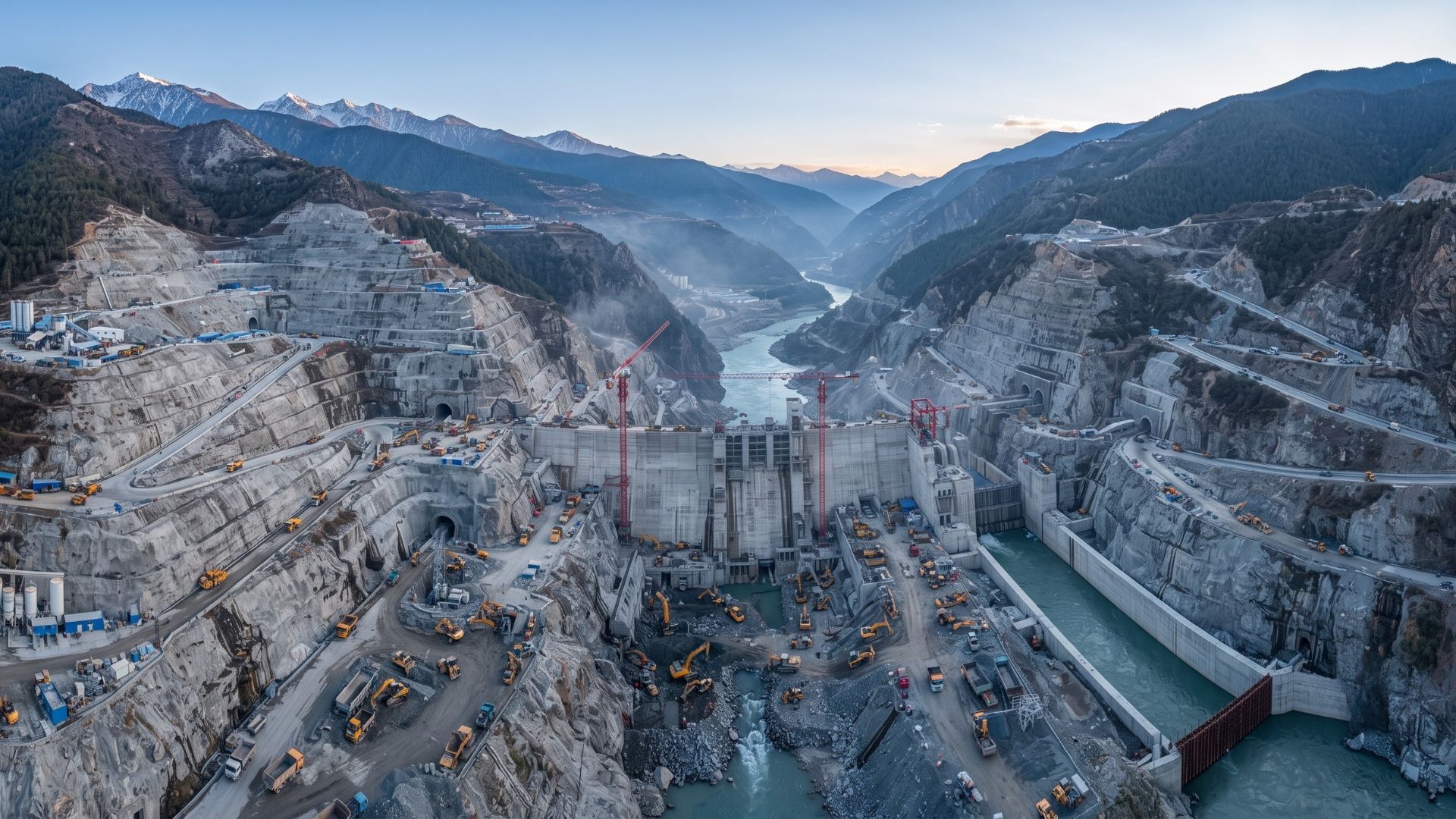
China Constructs Four 20 km Tunnels in World’s Deepest Canyon for Mega Power Plant to Outperform Three Gorges and Power All of Britain

-
China’s Engineered Bamboo: The “Material of the Future” Stronger Than Steel and a Sustainable Wood Alternative

-
Egypt’s “New Nile”: 170 km Artificial River Aims to Turn Desert into Farmland, but Water Supply Concerns Loom
-
Unable to secure a mortgage as a self-employed single mother, she designed her own floating home from a 20-meter boat and now lives “off-grid” with her two children and solar panels on an English canal.


Formally, the megaproject was approved in 2007 and started in 2008. The concession was granted to Escal UGS, whose main shareholder was ACS, with 66%. The initial budget was 500 million euros, but the story took another turn.
The structure that never truly operated
The plan included storing approximately 1.3 million cubic meters of LNG and involved a maritime platform, a 30.3-kilometer pipeline, and a land plant in Vinaròs, Castellón. The installation was located about 1,700 meters deep.
However, in practice, Castor never moved beyond the planning stage as a regular operation. It reached the phase of being set in motion, but stopped there. And the reason has a name and left a mark on the map.
When the earthquakes began and why this became a point of no return
To function, the storage needed what is called “cushion gas,” a base gas to maintain pressure. In 2013, an injection was made for this purpose, and according to the investigations mentioned in the case, the activity was linked to microseisms in Castellón between June and September of that year, with movement of the Amposta fault and another lower fault.
The numbers grew over time. Initially, around 350 tremors were reported, then over 500. Later, a study published in the Geophysical Journal International raised the estimate to over 1,000 ground movements, meaning over 1,000 earthquakes in the final accounting.
The majority was mild, but there was one record that became a symbol of risk. The largest earthquake mentioned reached a magnitude of 4.3 on the Richter scale. And from there, the political and social tolerance to move forward collapsed.
The decision to stop and the wear and tear that came with it
With the earthquakes gaining attention, the then Minister of Industry, José Manuel Soria, ordered the project to be halted. The pressure came not only from the tremors: profitability and environmental impact were also being discussed.
Moreover, the energy landscape changed. The Spanish system evolved into a more flexible logic, based on LNG imports and regasification plants, which reduced the argument for the urgent need for Castor. Even so, the bill did not stop along with the works.
How the earthquakes became a bill paid by everyone


With the failed project, the concession contract and the forecast of compensation to the awardee came into play. In October 2014, a compensation of 1.35 billion euros was approved by royal decree-law.
The mechanism was designed by the gas system: banks advanced the amount to Enagás, and the value was charged to consumers’ gas bills. In practice, the earthquakes were left behind, but the charges remained in the present.
In 2017, this mechanism was partially annulled by the Constitutional Court, which halted payments to financial institutions. The debt, with interest, ended up being assumed by the State, and the cost began to fall on taxpayers. The case began to be pointed out as an example of “socialization of losses.”
Litigations, refunds, and the bill that keeps growing
The legal dispute continued with new decisions. Among the cited episodes, the Audiencia Nacional ordered Escal UGS to refund gas consumers 209.7 million euros in “financial remuneration” related to 2014, 2016, and 2017.
And another stage came that opens new expenses: the dismantling of the underwater storage. In the spring of last year, the Minister for Ecological Transition and the Demographic Challenge, Sara Aagesen, announced the dismantling, and the process was awarded to Enagás in 2024.
The most recent chapter mentioned in the case is from February 2026, when the Supreme Court recognized new compensations for dismantling work and for operation and maintenance services. The indicated amount was 255 million euros, with more costs still expected until the final closure.
Result: the amount already exceeds 1.6 billion euros and continues to rise, even with attempts to reduce losses by selling part of the equipment. And this for an infrastructure born almost 20 years ago that never came to function.
Do you think that projects of this scale should have stricter brakes before they become a risk of earthquakes and public accounts?