






 Portuguese
  Spanish


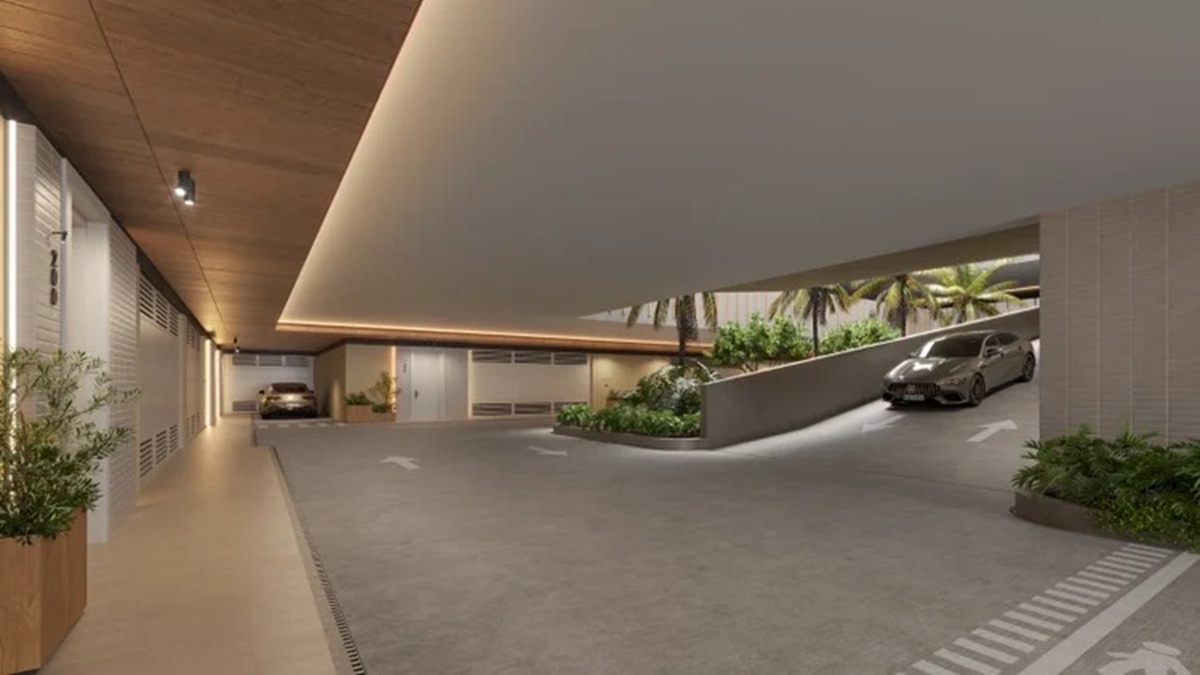


The New Residential System Park Haus, Created by Beco Castelo, Promises to Deeply Change the Experience of Living by Taking the Car Directly to Each Unit. With an Investment of R$ 1.1 Billion, the Project Eliminates Underground Garages and Adopts Internal Ramps for Safe and Autonomous Access.
Beco Castelo, a Santa Catarina construction company with a long history in the market, registered an unprecedented system in the country with the National Institute of Industrial Property. The model allows residents to park their vehicles inside their own units, thanks to internal ramps and planned accesses on each floor.
Named Park Haus, the concept was created by the developer’s technical team and, according to INPI, is the first of its kind in Brazil.
The patent secures the right to explore for a period of 20 years and paves the way for future partnerships, as other interested companies may enter agreements to utilize the technology.
-
Brazilian Actress Turns Waxing Clinic into 400-Unit Chain with $50 Million Revenue, Sells Stake After 13 Years

-
Major Company Shuts Down 70-Year-Old Factory in Brazil, Relocating Production and Impacting Over 100 Families
-
Toyota Shuts Down Brazilian Plant After Producing Over 1 Million Vehicles, Plans Special Destination for Final Corolla Produced Following $2.1 Billion Investment and Expansion.
-
Shoe Factories Close, Leaving 528 Workers Jobless in Sudden Turn of Events Affecting Hundreds of Families After Decades of Operation.


The forecast is that the enterprise will be launched in 2026 in the Cacupé neighborhood in Florianópolis, when the number of units, built area, and prices will be disclosed.
Origin of the Idea After the 2003 Blackout
The project’s inception dates back to the 2003 blackout, when a large part of Florianópolis was left without power for three days. The episode led Beco Castelo’s founder, José Castelo Deschamps, to seek alternatives to solve accessibility issues in elevated floors without depending on mechanical equipment.
Over time, the research evolved until it arrived at the patented model. He explains that the main goal is not to make the car the central focus of the residence, but to create a more integrated experience, allowing the resident to have autonomy, comfort, and control over their own space.
According to Deschamps, families looking for practicality, safety, and convenience find a direct solution in Park Haus, just like people with reduced mobility, who can access the unit without depending on vehicle elevators.
The vision reinforces a growing trend in the real estate sector, focused on residential solutions that are more responsive to the daily lives of residents.
Technical Recognition and Enthusiasm in the Sector
The system has been praised by representatives of national entities. For Kita Xavier, President of the Regional Council of Engineering and Agronomy of Santa Catarina, Park Haus offers exactly what is discussed when the subject is innovation: efficient, sustainable environments aligned with human needs.
He emphasizes that the project provides the construction industry with a concrete vision of smart cities applied to daily use.
The President of the Council of Architecture and Urbanism of Brazil, Patrícia Sarquis Herden, also highlighted the proposal.
She reported traveling 30 hours from Seoul to Florianópolis to learn about the solution and stated that she believed it was just another type of vehicle elevator. Upon analyzing the project up close, she described the idea as a true redefinition of the concept of living, with a clear focus on people.
Independent Ramps, Constant Ventilation, and Technical Detailing
The internal functioning has been structured to unite well-being and technology. Vehicles use independent ascent and descent ramps, ensuring smoothness and safety in movement. The accesses to the apartments resemble streets, with airflow ensuring adequate ventilation and exhaust.
The aesthetic choice was inspired by urban roads, with safety lanes and spaces similar to sidewalks, reinforcing the feeling of an outdoor environment integrated into the building’s structure.
The project uses high-resistance flooring and features sound attenuation. The expanded ceiling height allows ambulances, moving vehicles, and large trucks to reach the units without restriction. In a decisive stage of development, Deschamps personally visited the Fire Department to learn about the dimensions of rescue vehicles and ensure that all accesses were compatible with the corporation’s needs.
Less Excavation and Efficiency in Infrastructure
Beco Castelo emphasizes that Park Haus reduces the need for excavation, as it eliminates underground garages.
The architectural design also facilitates the implementation of infrastructure systems focused on efficiency and sustainability. The solution aligns with the company’s philosophy, which has been operating since 1978 and has already delivered 43 developments, totaling more than 2,200 residential units and 350,000 square meters built.
The expected investment for Park Haus and two other similar projects totals R$ 1.1 billion in the coming years. The developer’s latest launch had a GAV over R$ 200 million, highlighting the economic impact of the company in the sector.




Nossa. Que coisa moderna.
😂😂😂😂😂😂😂😂😂😂😂