Portuguese
  Spanish


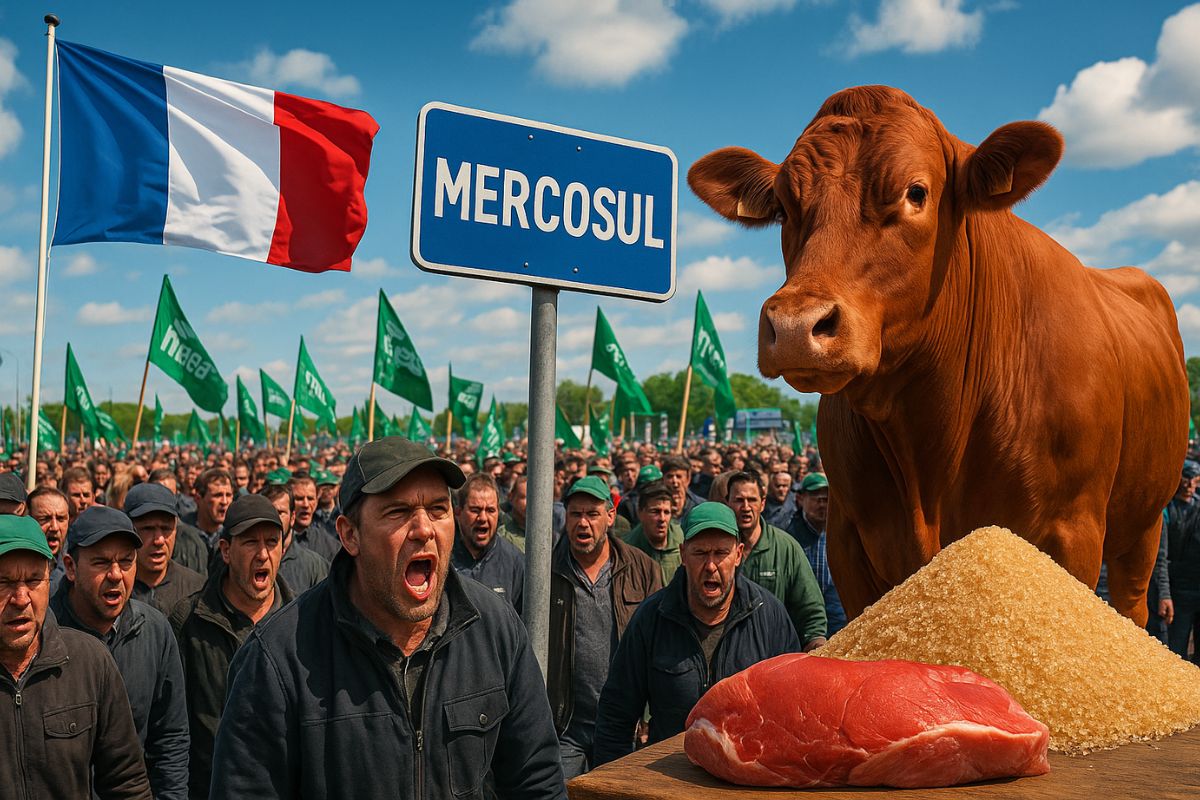

Farmers Warn Of Risk Of Collapse With Influx Of Brazilian Meat And Sugar.
Protests Across France marked Friday (26), when nearly 3,000 farmers occupied streets and squares to denounce the risks of the free trade agreement between the European Union and Mercosur. According to People’s Daily, the demonstrations were organized by the FNSEA union and received support from young farmers, who fear the impact of cheaper agricultural products from Brazil, Argentina, Paraguay, and Uruguay.
The fear is that opening the European market to Mercosur will cause a collapse in the French agricultural sector, especially in livestock and sugar and rice production, reducing the profit margin of local producers.
The pressure is mounting on President Emmanuel Macron, who has already faced criticism for not imposing stricter safeguards in the negotiations.
-
Brazilian Family’s Cheese, Started with One Cow in 1984, Named Best in the World, Beating 2,700 Competitors from 30 Countries

-
Brazilian Ranchers Use Satellites to Optimize Pasture Management and Prevent Feed Loss in Cattle Farms

-
Russia Follows China in Recognizing Brazil as Free from Foot-and-Mouth Disease Without Vaccination, Boosting Meat Exports and Agribusiness Potential

-
23-Year-Old Brazilian Turns Beekeeping into College Tuition, Harvesting Honey Twice a Year from 50 Hives




Fear Of Unfair Competition In The Field
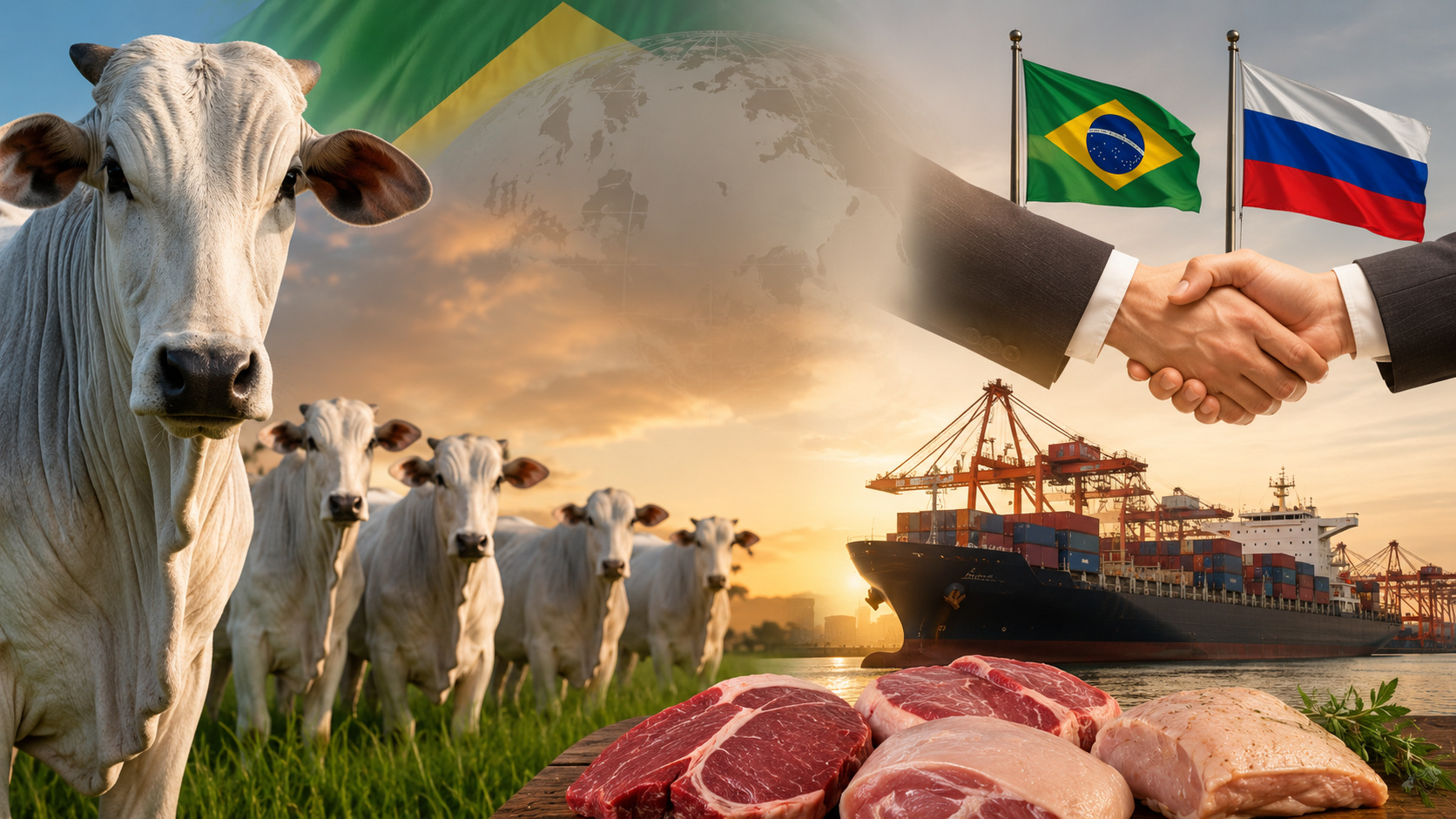
French farmers point out that, with lower production costs in Mercosur countries, the entry of meat and sugar under these conditions would threaten the survival of European farms. Many report that they are already facing financial difficulties, with no margin to compete with imported products.
One local leader, Pascal Verriele, a farmer for four decades, stated that “there is no more visibility or maneuvering room to keep the properties active”, highlighting that trade opening threatens the entire rural structure of France.
National Mobilization In Several Cities
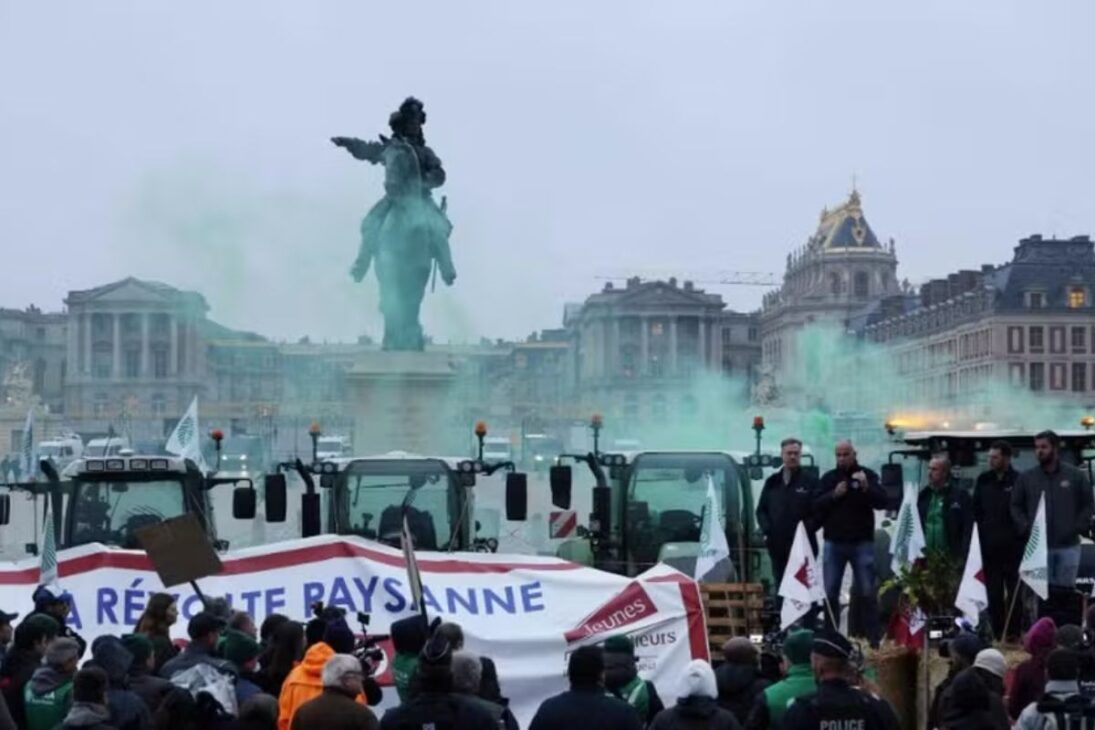
The demonstrations took place in more than 70 locations, including the entrance to the Palace of Versailles and strategic points in Paris. Farmers built bonfires, set off green flares, and used tractors to block access, in an effort to bring visibility to the sector’s demands.
According to the organizers, nearly 3,000 rural producers participated directly, showing that the dissatisfaction extends beyond specific regions and has already reached a national character. The promise is to escalate the actions throughout the European winter if there is no concrete response from the French government.
Government Under Pressure And Expected Response
Arnaud Rousseau, president of FNSEA, stated that the mobilization is a direct message to Emmanuel Macron. According to him, farmers expect a firm stance against the current terms of the agreement, which they consider detrimental to French production. The union also warned that new waves of protests could be called, maintaining the climate of tension.
France, which has historically advocated for agricultural protection measures, now faces the dilemma of balancing its internal interests with the commitments made by the European Union in trade negotiations.
The Mercosur–EU Agreement And Its Implications
The free trade agreement between Mercosur and the European Union, covering economies with a combined GDP of US$ 4.3 trillion, provides for tariff reductions and the expansion of import quotas. Although experts point out that there are safeguard clauses under review by the European Commission, French farmers remain insecure.
According to local producers, tariff-free import quotas also granted to Ukraine are already pressuring the sector, heightening fears of a flood of foreign agricultural products. This perception reinforces the idea that the European countryside could suffer an irreversible impact if conditions are not reviewed.
The protests across France highlight the clash of interests between trade opening and agricultural protection. For farmers, the risk of bankruptcy for thousands of properties is not only economic but also social, as it directly impacts food security and the cultural identity of the country.
And you, do you believe that the Mercosur–EU agreement could really endanger French agriculture? Or do you see trade opening as an inevitable opportunity for the European bloc? Leave your opinion in the comments, we want to hear different views on this impasse.