Portuguese
  Spanish


The missile factory of Siatt, controlled by Edge, is expected to be ready in Caçapava by November, in Vale do Paraíba, with a capacity for 8 anti-ship weapons per month. The project targets exports and connects defense, drones, and AI to the global competition for security, technology, and invisible borders in current Brazil.
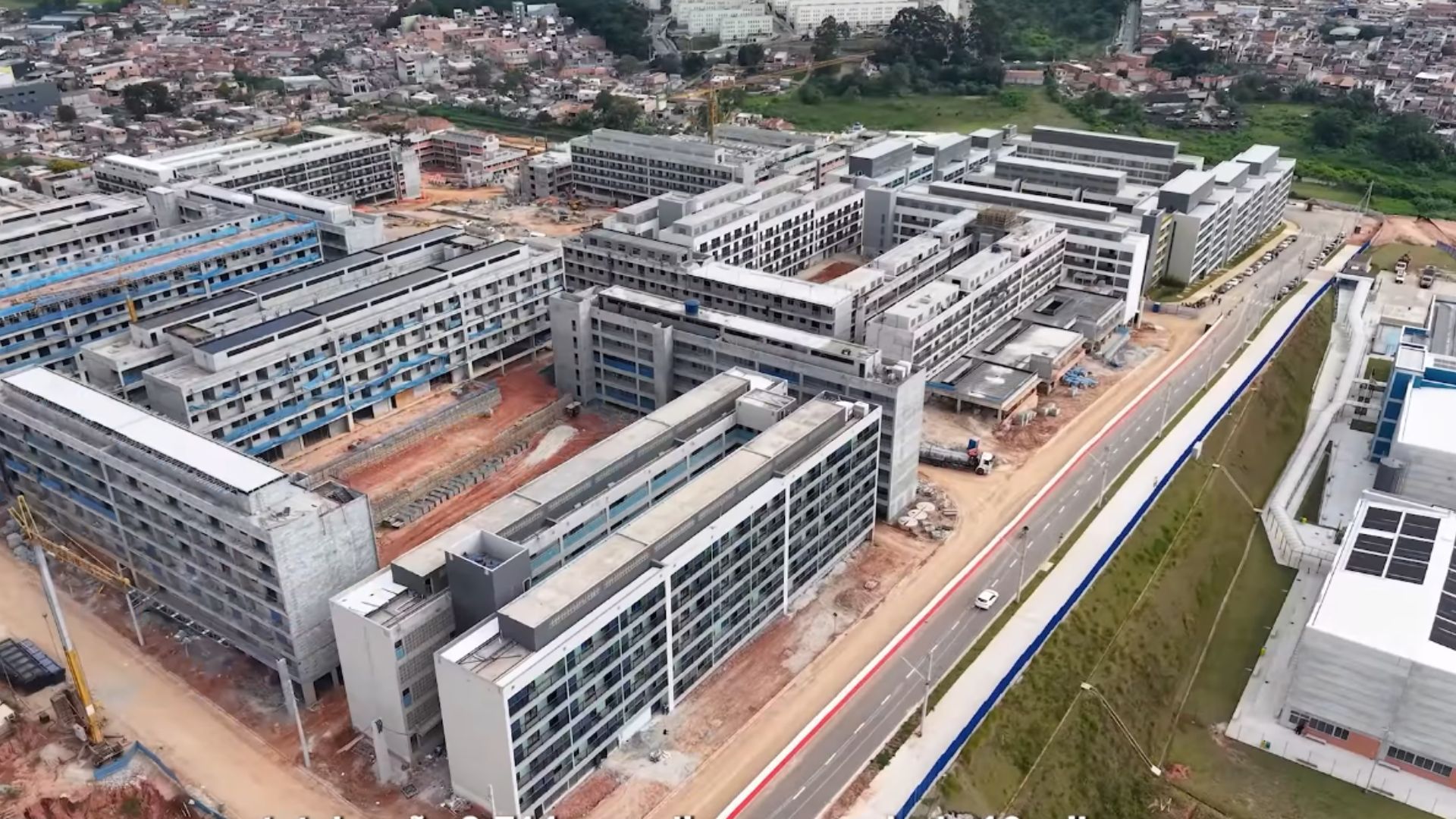
The missile factory under construction in Caçapava, in the interior of São Paulo, is expected to be ready by November and place Vale do Paraíba in a new position within the defense industry. The unit belongs to Siatt, a company controlled by Edge, a United Arab Emirates group that operates globally in the defense and security sector.
According to information published by Exame, the project was detailed in June 2026 by Rodrigo Torres, Edge’s Chief Financial Officer, when discussing the expansion of the group’s Brazilian operations. The forecast is that the unit will produce up to 8 anti-ship missiles per month, serving both the Brazilian market and possible exports, in a scenario where drones and AI also reshape global security.
Vale do Paraíba enters the map of the global defense industry

The choice of Caçapava reinforces the importance of Vale do Paraíba for sectors linked to technology, defense, and advanced industry. The region already has a tradition in strategic activities and now receives a structure aimed at the production of more complex weaponry.
-
Drill Uncovers Freshwater Rivers Hidden Beneath the Ocean Floor

-
3,000-Ton, 81-Meter Attack Submarine Begins Sea Trials, Equipped with Heavy Torpedoes and Anti-Ship Missiles

-
Boat Made from 10 Tons of Plastic and 30,000 Discarded Flip-Flops Sails Along African Coast, Serving as a Floating Classroom on Ocean Pollution
-
Welder Discovers 16th-Century Diamond Ring in England After 7 Hours with Metal Detector; Gold Jewel Linked to Edward I Pattern Auctioned for £17,000




The new missile factory also symbolizes a change in Brazil’s role within global defense chains. Instead of appearing only as a buyer of equipment, the country is now treated as a production base for projects with the potential to serve the domestic market, expand exports, and consolidate Vale do Paraíba as a strategic hub.
Unit should produce up to 8 anti-ship weapons per month
The reported capacity for the facility is up to 8 anti-ship missiles per month. This type of weapon is aimed at the naval environment and fits into a growing demand for defense systems capable of protecting maritime areas, strategic routes, and sensitive structures.
The number is noteworthy because it indicates an industrial operation planned for continuous scale, not just for occasional development. Even so, production will depend on the completion of the unit, contracted demand, and regular stages of certification, supply, and sector operation.
Project targets Brazil and exports
Edge states that the investment in Siatt is not solely aimed at serving Brazil. The strategy also includes exports, in line with the group’s international expansion movement and the search for new defense markets.
The missile factory in São Paulo fits into this context as part of a larger plan. Siatt is already active in military products, and the expansion of the missile line reinforces the attempt to transform the Brazilian operation into a growth platform for different countries.
Edge grew with acquisitions and expanded presence in Brazil
Edge was created in 2019 by the United Arab Emirates, from the merger of the country’s defense and security companies. In a few years, it expanded its international operations through acquisitions, partnerships, and new technological fronts.
In Brazil, the group came to control companies like Siatt and Condor. Besides the missile factory, there are plans related to technology, non-lethal equipment, cameras, training, and international expansion, showing that the Brazilian presence in Edge’s portfolio goes beyond a single project.
Defense, drones, and AI change the logic of conflicts
The advancement of the defense industry is occurring at a time when wars and international tensions accelerate the demand for faster, connected, and adaptable systems. Drones, sensors, integrated communication, and AI have come to play a central role in this new scenario.
The current logic does not depend solely on an isolated piece of equipment but on the connection between different forces and systems. In this environment, the missile factory connects to a broader discussion about stock, readiness, local production, drones, and response speed in crisis situations.
Invisible borders become a new security priority
Another point mentioned by Edge involves border protection. The company assesses that the traditional idea of defense based solely on physical fences has lost ground to technologies capable of monitoring extensive areas with drones, radars, sensors, cameras, and real-time communication.
This concept of an invisible border gains relevance in countries with large land and maritime areas, such as Brazil. Defense becomes less dependent on visible barriers and more on the ability to quickly understand what is happening in each monitored region with AI, sensors, and integrated communication.
Global defense market experiences strong acceleration phase
The construction of the unit in Caçapava takes place amid a cycle of growth in the global defense sector. Recent conflicts, geopolitical tensions, and security reassessments in different regions have increased investments and boosted the value of companies in the sector.
At the same time, the development and delivery timelines have become more pressured. Equipment that used to take many years to advance now needs to keep up with more unstable scenarios, where cheap drones, interference systems, and digital technologies quickly change the balance between attack and defense.
Do you think this missile factory strengthens the Brazilian industry and national security, or does the advancement of this type of production raise concerns about an arms race? Leave your opinion in the comments.