






 Portuguese
  Spanish
  5 min of reading
  1 comment


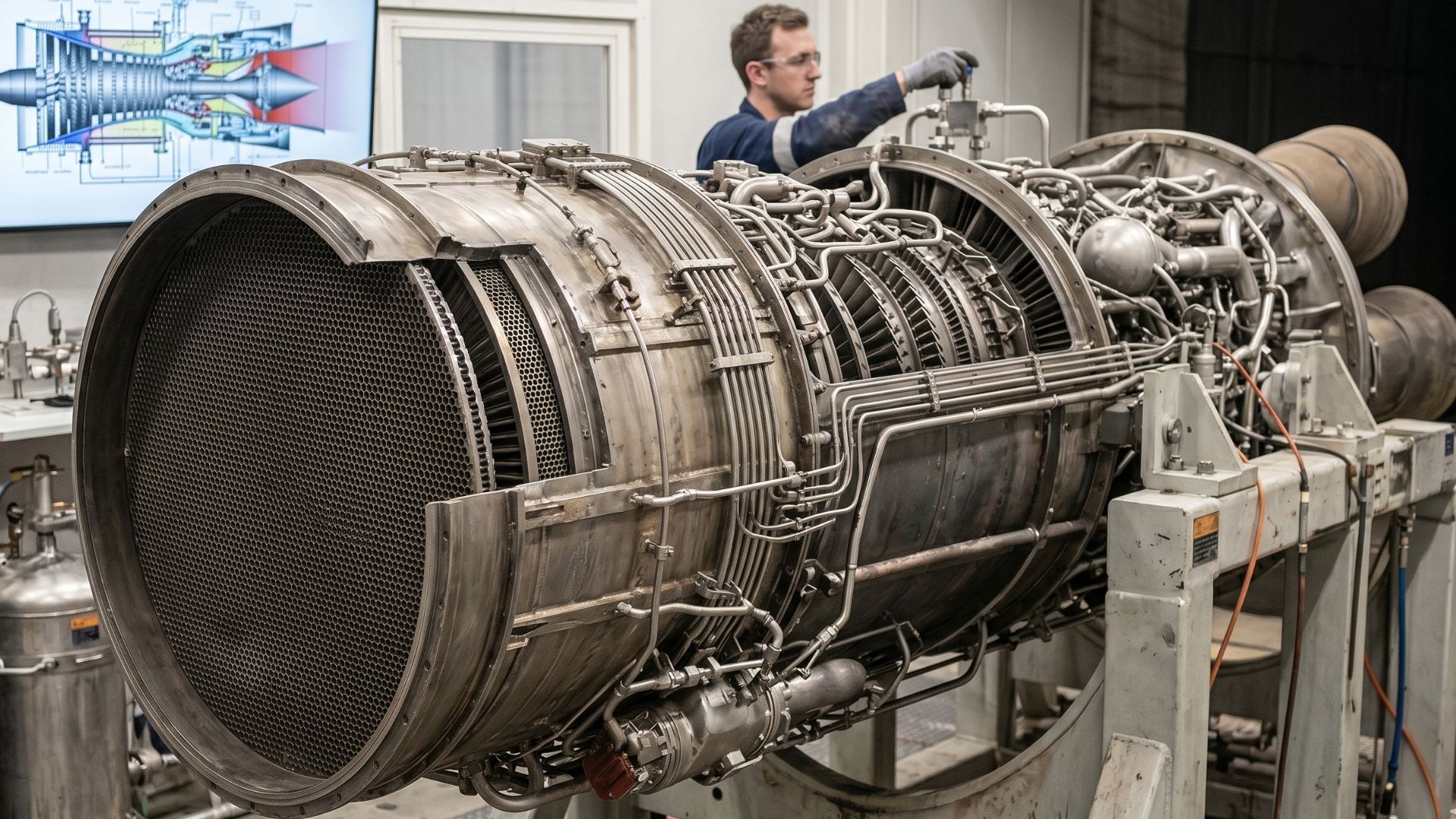


SABRE Engine by Reaction Engines uses extreme pre-cooler, operates as a jet up to Mach 5 and as a rocket up to Mach 25, aiming for hypersonic flights in the coming decades.
According to Reaction Engines, the SABRE, an acronym for Synergetic Air-Breathing Rocket Engine, is a hybrid engine that functions in two modes within the same system. It operates as an air-breathing jet engine from the ground up to Mach 5, using oxygen from the atmosphere, and then switches to a rocket engine from Mach 5 to Mach 25, burning liquid hydrogen and liquid oxygen stored onboard.
What sets the SABRE engine apart is the pre-cooler, a heat exchanger capable of reducing the temperature of the air entering the engine from over 1,000°C to minus 150°C in less than one-twentieth of a second. In tests validated by ESA and DARPA at the Colorado Air and Space Port, the system reached 1,126°C, performing above computational model predictions.
SABRE Engine attempts to solve the biggest blockade of hypersonic aviation
According to Reaction Engines, the biggest obstacle in hypersonic aviation is not just accelerating an aircraft, but keeping it flying within the atmosphere without destroying the engine itself. Vehicles like the NASA X-43A and the Boeing X-51 Waverider reached very high speeds but were disposable systems, launched at altitude and incapable of taking off from a regular runway.
-
Offshore air transport soars in Brazil, surpasses 2.5 million passengers, and reveals how oil has transformed Rio’s airports into key pieces of national logistics.

-
Latin America becomes the “global champion” of aviation taxes, tickets may become more expensive in Brazil, and IATA’s warning exposes risk for flights, tourism, and passengers.

-
Brazil has lost 85 air routes since 2019 and is still flying less than before the pandemic, leaving passengers with fewer destinations, fewer frequencies, and a more limited air network.

-
Anac and Decea are behind iFood’s drones in Barueri and explain how aerial delivery got the green light in Brazil, as orders leave the mall, cross the sky in a few minutes, and reveal the behind-the-scenes of new commercial drone deliveries in the country.





At Mach 5, the air enters the engine so hot that conventional materials cannot withstand direct contact. This is the problem that has stalled the idea of a reusable hypersonic aircraft for decades. Instead of trying to build an engine that can withstand this raw heat, the SABRE adopts another logic: cooling the air before it enters the main part of the engine.
This change in approach is the core of the project. The engine no longer faces the air at extreme temperatures directly and begins to operate under more controllable conditions, paving the way for a high-speed aircraft with horizontal takeoff and repeated use.
SABRE pre-cooler reduces air from 1,126°C to minus 150°C without freezing
According to Reaction Engines, cooling air from over 1,000°C to minus 150°C in a minimal fraction of time creates an immediate problem. The water vapor present in atmospheric air tends to freeze under these conditions, which could block the heat exchanger channels in seconds.
The company claims to have developed a patented solution to prevent this freezing without sacrificing thermal efficiency.

What is publicly known is that the system uses a mixture of fluids to inhibit ice formation, while the cryogenic hydrogen itself circulates through the channels, absorbs the heat removed from the air, and then proceeds to combustion.
Also according to Reaction Engines, the pre-cooler can handle air entering with a force equivalent to 25 times that of a category 5 hurricane, and the secondary exchanger HX3 was tested at 1,126°C, with heat exchange slightly above expected and pressure loss below expected.
How the SABRE operates between Mach 5 in the atmosphere and Mach 25 in space
According to Reaction Engines, the major difference of the SABRE compared to other hypersonic engines is that it operates in two propulsion regimes. A conventional scramjet needs to be accelerated first by another system because it does not work at low speed, which makes direct runway takeoff unfeasible.
The SABRE starts as a jet engine during takeoff and initial acceleration. As the speed increases and the air gets hotter, the pre-cooler takes on an increasing role.
When the aircraft reaches Mach 5, the system closes the air intakes, starts using onboard liquid oxygen, and switches to rocket mode, which theoretically can take the vehicle up to Mach 25.

For a hypersonic commercial aircraft, Reaction Engines itself claims that the air-breathing mode at high speeds would suffice, which would make routes like London to New York in 90 minutes and London to Sydney in 4 hours within the proposed operational logic.
ESA, DARPA, BAE Systems, and Rolls Royce strengthen the technical weight of SABRE
According to Reaction Engines, the strength of the project is not just in the company’s discourse but also in the list of institutions that have validated or funded parts of the technology. BAE Systems invested in the company and conducted independent component tests, while ESA validated the preliminary design of the demonstrator engine and supported stages of the program.
DARPA also funded tests of the precooler in Colorado, and Rolls Royce joined the investors. The company also raised US$ 60 million in a Series C round with participation from industrial groups and aerospace funds, reinforcing that the project underwent technical validation before receiving capital.
This set of support is relevant because hypersonic technologies often encounter grandiose promises without third-party validation. In the case of SABRE, Reaction Engines maintains that the core physics of the precooler has already passed sufficiently robust external tests to keep the program in development.
What is still needed for the SABRE engine to leave the laboratory and reach flight
According to Reaction Engines, the SABRE has not yet reached operational flight. The gap between separately validated components and complete engine in flight remains large, even after successful tests of cryogenic hydrogen management and heat exchangers.

The next step is the integrated ground engine test, with the demonstrator operating as a unified system at the TF1 facility in Westcott, United Kingdom. After that, the planned path includes flight testing on an unmanned demonstrator aircraft before any commercial application.
The company projects the 2030s for cargo transport and space access, and the 2040s for hypersonic passengers.
In other words, the SABRE engine is still far from becoming a boarding pass, but it has already moved past the theoretical concept stage and entered the phase where it needs to prove, as a complete engine, that it can transform one of aviation’s greatest dreams into a real system.





Reaction Engines went bust in Oct 2024 due to lack of investment, a sad day for British Engineering