






 Portuguese
  Spanish
  5 min of reading
  0 comments


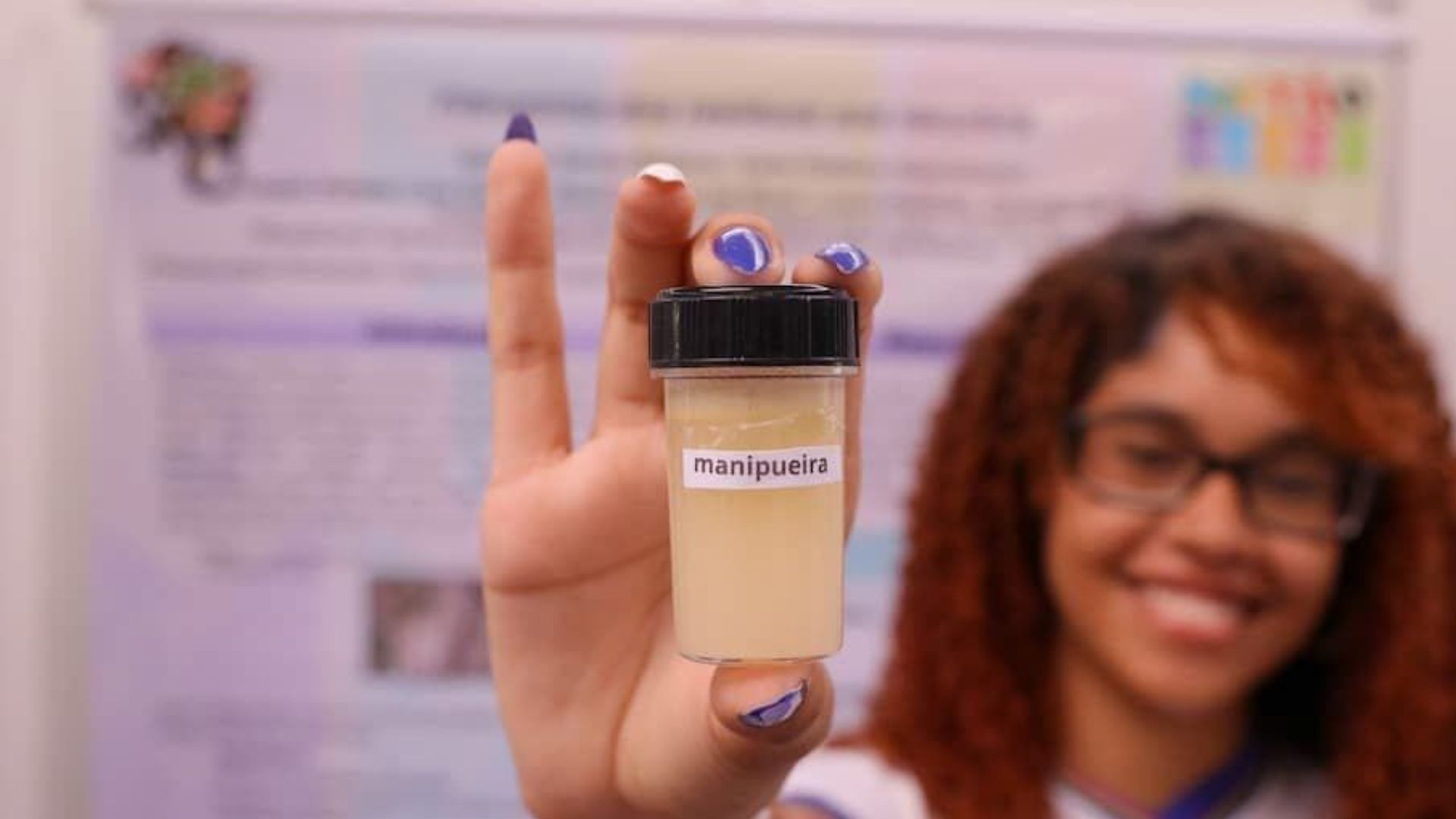
Filtropinha, created by students from Carnaíba, uses sugar-apple peel to treat cassava wastewater, costs R$ 5 and won a national school innovation award.
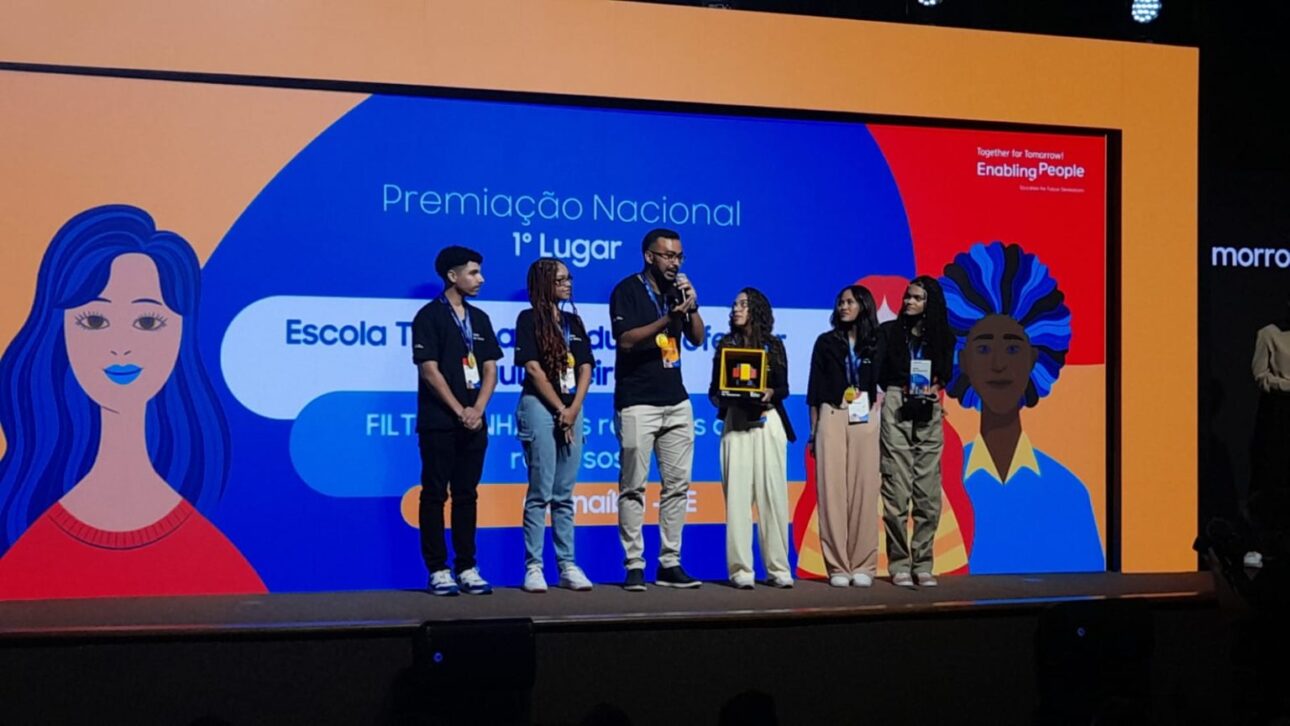
Four students from the 2nd year of Escola Técnica Estadual Professor Paulo Freire, in Carnaíba, in the Sertão of Pernambuco, transformed an environmental problem linked to flour houses into a low-cost solution that gained national projection. The project Filtropinha: from waste to resources won the 11th edition of Solve for Tomorrow Brazil, a Samsung initiative aimed at public school students who develop solutions based on science, technology, engineering, and mathematics for real problems in their territories. The announcement of the winners was made on December 3, 2024, at the Brazilian Cinematheque, in São Paulo.
The invention was born from a concrete problem in the community itself. The students created a low-cost filter based on sugar-apple peel, with a structure produced in a 3D printer, to reduce the pollutant load of cassava wastewater, a residue generated in the processing of cassava.
Cassava wastewater from flour houses became the environmental problem the school decided to tackle
The starting point of Filtropinha was the observation of an environmental liability that was part of the local routine. Porvir describes cassava wastewater as a yellow liquid released when cassava is pressed and reports that, when discarded without treatment, this residue is quite polluting.
-
8-year-old boy found small balls in the yard, thought they were seeds, and helped U.S. universities reveal a hidden natural strategy in oak galls, showing how small domestic observations can change scientific research on discrete natural processes.

-
The owner of Facebook, Mark Zuckerberg, opened his wallet and paid the equivalent of R$ 72.9 billion, or US$ 14.3 billion, to hire a 28-year-old and put him in charge of Meta’s new superintelligence.
-
They wanted artificial intelligence, but they drained the water from a village in Mexico: the water consumption of data centers caused a hepatitis outbreak, and big tech companies Amazon, Microsoft, and Google were forced to halt billion-dollar projects.

-
System created to save lives in disasters turned ‘against’ Brazilians overnight: a hacker attack sent out a false alert from Civil Defense with the word “misantropia” that went off on the phones of half the country, even in silent mode, and took down the Cell Broadcast.


The Secretariat of Education of Pernambuco states that the project emerged to address the improper disposal of this material and the toxic pollution associated with it in communities linked to flour production.


The issue gains even more weight because it involves a traditional activity of the territory. According to the Secretariat of Education of Pernambuco, the project was developed with a focus on the Quilombo do Caroá, in Carnaíba, and was based on a concrete reality of the flour houses in the region.
According to the department, the flour mills can use 15,000 to 20,000 liters of water per production, which makes any solution that reduces contamination and encourages reuse even more relevant.
Instead of an abstract laboratory experiment, Filtropinha was designed to respond to a problem that directly affects the routine of rural and quilombola communities, combining school science, territorial observation, and practical application.
Pinecone Shell and Activated Charcoal Filter Reduces Pollutant Load with Simple Technology
According to the Pernambuco Department of Education, the filter is composed of a model produced with a 3D printer and layers of cotton, filter paper, pinecone shell flour, and activated charcoal obtained from burning these same shells. The prototype also includes a screw designed to facilitate its adaptation to water tanks where the cassava wastewater is stored in flour houses.
Samsung describes the Filtropinha as a low-cost prototype capable of treating water contaminated by solid waste, making it drinkable and reusable, in addition to reducing environmental impact.
Porvir adds that the proposal is not limited to filtration: the idea is also to transform the polluting waste into a resource and advance the development of a slow-release fertilizer, reinforcing the concept of reuse that gives the project its name.
Cost is one of the strongest points of the invention. Porvir reports that each filter costs R$ 5 and the refill costs R$ 0.25, a price that brings the technology closer to the economic reality of the communities served. This gives the project a rare advantage in school solutions: it combines innovation, low cost, and a concrete possibility of application in the territory where it was born.
Tests with Seeds and Community Feedback Strengthened the Project Before the Award
The results released by the Pernambuco Department of Education helped provide support for the project. According to the department, in tests conducted by students, the seed germination rate reached 80% when the cassava wastewater had been treated by Filtropinha.
When the liquid was used in its natural state, this rate dropped to 20%. The contrast suggests a significant reduction in the impact of the waste after filtration.
The project was also brought back to the community. Porvir reports that Filtropinha was presented to rural producers of Quilombo Travessão do Caroá, also in Carnaíba, and notes that there was interest in the future implementation of the filter in flour houses. In the article, student Eduardo states that the reception and interest of the residents in applying the solution were inspiring for the team.
In the report by the Pernambuco Department of Education, the student Luana Noêmia states that the residents of Quilombo do Caroá showed curiosity and interest in applying the project in their daily lives, seeing the filter as an alternative to promote more sustainable production and improve the quality of life in these communities. This feedback is one of the elements that distinguishes Filtropinha from a common school experience: the solution was designed to circulate outside the school and respond to a real demand.
Victory in Solve for Tomorrow highlights the strength of public schools in the countryside
The national achievement reinforced this trajectory. Samsung reports that Filtropinha: from waste to resources took first place in the National Winners category of Solve for Tomorrow Brazil 2024, representing Escola Técnica Estadual Professor Paulo Freire, from Carnaíba, Pernambuco.
The award brought together outstanding projects from different states and had a panel with representatives from Samsung, Cenpec, universities, and institutions related to education and science.
According to Samsung, Solve for Tomorrow has been in Brazil since 2014 and, over its 11 editions, has involved 179,000 students, more than 39,000 teachers, and more than 7,500 public schools.





Be the first to react!