Portuguese
  Spanish


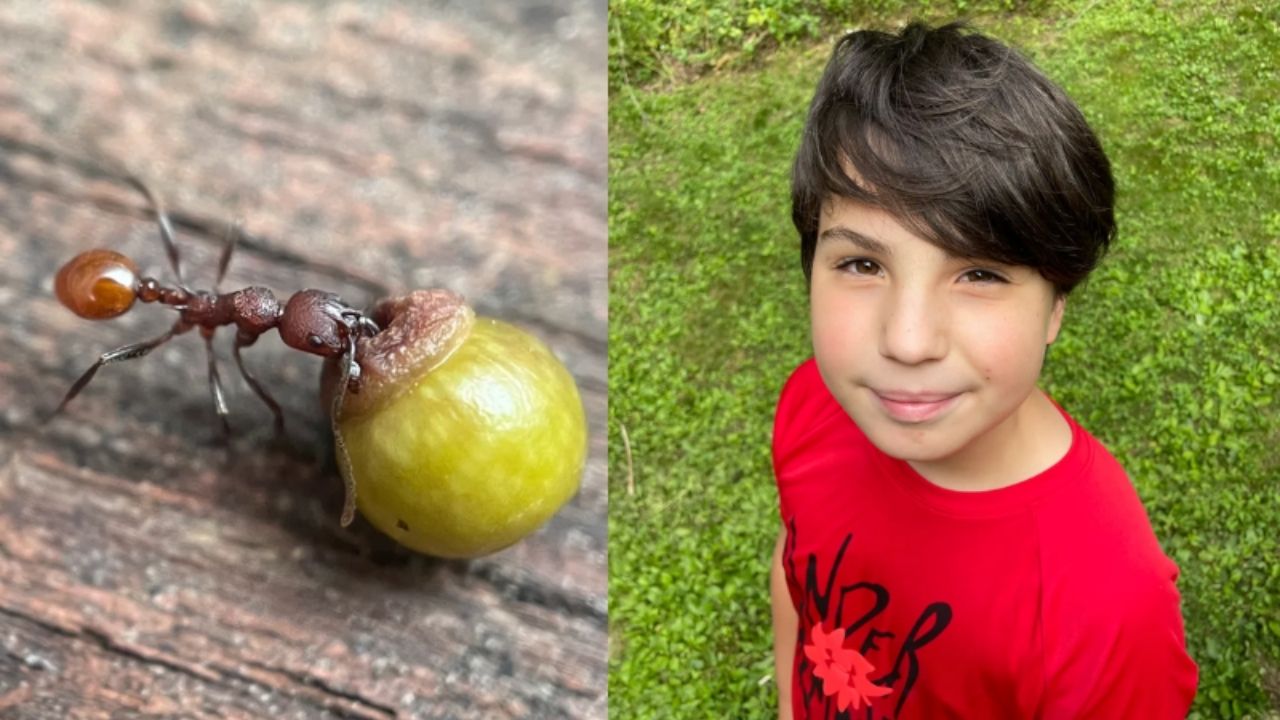

Published on May 6, 2026, the story shows how a simple observation made by Hugo Deans led researchers to reassess oak galls, chemical signals, and discreet ecological relationships, revealing that a scientific discovery can begin far from laboratories, in a common backyard.
Little balls in the backyard seemed like just seeds scattered on the ground, but they ended up being the starting point for a scientific discovery. At 8 years old, Hugo Deans found the small structures near a fallen log and caught the attention of researchers.
His curiosity caught the attention of his father, a researcher at Pennsylvania State University, in the United States. What seemed like just a child’s observation ended up leading scientists to investigate oak galls, natural structures that concealed a little-known ecological relationship.
A scientific discovery began with small balls in the backyard
The story gained prominence after being published by Só Notícia Boa on May 6, 2026. The case shows how discreet details of everyday life can pave the way for relevant questions within science.
-
What is a red flashlight used for, after all? See why it is so commonly used at night.

-
He has never read a line of code, but he already knows how to work: the French company UMA presented in Paris the Northstar, its first AI-powered humanoid robot designed for factories and warehouses, capable of copying tasks just by observing an employee in action.

-
A young Kenyan engineer collects plastic waste from the streets and transforms it into robots that translate physics lessons into sign language in real-time, a machine made with old bottles that teaches what was missing to deaf children left out of science.
-
What is the dark substance found in the sand of Ipanema Beach? Civil Police conduct an examination, collect samples of the material, and initiate an investigation to identify the composition, clarify the origin, and verify if there was an environmental crime.



Hugo was not in a laboratory, nor was he participating in an expedition. He simply observed something different on the ground at home. This simple detail made researchers look more closely at structures that often go unnoticed in gardens, trails, and wooded areas.
What seemed like seeds were oak galls
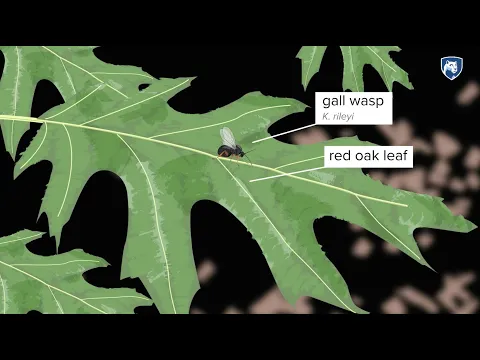
The little balls found by the boy were oak galls, also called bugalhos. These formations arise when the tree reacts to the presence of organisms in its tissues and creates a kind of natural capsule around the developing structure.
To the quick observer, the gall may resemble a seed. It was precisely this resemblance that made the scientific discovery more interesting. The appearance, position on the ground, and external composition of these structures helped researchers investigate why they were collected and taken to another environment.
Researchers noticed a hidden natural strategy
During the investigation, scientists realized that the galls were not just falling to the ground without further function. Some were collected and transported to nests, which caught attention as it resembled a known ecological process involving seeds.
The central point of the research was not just in the transport, but in the structure of the gall. The outer part functioned as a nutritional reward, while the inner part remained preserved. This detail revealed a more sophisticated natural strategy than it seemed at first glance.
Relationship resembles a process already known to science
In ecology, there is a process called myrmecochory, in which seeds are carried because they have a nutritious part capable of attracting organisms from the environment. In return, the plant gains dispersion and protection in some stages of the natural cycle.
In the case observed from the small balls in the yard, researchers found something similar. The oak galls had an external structure similar to a food reward, called a cap. This helped explain why they were taken to nests and preserved after the consumption of this layer.
Chemical signals helped explain the mystery

The investigation advanced when scientists analyzed the composition of the gall’s cap. They identified substances capable of attracting the transport of these structures, including fatty acids similar to compounds found in seeds.
This chemical similarity was one of the most important parts of the scientific discovery. It indicated that the process did not depend solely on the appearance of the small balls, but also on natural signals invisible to the naked eye. In other words, there was a kind of chemical language guiding the interaction.
Tests compared galls and seeds in a controlled environment
To verify the hypothesis, researchers conducted tests in the forest and also in the laboratory. The oak galls were compared with seeds, allowing observation of whether both aroused similar interest in the studied environment.
The results strengthened the idea that the galls were exploiting a mechanism already known in nature. What Hugo found in the backyard was not just a visual curiosity, but part of a discreet ecological process, capable of expanding the understanding of how different living beings interact.
Galls may gain protection after transport
Another relevant point is that the internal part of the galls remained intact after the outer layer was consumed. This opened a new interpretation for the researchers: the transport could lead these structures to more protected locations.
Inside the nests, they could be less exposed to certain soil risks, such as predators, fungi, and microorganisms. Thus, the scientific discovery suggested that the process could bring an advantage to the structure preserved within the gall, creating a natural relationship of indirect benefit.
Universities investigated the relationship in scientific study
The research involved scientists from Pennsylvania State University and the State University of New York, with publication in the journal American Naturalist. The study helped to show that known ecological mechanisms can appear in contexts different from expected.
Until then, this type of relationship was mainly associated with seeds. The observation initiated by Hugo showed that oak galls could also participate in a similar dynamic, broadening researchers’ perspective on natural processes hidden in common environments.
The backyard became a starting point for a larger research
The case shows that science does not always begin with expensive equipment or large laboratories. Sometimes, it starts when someone pays attention to something small, asks a question, and decides to show what they found.
The little balls in the backyard looked like seeds, but they helped reveal a complex ecological relationship. The scientific discovery reinforces that common environments, like gardens and backyards, can still hold processes little understood by science.
When a child’s curiosity changes the perspective of adults
Hugo Deans did not solve the whole mystery alone, but he noticed something different and took the question further. This was the decisive step for researchers to investigate oak galls more deeply.
And you, do you think schools and families should encourage children more to observe the nature around them, ask questions, and record small discoveries? How many important answers might be hidden in a common backyard? Leave your opinion in the comments.