Portuguese
  Spanish


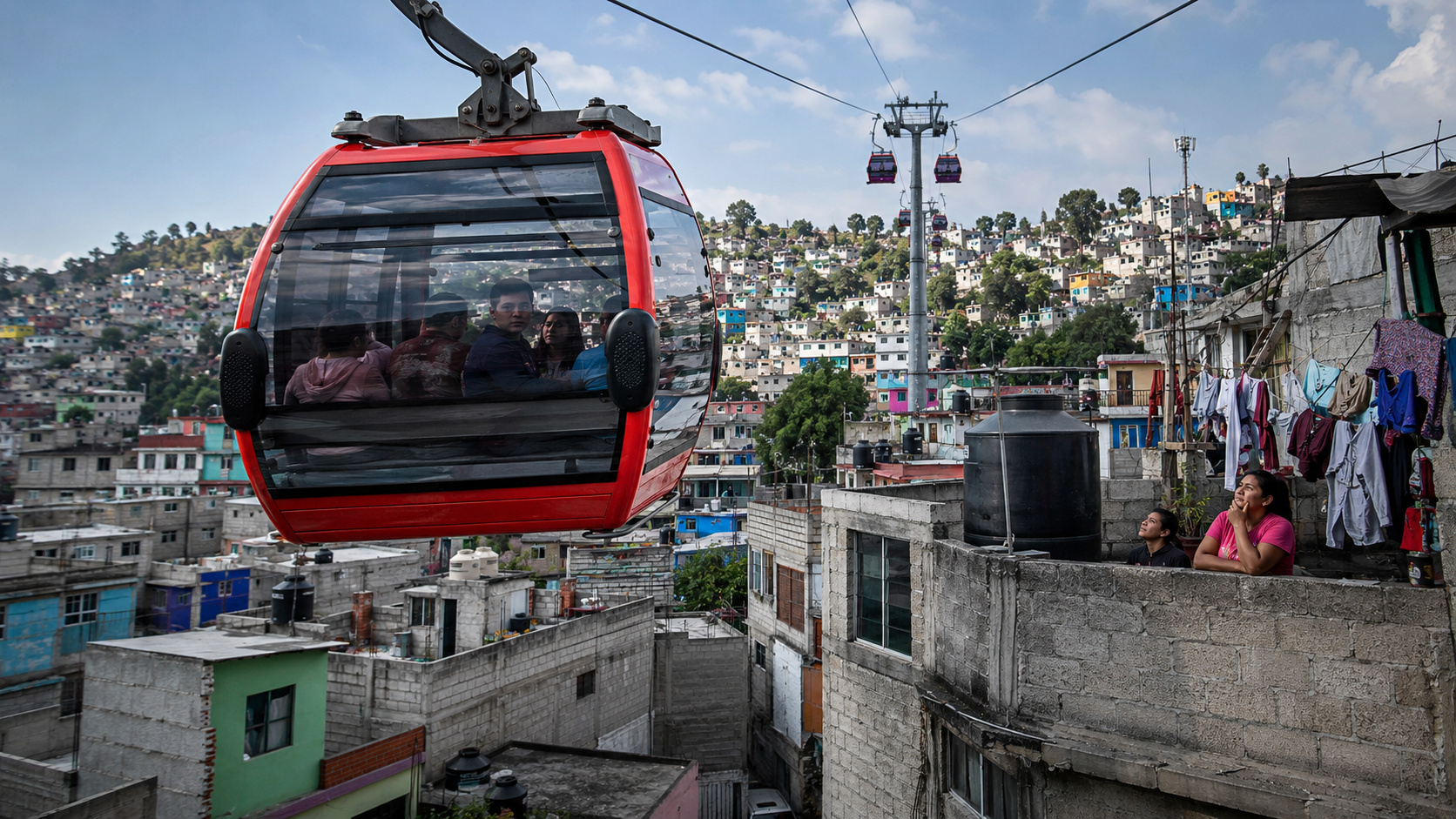

Mexico City’s Cablebús improved access to high areas, but Cuautepec residents complained about direct views into homes, rooftops, and private routines, reigniting the debate on urban mobility, security, and privacy in aerial public transport
Mexico City’s aerial public transport has become the center of an unexpected discussion after Cuautepec residents reported that Cablebús cabins pass too close to their homes.
The investigation was published by Telediario, a Mexican news portal on local topics. The case involves Cablebús Line 1, created to improve mobility in high and difficult-to-access areas by traditional means.
The problem emerged when some residents began to feel that their daily routines inside their homes were exposed. The cabins allow views of rooftops, terraces, and spaces used in daily life, which transformed a mobility project into an alert about urban privacy.
-
Engineers spend a decade building a $2.3 million bridge, but the project features a surreal curve, becomes a joke, and ends with seven suspended.

-
7-year-old boy acts without hesitation and saves his 1-year-old brother from drowning in the family pool in Texas: the boy’s courage impressed the sheriff and he may now receive an official police commendation.

-
The forgotten Atari stock that seemed like something out of a movie: millions of sealed cartridges were buried underground and were sold for very low prices.

-
Collector adapts forklift electric motor in a Kombi Corujinha pickup, hides 16 batteries under the bed, and makes the Brazilian classic run silently with up to 90 km of range.


Cablebús helped high-altitude neighborhoods, but changed the relationship between passenger and resident
Mexico City’s Cablebús was implemented as a solution for regions where traditional transport has more difficulty reaching. In high areas, this type of system can facilitate commutes and connect residents to other parts of the city.
The situation in Cuautepec shows that a public work can solve one problem and, at the same time, create another. By circulating overhead, the transport doesn’t just pass over streets and avenues. It also crosses the field of vision of homes.
For the passenger, the cabin offers a wide view of the neighborhood. For those living along the route, this view can mean exposure of private life.
Cabins near homes turned rooftops into part of the route
Rooftops (azoteas) are open areas used in many Mexican homes. They are part of daily domestic routines and can be used for simple tasks, relaxation, circulation, and everyday care.
When the transport passes a few meters from these spaces, the sense of privacy changes. Residents no longer see only the street as the limit of exposure. The upper part of the house also becomes observed by those traveling in the cabins.
This detail makes the case curious and uncomfortable: public transport turned into an aerial window into ordinary homes. Mobility gained height, but the intimacy of residents also became more visible.


Telediario detailed residents’ complaints about privacy in Cuautepec
Telediario, a Mexican news portal on local topics, detailed residents’ complaints who pointed out privacy invasion by the Cablebús passing over the homes.
The complaint was not restricted to the discomfort of being observed. There was also fear that ill-intentioned people could identify routines, access points, schedules, and details of residences from above.
This concern shows that security and privacy can become central themes in urban aerial transport projects. The discussion is not just about displacement. It also involves how the city enters the lives of those living under the route.
Urban aerial transport creates a view that buses and subways don’t have
Buses, subways, and vans pass at street level. Passengers look at sidewalks, facades, and avenues. A suspended system, like the Cablebús, places the passenger at a different angle.
This superior view changes the relationship with the neighborhood. Rooftops, backyards, terraces, and previously less visible areas enter the field of vision of those moving.
Therefore, the Cuautepec case draws attention. Aerial public transport not only transports people. It also creates a new way of observing the city, including where there are homes and private routines.
Urban mobility needs to consider those who live along the route
Urban mobility is often evaluated by its ability to shorten distances, connect neighborhoods, and facilitate access to city services. These points are important, especially in high-altitude and hard-to-reach areas.
However, the case shows that the route also matters. When a cabin passes too close to homes, the route affects people who may not even use the transport every day.
The main consequence is direct: a mobility solution can create friction when it encroaches on domestic intimacy. Urban planning needs to consider those who board, but also those who live beneath the path.
Privacy debate may influence future urban cable cars
The case of **Cablebús Line 1** became an example of tension rarely discussed in cities. Urban cable cars can be useful, but they also raise privacy concerns when they pass too close to residential areas.
The discussion in Cuautepec shows that public works need to balance collective benefit and local impact. Improved transport does not eliminate residents’ right to feel protected within their own homes.
This type of debate could gain traction in other cities exploring similar solutions. After all, when transport ascends, the city viewed from above also reveals what was once hidden from the eyes of passersby.
The **Mexico City Cablebús** remains an important work for mobility in high-altitude neighborhoods, but the case left a clear lesson. Transport can bring people closer to services and opportunities, but it can also bring eyes closer to private spaces.
The question that remains is simple and necessary: to what extent can a work designed to improve collective life pass close to a family’s intimacy without creating a new urban problem? Leave your opinion in the comments and share this post.