






 Portuguese
  Spanish
  3 min of reading
  0 comments


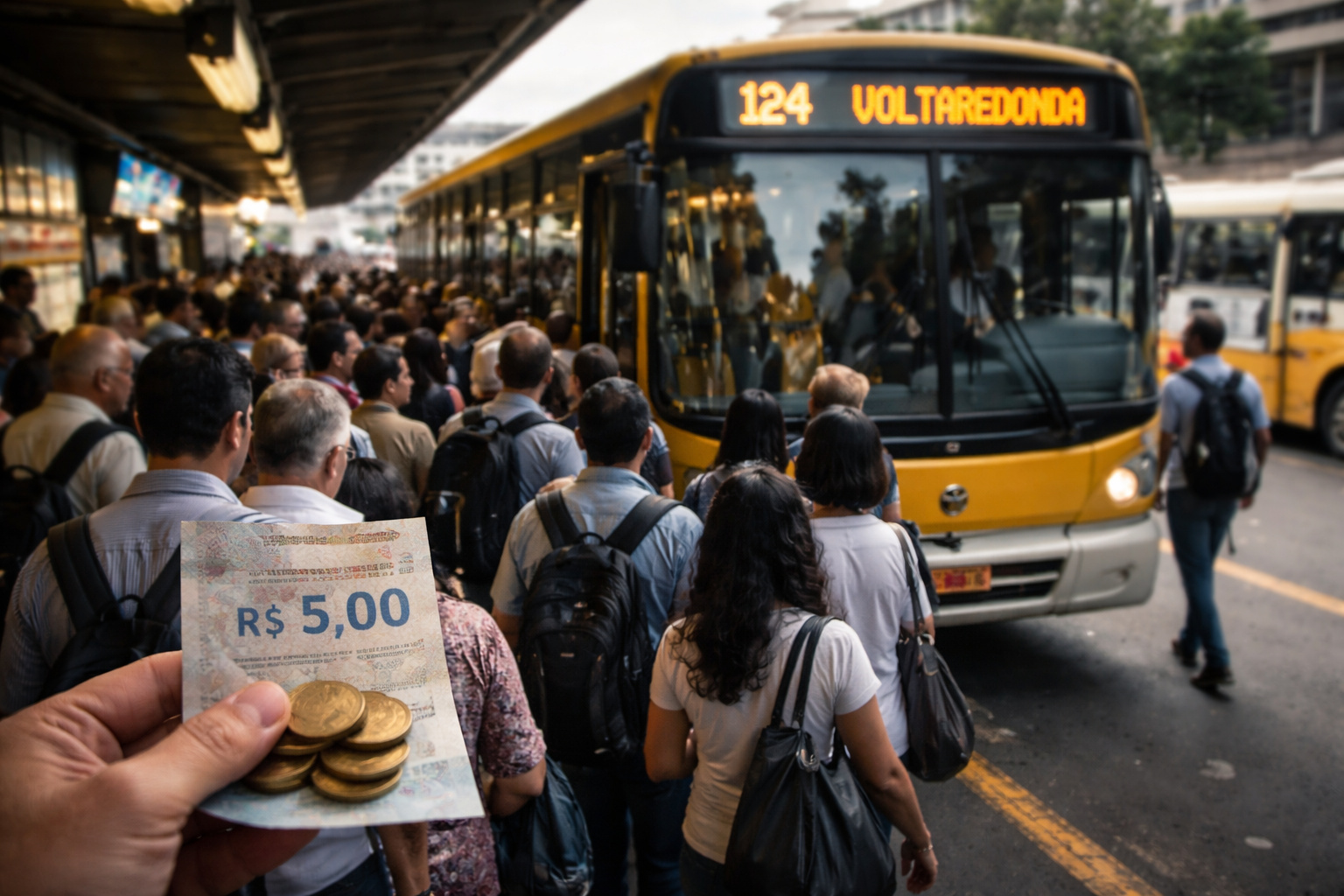
Reduction of the weekly working hours pressures costs, requires hiring, and may directly affect the amount paid by users
A significant labor change with a major economic impact is already mobilizing the transportation sector in Brazil.
The possible reduction of the weekly working hours from 44 to 40 hours, scheduled for 2026, could generate an impact of up to R$ 11.88 billion, according to a study released by the National Confederation of Transport (CNT).
This scenario, therefore, raises an immediate alert, as companies operate close to the current limit and will need to reorganize their operations.
-
Brazilian Joins Homeownership Consortium, Faces Decade of Dual Payments Totaling $141,000, Surpassing Traditional Mortgage

-
Land Rover to Halt Production in July, Putting 371 Jobs at Risk, as Chinese Automaker Negotiates to Convert Factory to 100,000 Vehicles Annually by 2027

-
Mexican Pest Threatens U.S. Cattle Herds at Historic Lows, Potentially Boosting Brazilian Beef Exports as Burger Prices Soar

-
Brazilian Freight Bill Progresses in Congress with $5,000 Minimum Wage, 70% Advance Payment, and Fines Up to $1 Million, as Agriculture and Industry Warn of Rising Costs and Legal Uncertainty


Operational pressure and rising costs come into focus
With the new working hours, the cost of labor is expected to increase significantly.
According to the CNT, this increase could reach about 10%, even without a proportional adjustment in salaries.
Consequently, personnel expenses are expected to rise by approximately 8.6%, further straining the companies’ finances.
Moreover, since transportation is a labor-intensive sector, the impact is likely to be more significant than in other areas of the economy.
Need for hiring increases sector challenges
To maintain the current level of operation, it will be necessary to expand the number of workers.
In this context, the estimate points to the hiring of about 240,000 new professionals, which increases the complexity of the scenario.
However, the sector is already facing structural difficulties.
According to the survey by the CNT, about 65% of companies report problems hiring, while the lack of qualified drivers appears as one of the main bottlenecks.

Small businesses face greater risk of impact
At the same time, smaller companies are likely to feel more intense effects.
This occurs because businesses with up to nine employees already allocate almost half of their gross revenue to salary payments.
In light of this scenario, some effects are being considered:
- Possible adjustment of tariffs to the consumer
- Reduction of operations on some routes
- Increase in informality in the sector
Thus, the financial sustainability of these companies may be directly compromised.
Low productivity hinders adaptation to the new work schedule
Another relevant factor involves productivity in Brazil.
Compared to developed economies, the country shows lower levels of work efficiency.
In this sense, adapting to the new work schedule becomes more challenging, as companies need to maintain the same operational level with fewer available hours.
As a result, competitiveness and service quality may be affected.
Balance between costs and services provided will be decisive
In light of this scenario, the transport sector is facing a moment of structural adjustment.
As labor changes advance, companies seek alternatives to absorb the impacts without compromising operations.
Still, the increase in costs may reach the end consumer, especially through higher tariffs.
In this context, the challenge will be to balance efficiency, financial sustainability, and the quality of services provided.
In light of this, with rising costs and the need for adaptation, will it be possible to prevent public transport from becoming more expensive in the coming years?





Be the first to react!