





 Portuguese
  English
  Spanish
  3 min of reading
  5 comments


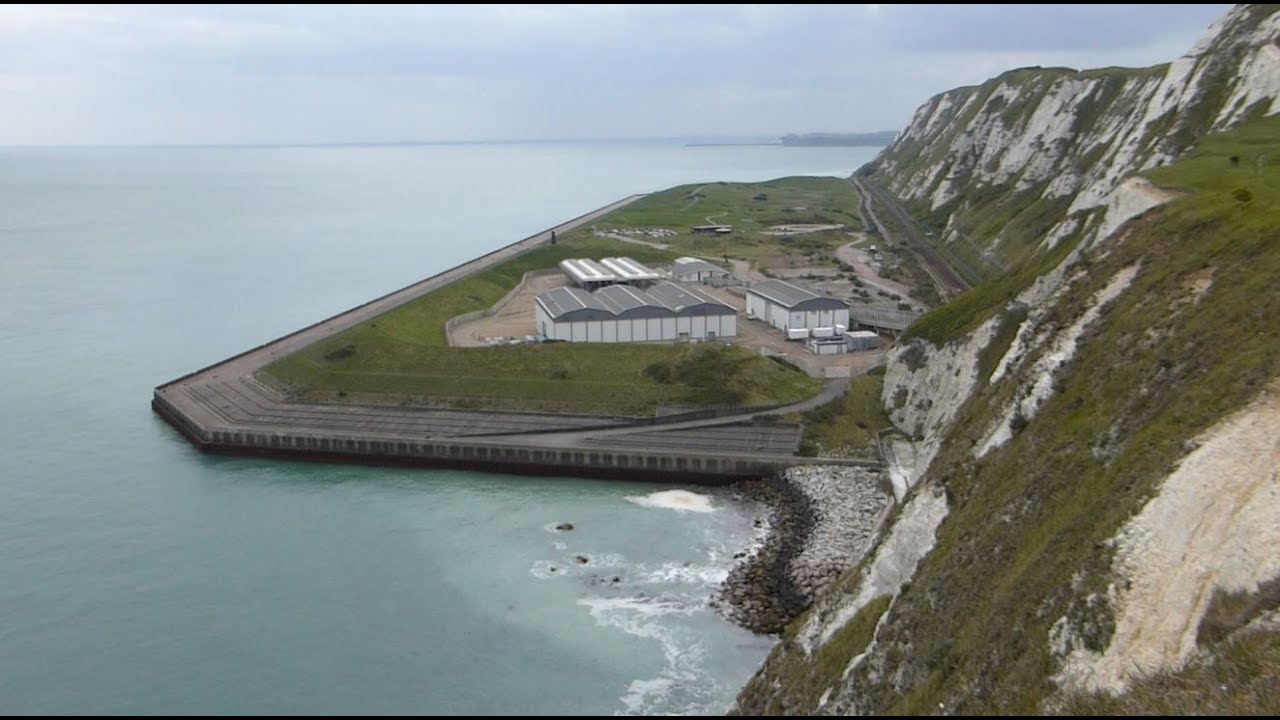


Excavated Rock from the Channel Tunnel Became Samphire Hoe, a New Coastal Area Created with Millions of Tons of Reused Material.
When the Channel Tunnel began to be excavated in the late 1980s, a huge problem arose even before the trains started running: what to do with millions of tons of rock removed from the underground under the English Channel? The answer was not to dump the material into the sea or transport it to distant landfills. Instead, engineers decided to transform the rubble into land.
Thus was born Samphire Hoe, an artificial coastal area created in the southeast of England from the very material excavated from the tunnel.
The Volume That Seemed Impossible to Manage
The construction of the Channel Tunnel required the drilling of approximately 150 km of tunnels consisting of main galleries, service tunnels, and access points.
-
Company develops a 50 m² prefabricated house with 2 bedrooms, wood finishes, and a price below 18,000 euros in Spain.

-
Chinese construction companies take on the project to transform the former historic port of Benin into a seaside tourist complex: the project in Ouidah will connect La Marina, a 2 km route, and the Gate of No Return memorial to redesign the African Atlantic coast with global appeal.

-
American city to tear through rock under a creek to build giant sewage tunnel: historic project in Lynchburg will be up to 36 meters below Blackwater Creek, store 17.8 million liters, and promises to cut 98% of polluting overflows by 2027.
-
While the world opens dry channels and routes between two oceans, Brazil is still discussing the railways it promised decades ago.



This process resulted in about 4.5 to 5 million tons of rock, mainly chalk and marl, extracted from the bottom of the channel.

Moving this volume overland would be logistically unfeasible and environmentally problematic. Disposal at sea also faced severe environmental restrictions. The solution needed to be definitive, cost-effective, and technically safe.
Creating Land as an Engineering Solution
The solution found was to use the English coast as the destination for the material. In a stretch between Dover and Folkestone, the excavated material began to be transported by belts and pipes to the shoreline, where it was deposited in a controlled manner behind marine containment structures.
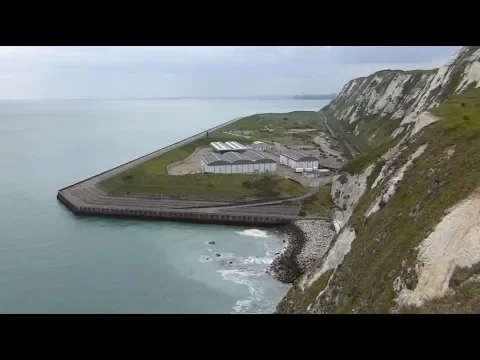
Over the years, what was once just sea and cliffs transformed into a new coastal plain covering about 30 hectares. This area was named Samphire Hoe, in reference to a typical plant from the region.
Containment and Stability: The True Challenge
Creating land is not just about stacking rock. The material needed to be layered, compacted naturally by its own weight, and protected against the continuous action of the waves. For this, retaining walls and carefully sloped embankments were built to dissipate marine energy.
The type of rock extracted from the tunnel helped. The fragmented chalk has good drainage and predictable behavior when deposited in large volumes, reducing the risk of uneven settling or collapses.
The reuse avoided the transportation of millions of tons by truck, reduced indirect emissions, and eliminated the need for disposal areas on solid ground. What began as a logistical problem turned into an environmental and urban gain.
Today, Samphire Hoe is home to green areas, trails, marine life observation zones, and serves as a natural buffer between the sea and the chalk cliffs of southeast England.
Engineering Integrated into the Project from the Start
None of this was improvised. The creation of the coastal area was part of the tunnel’s planning from the early stages. The Channel Tunnel project was not only thought of as transportation infrastructure but as a complete system that included monumental waste management.

This integration of excavation, logistics, and the final destination of the material is one of the points that makes the project a reference even today in large tunnel engineering.
A Rare Case of Total Reuse
In modern tunnel projects, part of the excavated material usually ends up as waste. In the case of the Channel Tunnel, most of the rock removed from the British side had a useful and permanent destination, something rare in projects of this scale.
Samphire Hoe is, in practice, a territory that only exists because the tunnel exists.
The story of the Channel Tunnel is often told from its 50 km under the sea, the railway technology, or the physical link between the United Kingdom and mainland Europe.
But beyond the tracks, there is an equally impressive structure: a piece of land created from nothing, using exactly the material that would be treated as a problem in any other project.
In this case, engineering not only connected two countries beneath the sea. It also showed that with technical planning, even the rubble from a colossal project can become land, landscape, and a permanent legacy.









So what happened on the French side ?
So what’s new??! The Chinese have done much more to desecrate natural sea and land features to create unnatural structures!!!
If you create land like this, you’re contributing to sea level rise. I think it’s somewhat reckless.